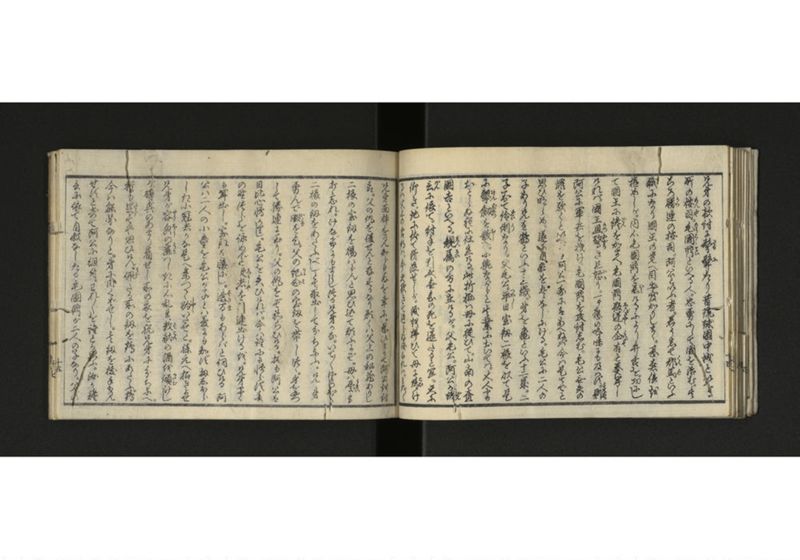
翻刻
兄弟の敵討に髣髴(さもに)たり昔琉球国中城といへる
所の按司(あんず)。毛国鼎(もうこくてい)といへる人。忠勇にして国を治む。其
ころ勝(かつ)連の按司。阿公といふ者。若うして郡馬(くんば)といふ
職になり国王の覚へ目出度かりしまゝ。甚奢侈を
極めしが。内心毛国鼎を忌(いみ)けるにより弁舌を。功にし
て国王に讒(ざん)をかまへ。毛国鼎/叛逆(ほんぎやく)の企(くはだて)有と奏聞し
ければ。国王/且驚(かつおどろ)き且/怒(いか)り。一チ応の吟味にも及はず。則(すなはち)
阿公に軍兵を授け。毛国鼎を攻討しむ。毛公無矢#1の
罪を歎くといへども阿公一円に取あへねば今は是までと
思ひ明らめ。遂に自殺をそなしにける。毛公に二人の
子あり兄を鶴といふ十三歳。弟を亀といふ十二歳。二
子別て伶俐(れいり)なり。父毛公。平日(つね〳〵)宝剣二振を以て是
に撃剣(けんじゆつ)を教(おし)へ。小腕ながらと其業においては。大人にも
おとらぬ様に仕立ける。此折柄は母に従ひて。山南の査
国吉といへる。親属(しんるい)の方に在けるが。父毛公。阿公か讒(ざん)
言(げん)に依て。討手を引受無念の死を遂たると聞。天に
仰き。地に伏て涕泣せしが。涙を払ひて母に請(こひ)け
るは父上の最期は。今更歎きて返らぬ儀なれは。われ〳〵
兄弟面体を見知られぬを幸に。忍ひよりて阿公を討
取。父の仇を復せんと存するなり願くは父上の秘蔵ありし
二振の宝剣を賜はらんと思ひ込て願ふにぞ。母は憂(うれい)も
打忘れ。けなげにもまうしつる兄弟かな。いて〳〵望の如く
二振の剣をあたふべしとて取出して分ち与ふ。兄弟
勇んで暇(いとま)を乞。父の紀念(かたみ)の宝剣を帯しつゝ。身をやつ
して勝連に至り。父の仇をぞねらひける。扨も阿公は
日比心憎かりし。毛公を失ひければ。今は誰にも憚らず春
の野つらを詠めんと従者(しうしや)を引連出けるを。兄弟早く
も聞出し。宝剣を懐にし。透間(すきま)もあらばと伺ひける阿
公は二人の小童を毛公が子とは夢にも知ず扨しほら
しき小冠者かな是へ参つて酌(しやく)いたせと。膝元へ招きよせ
兄弟が容皃(やうほう)の麗(うる)はしきに心乱れ。数献(すこん)の酒を傾(かたむ)けし
が酔興のあまり着せし所の衣を脱兄弟に分ち与へ。
猶も足(たら)すや思ひけん。佩(はい)たる所の剣を鶴にあたふ。鶴
今は能図なりと。弟に目くばせし。其剣を抜手も見
せずと寄て阿公に組付。われ〳〵を誰とか思ふ。汝か讒
言に依て自殺なしたる毛国鼎が二人の子なり。父の
現代語訳
兄弟の敵討ちに非常によく似ている。昔、琉球国の中城という所の按司(地方領主)、毛国鼎(もうこくてい)という人物は、忠勇にして国をよく治めていた。その頃、勝連の按司で阿公という者が、若くして郡馬(くんば)という職に就き、国王の覚えもめでたかったため、甚だしく奢侈の限りを尽くしていた。しかし内心では毛国鼎を妬んでいたため、弁舌を巧みに用いて国王に讒言を仕組み、毛国鼎に謀反の企てがあると上奏した。国王はたいへん驚き、かつ怒って、一切の吟味もせずに、すぐに阿公に軍兵を与えて毛国鼎を攻め討たせた。毛公は身に覚えのない罪を嘆いたが、阿公が全く聞き入れないため、今はこれまでと覚悟を決め、ついに自害してしまった。毛公には二人の子があり、兄を鶴といい十三歳、弟を亀といい十二歳であった。二人の子は特に聡明であった。父毛公は常日頃から宝剣二振りを用いて二人に剣術を教え、若い身ながらもその技においては大人にも劣らないように仕込んでいた。この折、二人は母に従って山南の査国吉(さこくきち)という親族の方に滞在していたが、父毛公が阿公の讒言によって討手を受け、無念の死を遂げたと聞き、天を仰ぎ、地に伏して涙を流して泣いた。しかし涙を拭って母に申し出るには、父上の最期は今さら嘆いても取り返しのつかないことゆえ、われわれ兄弟は顔を知られていないことを幸いに、忍び寄って阿公を討ち取り、父の仇を討ちたいと存じます。願わくば、父上が大切にしていた二振りの宝剣をいただきたいと、思い詰めて願い出た。母は悲しみも打ち忘れ、「健気なことを申した兄弟よ、さあさあ望みの通りに二振りの剣を与えよう」と言って取り出して分け与えた。兄弟は勇んで暇を乞い、父の形見の宝剣を帯びながら、身を変装して勝連に至り、父の仇を狙い続けた。さて阿公は、日頃から憎らしく思っていた毛公を亡き者にしたので、今は誰にも気兼ねなく春の野を眺めようと、従者を引き連れて出かけたのを、兄弟がいち早く聞きつけ、宝剣を懐に隠し、少しでも隙があればと機会を伺っていた。阿公は二人の小さな子どもを毛公の子とは夢にも知らず、「まあ可愛らしい小者よ、こちらへ参って酌をいたせ」と、膝元へ招き寄せた。兄弟の顔立ちの麗しさに心乱れ、何杯もの酒を傾けたが、酔い興じるあまり、着ていた衣を脱いで兄弟に分け与えた。それでも足りないと思ったのか、佩いていた剣を鶴に与えた。鶴は今こそ好機なりと、弟に目くばせした。その剣を抜く手も見せず、寄って阿公に組み付き、「われわれを誰と思うか。汝の讒言によって自害した毛国鼎の二人の子である。父の
英語訳
[The story] closely resembles the vendetta of the [Soga] brothers. Long ago, in a place called Nakagusuku in the Ryukyu Kingdom, there was an *aji* (local lord) named Mō Kokutei, a loyal and brave man who governed his domain well. At that time, the *aji* of Katsuren, a man called Akō, rose to the position of *gunba* at a young age and enjoyed great favor with the king, indulging himself in extravagant luxury to the utmost. However, harboring secret resentment toward Mō Kokutei, he cleverly used his eloquence to fabricate a slanderous accusation before the king, reporting that Mō Kokutei was plotting rebellion. The king was both startled and enraged, and without conducting any inquiry whatsoever, immediately granted Akō soldiers and ordered him to attack and destroy Mō Kokutei. Though Mō protested his innocence and lamented the unjust accusation, Akō refused to listen at all. Resigning himself to his fate, Mō ultimately took his own life. Mō had two sons: the elder was called Tsuru (Crane), aged thirteen, and the younger was called Kame (Turtle), aged twelve. Both children were exceptionally clever. Their father Mō had always used two treasured swords to teach them swordsmanship, training them until, young as they were, their skill was equal to that of grown men. At this time, the two boys were staying with their mother at the home of a relative named Sa Kokukichi in Sannan, when they heard that their father Mō had been forced to die a dishonored death at the hands of attackers, all due to Akō's slander. They looked up to the heavens and prostrated themselves on the ground, weeping bitterly. But wiping away their tears, they appealed to their mother: "Father's passing is something no amount of grief can undo. Since our faces are not known to the enemy, we intend to steal close to Akō, kill him, and avenge our father. We beg you to grant us the two treasured swords that Father so dearly prized." They pleaded with the utmost earnestness. The mother, forgetting her own sorrow, said: "What brave and admirable sons you are! Come then—I shall give you the two swords you desire," and took them out and divided them between the brothers. The brothers joyfully took their leave, girded themselves with their father's treasured swords as mementos, disguised themselves, and traveled to Katsuren, where they watched ceaselessly for a chance to take their revenge on their father's killer. Now, Akō, having eliminated Mō Kokutei—the man he had long despised—felt that he could now enjoy himself freely without concern for anyone. He set out with his retinue to admire the spring countryside. The brothers quickly learned of this, concealed their treasured swords in their robes, and lay in wait for even the slightest opportunity. Akō, not dreaming in the least that the two small boys were Mō's sons, said, "My, what charming little pages—come here and pour my wine," and beckoned them close to his knee. Enchanted by the brothers' beautiful faces, he drank cup after cup of wine, and in his drunken merriment, stripped off the garment he was wearing and distributed it between the brothers. Still feeling it was not enough, he even presented his own sword to Tsuru. Tsuru, sensing that the moment had come, gave his brother a meaningful glance. Without a moment's hesitation, he drew the sword and threw himself upon Akō, crying: "Do you know who we are? We are the two sons of Mō Kokutei, who took his own life because of your slander. For our father's