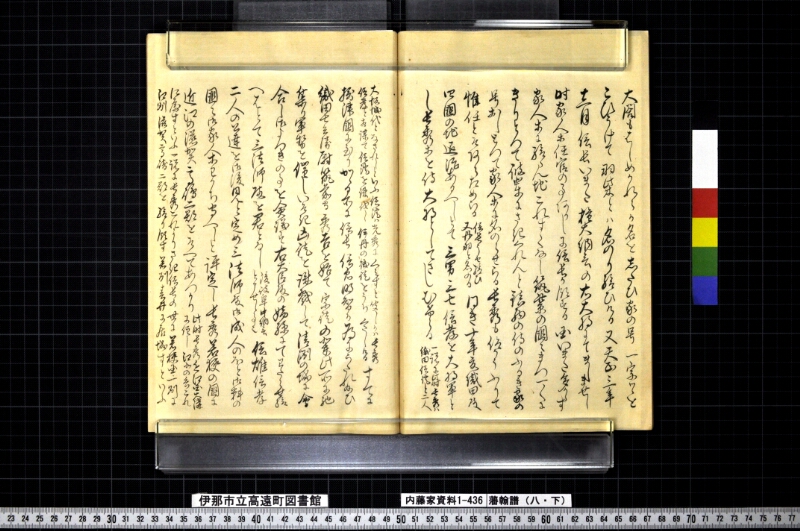
翻刻
【右丁】
太閤もはしめかれらか名をしたひ家の号 一字ツヽを
こひうけて羽柴とは名のり給ひける 又天正三年
十二月 信長いまた権大納言の右大将にてましませし
時家人等任官の事ありしに信長か領する国いまた多からす
家人等に給らん地これすくなし筑紫の国々まつ一〳〵に
きりとつて彼輩にさきくれんと鎮西の侍のふるき家の
号おしとつて家人に名のらせらる長秀も仰かうふりて
惟任とそあらためらる《割書:信長うせ給ひ|又丹羽と名のる》同き十年夏織田殿
四国の地退治あるへしとて三男三七信孝を大将軍と
し長秀等を侍大将としてさしむける《割書:一説に此時長秀は|織田信澄と二人》
【左丁】
《割書:大坂城代となされしといふ信澄は光秀にくみすと聞しかは長秀|信孝と相謀て信澄を誅伐し 伊丹の賊徒をうち くたしける》すてに
摂津国に至りかゝる所に 信長 信忠 明智か為にうたれ給ひ
織田七兵衛尉筑前守 秀吉を始て 宗徒の輩此所に馳
集り軍勢を催しいそき凶徒を誅戮して清洲の城に会
合し御よつきの事を僉議す右大臣殿の嫡孫にてわたらせ給
へはとて三法師殿を君となし《割書:後岐阜中納言|と申せし事也》信雄信孝
二人の公達を御後見と定め三法師殿御成人のほと御料の
国々御家人等わかち守へしと評定し長秀若狭の国に
近江の滋賀高島二郡をそへてあつかり《割書:此時長秀近江国大津|に住し江北の兵これ》
《割書:に属すといふ一説に長秀これよりさき信長の世に若狭国一州に|江州滋賀高島二郡を給り領す若州春井に居城すといふ》
現代語訳
【右丁】
太閤(豊臣秀吉)も初めは彼らの名声を慕い、家の姓の一字ずつを請い受けて「羽柴」と名乗られた。また天正3年12月、信長がまだ権大納言右大将でいらっしゃった時、家臣等の任官のことがあったが、信長が領する国はまだ多くなく、家臣等に与える領地も少なかった。九州の国々をまず一つ一つ切り取って彼らに先に与えようと、九州の武士の古い家の姓を奪い取って家臣に名乗らせた。長秀も仰せを蒙って「惟任」と改めた(信長が亡くなってまた丹羽と名乗る)。同じ年の夏、織田殿が四国平定を行うべしとして、三男三七信孝を大将軍とし、長秀等を侍大将として派遣した(一説にはこの時長秀は織田信澄と二人で大坂城代となったという)。
【左丁】
信澄は明智光秀に与するとの噂があったので、長秀は信孝と相談して信澄を誅殺し、伊丹の賊徒を討ち破った。すでに摂津国に到着したところで、信長・信忠が明智のために討たれた。織田七兵衛尉筑前守秀吉をはじめとして、一門の者たちがこの場所に駆け集まり、軍勢を催して急いで凶徒を誅殺し、清洲城に会合して後継のことを評議した。右大臣殿(信長)の嫡孫でいらっしゃるということで三法師殿(織田秀信)を君主とし(後に岐阜中納言と申した)、信雄・信孝二人の公達を後見と定め、三法師殿が成人するまでの間、御料の国々を御家人等で分けて守ろうと評定し、長秀は若狭国に近江の滋賀・高島二郡を加えて管理することとなった(この時長秀は近江国大津に住み、江北の兵がこれに属したという。一説には長秀はこれより先、信長の世に若狭国一州に江州滋賀・高島二郡を賜り領していた。若州春井に居城したという)。
英語訳
【Right Page】
Taikō (Toyotomi Hideyoshi) also initially admired their reputation and requested one character each from their family names, taking the name "Hashiba." In December of Tenshō 3 (1575), when Nobunaga was still Gon-Dainagon and Udaishō (Provisional Major Counselor and Major Captain of the Right), there was a matter of appointing his retainers to court ranks. However, Nobunaga's domains were not yet extensive, and the lands to grant his retainers were limited. Planning to first conquer Kyushu's provinces one by one and grant them to his followers, he appropriated ancient family names of Kyushu samurai and had his retainers adopt them. Nagahide also received such an order and changed his name to "Koretō" (after Nobunaga's death, he returned to using Niwa). In the summer of the same year, when Lord Oda decided to pacify Shikoku, he appointed his third son Sanshichi Nobutaka as commanding general and dispatched Nagahide and others as samurai generals (one account states that at this time Nagahide and Oda Nobutsune together became castellans of Osaka Castle).
【Left Page】
Since there were rumors that Nobutsune was siding with Akechi Mitsuhide, Nagahide consulted with Nobutaka and executed Nobutsune, also defeating the rebel forces at Itami. Just as they had reached Settsu Province, Nobunaga and Nobutada were killed by Akechi. Oda Shichibē-no-jō Chikuzen-no-kami Hideyoshi and other clan members rushed to gather at this location, raised forces, quickly executed the traitors, convened at Kiyosu Castle, and deliberated on succession matters. Since he was the legitimate grandson of the Udaijin-dono (Nobunaga), they made Sanhōshi-dono (Oda Hidenobu) the lord (later called Gifu Chūnagon), appointed the two princes Nobukatsu and Nobutaka as regents, and decided that until Sanhōshi-dono came of age, the御料 domains would be divided among the retainers to govern. Nagahide was assigned to administer Wakasa Province along with Shiga and Takashima districts of Ōmi (at this time Nagahide resided in Ōtsu in Ōmi Province, and the forces of northern Ōmi were said to belong to him. One account states that even before this, during Nobunaga's reign, Nagahide had been granted and governed the entire province of Wakasa plus Shiga and Takashima districts of Ōmi Province, residing in a castle at Harui in Wakasa).