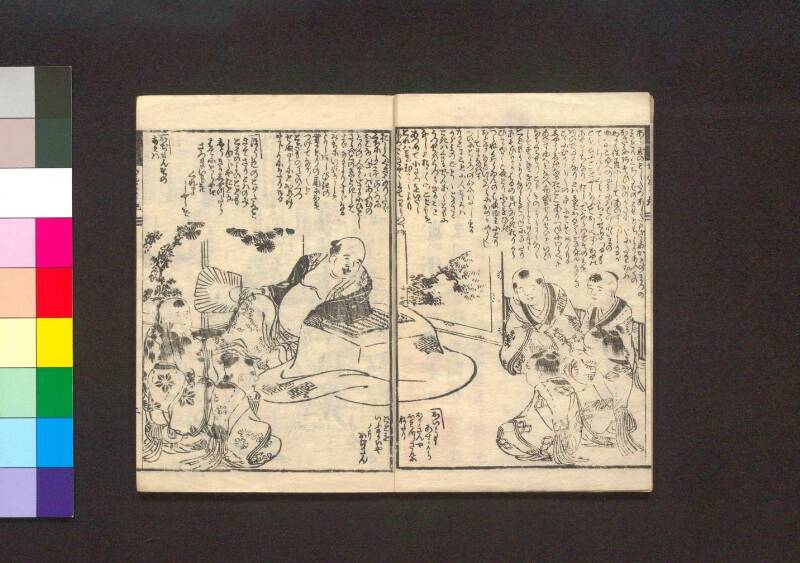
翻刻
あら玉のとしたつあした戸ざらぬかどのまつの
みとりこちくばのともとちよりあふての
おさなあそびおのがさま〴〵にたわむれ
ぬるも性善にしてあいすへしかるが
ゆへにこゆへのやみにはげあたまの
てうちんもくらくちとせふるつるも
とを思ふこをやしなふておしへずおやの
あやまちなりおしへてならはずそのみを
あいせさるなりとはしばおんこう#1がきんげんなりき
こゝにむかし〳〵の事にてぞありける
しやうじきなるおどこありつねにわらべを
あいすゆへみな人布袋せんせいといひ
ならわせりこどものよくすくなく
してすぐなるをいつくしみけるまゝ
こどもらよくなじみてつねにきたり
あそひけるかはるの日のながきおりから
ひまゆくこまどりにてをひき
つらねくはうゐんのはまゆみにとり
おとすなどいたづらにおのがめかくし
してまなばす
ついにこゝろのおにわたしする
などまことに人ごゝろは
かゞみのごとしとかさる
ときはくもるぜんあ〳〵ともに
うつせばうつらざること
なしとおゝくのこどもを
あつめて小さつをいだし
これは是むかしより
じつごきやうとてわらはべの
おしへぐさなりたゞ
くちによみてこゝろに
おこなはざればあふむの
とりの人まねするにひとし
さらばこのゑときして
すぐなるよりすぐなる
みちにいれかしと
よしあしびきの
やまどりの尾におを
つけてなが〳〵と
こどものたいくつ
せぬやうにとおどけ
まじりにかたりける
〽ほうかしのこがたな#2と
きてさりとはのみ
こみのよいこども
しゆじやおとな
しうきかしやつたら
はてにとらやき
さつまいも#3を
くれま
しやうぞ
【子供】
「おぢさんその
あとは
【子供】
〽おいらも
あすから
おかゝさんや
おとつさんに
ねだり
ごとを
いふまいや
ノウ
おぢさん
現代語訳
新しい年が立った朝、戸を開けっ放しにして、門の松の緑と竹の友と千代を迎えて、幼い遊びを各々思い思いに戯れているのも、性善説によるもので、愛すべきものである。しかし、この故に「故への闇に禿頭の提灯も暗く、千歳経る鶴も元を思う子を養って教えずは親の過ちなり。教えて習わず、その身を愛せざるなり」とは、芝恩師の金言であった。
ここに昔々のことであったが、正直な男がいて、常に童を愛するゆえ、皆人は布袋先生と呼び習わしていた。子供のよく(欲)少なくて素直なるを慈しんでいたので、子供らはよく懐いて、常にやって来て遊んでいた。春の日の長い折から、暇つぶしに手まりを手に引いて連ね、広院の破魔弓に鳥を落とすなど、いたずらに己が目隠しをして学ばせず、ついに心の鬼が渡りをするなど、まことに人の心は鏡のごとし、とある時は曇る。善悪ともに映せば映らぬことなし、と多くの子供を集めて小冊子を出し、「これは昔より実語教といって童の教え草なり。ただ口によんで心に行わなければ、鸚鵡の鳥の人真似するに等しい。さらばこの絵解きをして、素直なるよりもっと素直な道に入れよう」と、「よしあしひきの山鳥の尾に尾を付けて」長々と、子供が退屈せぬようにと、おどけ混じりに語った。
♪「放課後の小刀を切って、さりとは呑み込みのよい子供、主者大人、収穫をしたなら、最後に虎焼き、薩摩芋をくれましょうぞ」
【子供】
「おじさん、その後は...」
【子供】
♪「おいらも明日からお母さんやお父さんにねだり事を言うまい。のう、おじさん」
英語訳
On the morning when the new year dawned, with doors left open to welcome the New Year's pine decorations, bamboo companions, and the millennium, the children playing their innocent games in their own various ways - this too follows the theory of innate human goodness and is something to be cherished. However, for this very reason, "In the darkness of ignorance, even the lantern of a bald head is dim, and even cranes that live a thousand years think of their origins - to raise a child without teaching is a parent's fault. To teach without having them practice, without loving oneself, is futile" - these were the golden words of Master Shiba.
Long, long ago, there was an honest man who constantly loved children, so everyone called him "Master Hotei." Because he cherished children who had few desires and were innocent, the children grew fond of him and always came to play. During the long spring days, to pass the time, they would play with handballs linked together, shoot birds with the ceremonial bow at the temple grounds, and other mischief - blindfolding themselves instead of learning. Eventually, demons would cross their hearts. Indeed, the human heart is like a mirror - sometimes it clouds over. When good and evil are reflected, nothing fails to appear. So he gathered many children and produced a small book, saying: "This has been called Jitsugokyo since ancient times - it is a teaching text for children. If you merely recite it with your mouth but don't practice it in your heart, it's no different from a parrot mimicking human speech. Therefore, let me provide this illustrated explanation to lead you from innocence to an even more innocent path." Like adding tail to tail of the copper pheasant of the mountains, he spoke at great length in a playful manner so the children wouldn't get bored.
♪"After school hours with your little knife, oh what quick-witted children you are! Young masters, if you study well, in the end I'll give you grilled tiger cakes and sweet potatoes!"
[Child]
"Uncle, what comes after that..."
[Child]
♪"I too, from tomorrow on, won't make demanding requests of my mother and father. Right, uncle?"