翻刻
倉内財有朽(くらのうちのさいはくつることあり)
身内才無朽(みのうちのさいはくつることなし)
ぜにかねはわきものじや
もつたがもつたにたゝぬ【もつたがもつたにたらぬ?】
まことたからといふは
さいち六げい#1にたつした
ものがまことのてうじやと
いふものじやどんなふげん
でもしねばびた六文にとゞまる#2
さいちあるものはしゝてもおしへは
せんざいにのこるもろこし
しんのときてうぎ#3といふた人は
さいちたつべんなものじやが
とかくありつきの口がなく
六ねんるろうしてまづしく
くらしたゆへその女ぼう
おまへはいつしゆつせしてわたしら
にもあんどさせなさるといふたれば
てうぎしたをだしてみせたゆへ
女ぼうはべかつこうをしてみせるは
さてはしゆつせはのぞみなさらぬ
のといへばてうきわらつてわがした
ありやといふ女ぼうぬしはきでも
ふれはさしやらぬかしたがなふてなんと
しやうしからばこのしたあらんかぎりは
わがしゆつせとほからずとはたしてのち
たかきくらいとなるこれらかみのうちのさいなり
又もろこしにげんせき#5といふわろ#4はゑんてんに
ねんねしてむねのうちの才のむし
ほしをするといふた事もあるそれじや
からいまもむなぐらといふてむね
にはくらかあるとかくこどもしゆ
もてならひそろばん
かくもんの
たからを
むなくらに
つめこんで人に
むなぐらをとられぬやうにしな
されやあんかう#6はむねのうちのどうぐを
しやうひし人はむねのうちのちゑをたつとぶ
たゞむなくらのとよへ#7をあわせまたくらの
ふんとしをしめぬれば人にあくらのふれいなく
われにこゝろのくらやみなし〽かならすおとゝ
さんやおかゝさんをねたつていかほとよいもち
あそひをかふてもくらのうちのさい【財】てくちる
ことかあるそやしせる孔(かう)明いける仲達を
はしらしむこれみのうちの才はしゝてもくちぬてや
【ここより後ろは三国志の人名で地口を言っている】
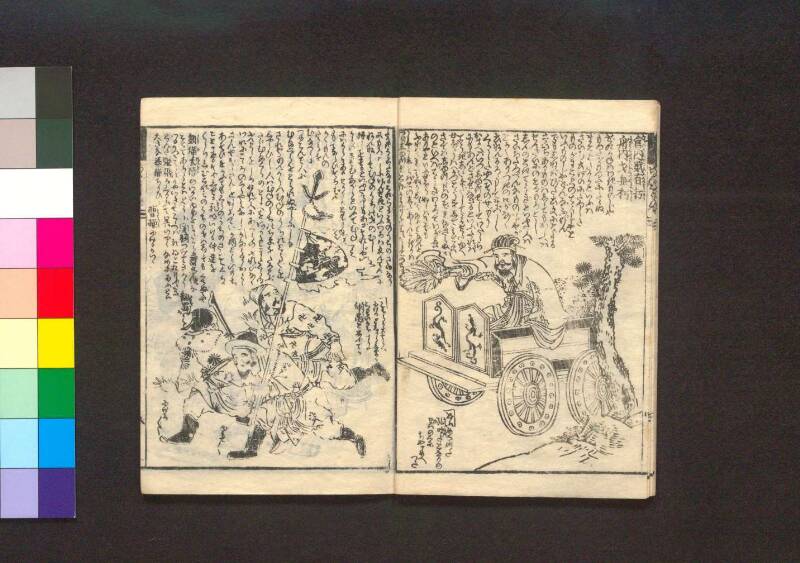
劉備玄徳(りうひけんとく)のわるいゆめをみたから寿亭侯な
ことてあろうとはとう□関羽つけてきかう
わるかつたかよもやいきてこゝへは孔明とおもふたに
とんた張飛かくるふて呉のやうなめにあふとは
大きな孫権?ちかひ
曹操(そう〳〵)にけるかいゝ
〽どふめへつた
孔明(こうめい)だとなりの
呉(ご)のくに
ちやァめへ
つた
〽こちらが大せうは
にけるとしからしやるか
こわいかほすりや
仲達(ちうたつ)と思ふてか
ゆるせ〳〵
にけろ
〳〵〳〵
現代語訳
倉内財有朽(くらのうちのざいはくつることあり)
身内才無朽(みのうちのさいはくつることなし)
お金や財産は脇のものである。持ったからといって持ったことにならない。真の宝というのは、才知六芸に達した者が真の長者というものである。どんな富豪でも死ねば一文六銭に留まる。才知ある者は死んでも教えは千代に残る。
中国の晋の時代に張儀という人は、才知弁舌に長けた者であったが、とかく仕官の口がなく、六年間放浪して貧しく暮らした。そのため妻が「あなたはいつ出世して私たちにも安堵させてくださるのか」と言ったところ、張儀は舌を出して見せた。そのため妻は驚いて見せるので、「それでは出世は望まれないのか」と言えば、張儀は笑って「我が舌はあるか」という。妻は「あなたは気でも触れたのか、舌がなくて何としましょうか」と言ったところ、張儀は「生きている限りは我が出世は遠くない」と答えた。そして後に高い地位となった。これが身の内の才である。
また中国に元積という悪者は、縁側で寝ていて胸の内の才の虫干しをするといった事もある。それゆえ今も胸倉という。胸には蔵があるとか。とにかく子ども衆、手習い・そろばん・学問の宝を胸の蔵に詰め込んで、人に胸倉を取られぬようにしなされ。暗合は胸の内の道具を消費し、人は胸の内の知恵を尊ぶ。ただ胸倉の戸を合わせ、また蔵の鍵を締めれば、人に悪蔵の無礼なく、我に心の蔵闇なし。
♪必ずお父さんやお母さんを妬んで、いかほど良い餅遊びを買っても、蔵の内の財は朽ちることがある。そうして死せる孔明、生ける仲達を走らしむ。これ身の内の才は死しても朽ちぬ。
【ここより後は三国志の人名で地口を言っている】
劉備玄徳の悪い夢を見たから寿亭侯なことであろうと、関羽を付けて聞こう。悪かったか、よもや生きてここへは孔明と思うたに、とんだ張飛が狂うて、呉のような目に遭うとは、大きな孫権違い。曹操(そうそう)に蹴るかいい。
♪どうも負けた孔明だと隣の呉の国、ちゃあ負けた
♪こちらが大将は蹴ると知っているのか、恐い顔するや、仲達と思うてか
許せ許せ
逃げろ
英語訳
"Wealth in the storehouse may decay (kura no uchi no zai wa kutsuru koto ari)"
"Talent within oneself never decays (mi no uchi no sai wa kutsuru koto nashi)"
Money and possessions are secondary things. Just because you have them doesn't mean you truly possess them. True treasure means that those who have mastered wisdom and the six arts are the real wealthy ones. No matter how rich a person may be, when they die, it all amounts to just a few coins. Those with talent and wisdom leave their teachings for a thousand generations even after death.
In ancient China during the Jin period, there was a man named Zhang Yi who was skilled in wit and eloquence, but he could not find employment and wandered in poverty for six years. His wife said, "When will you achieve success and give us peace of mind?" Zhang Yi stuck out his tongue to show her. His wife was startled by this display and asked, "So you don't hope for success?" Zhang Yi laughed and asked, "Do I still have my tongue?" His wife replied, "Are you mad? What would you do without your tongue?" Zhang Yi answered, "As long as I live, my success is not far away." Indeed, he later achieved high rank. This is talent within oneself.
Also in China, there was a scoundrel named Yuan Ji who would lie on the veranda and air out the insects of talent in his chest. This is why we still say "chest collar" (munagura) today - there is a storehouse in the chest. In any case, children, store the treasures of penmanship, abacus, and learning in the storehouse of your chest, and don't let anyone grab your chest collar. Secret meetings consume the tools within the chest, while people treasure the wisdom within their chests. Just close the doors of your chest storehouse and lock the storehouse - then there will be no rudeness from evil storehouses toward others, and no darkness in the storehouse of your own heart.
♪No matter how much you envy your father and mother and buy fine rice cake games, wealth in the storehouse may decay. Thus, the dead Zhuge Liang makes the living Sima Yi run. This shows that talent within oneself does not decay even in death.
[From here on, it plays with the names of Three Kingdoms characters]
Because Liu Bei Xuande had a bad dream, it must be something about the Marquis of Shouting. Let's ask Guan Yu about it. Was it bad? I thought Zhuge Liang would never come here alive, but what a surprise - Zhang Fei went mad and suffered like Wu. What a big mistake by Sun Quan. Should we kick Cao Cao?
♪The defeated Zhuge Liang in the neighboring country of Wu, yes, defeated
♪Does our general know he will be kicked? Making scary faces, thinking he's Sima Yi?
Forgive, forgive
Run away