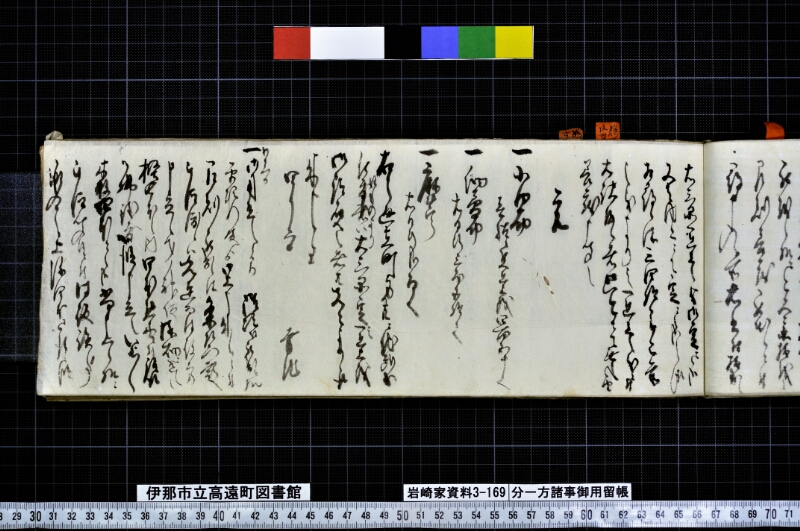
翻刻
【左丁】
右三品運上之義御定に候哉
又は内々にて定候哉之趣
相尋候様三四仰候由今前
之義より之運上之分に付
右訳存候者只今はて【?】無之候由
善蔵申聞之
覚
一小田布
壱駄に付運上銭四百五十文
一細雪【?】布
右同断三百五拾文
一麻苧
右同断弐百文
右之通在町方共に他所出
仕《見せ消ち:度者|候ものより》は右三品定之運上銭
御請負之者共先に■取
来申候以上
四月二日 幸作
同三日
一御用有之候間 御次え罷出候処
平次衛門殿ゟ口上申来候ニ付
即刻罷出候所条左衛門殿へ
被仰渡候は先達而同役方
申立候才ノ神坂漆畑に有之候
樫七本之内四本悪木に付■取
御払致度段申立之いよ〳〵
木数四本候哉如何
被仰聞候ニ付同役諸事
承合之上弥四本ニ御座候
現代語訳
【左丁】
右三品の運上の義、御定めに候や、又は内々にて定め候やの趣、相尋ね候様(三四?)仰せられ候由。今前の義より運上の分につき、右の訳を存じ候者、ただ今は【判読不能】これなき候由、善蔵申し聞かせ。
覚
一、小田布
一駄につき運上銭四百五十文
一、細雪【?】布
右同断 三百五十文
一、麻苧
右同断 二百文
右の通り、在町方ともに他所出仕候者より右三品定めの運上銭、御請負の者共先に取り来り申し候。以上。
四月二日 幸作
同三日
一、御用これあり候間、御次へ罷り出で候ところ、平次衛門殿より口上申し来り候につき、即刻罷り出で候ところ、条左衛門殿へ仰せ渡され候は、先達って同役方申し立て候才ノ神坂漆畑にこれあり候樫七本のうち四本悪木につき【判読不能】御払い致したき段申し立て、いよいよ木数四本に候や、いかが、と仰せ聞かせられ候につき、同役諸事承り合いの上、弥四本にて御座候。
英語訳
【Left Page】
Regarding the transport tax (unjo) on the aforementioned three types of goods, [we were instructed to] inquire whether this had been established by official regulation or settled informally through private arrangement. As for the background of this transport tax from earlier times, Zenzō informed us that there is currently no one [available] who knows the details of the matter.
Memorandum
One item: Oda cloth (ko-da-nuno)
Transport tax per load (da): 450 mon
One item: Fine Yukishiro cloth [reading uncertain]
Same as above: 350 mon
One item: Hemp fiber (asa-o)
Same as above: 200 mon
In accordance with the above, the transport tax as set for these three types of goods has hitherto been collected in advance by the tax contractors (ukeoi-mono) from those dispatched to other places, whether from village or town. The foregoing is respectfully submitted.
4th month, 2nd day Kōsaku
Same month, 3rd day
One item: As there was official business, I went to the anteroom (o-tsugi), whereupon a verbal message arrived from Heijūemon, and I immediately went out. The matter communicated to Jōzaemon was as follows: Regarding the seven oak trees (kashi) located in the lacquer grove at Sainokami-saka, which our colleague had previously reported upon — as four of those trees had been identified as poor-quality timber [and a proposal had been made] to dispose of them — he was now asked to confirm whether the number of trees to be disposed of was indeed four. Upon consulting with our colleague on the various particulars of the matter, [we confirmed that] the number was indeed four trees.