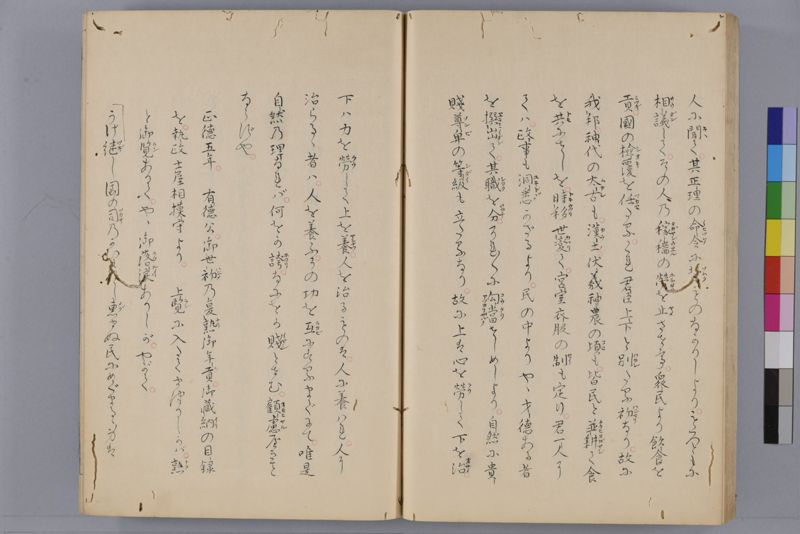
翻刻
【右丁】
人に聞(キヽ)て。其正⁻理の《振り仮名:命⁻令|イヒツケ》に背(ソムク)ものなかりしより。もろともに
相(サウ)⁻談(ダン)して。その人の《振り仮名:稼⁻穡|タガヤシウヱル》の労(ホネヲリ)を止(ヤメ)させて。衆⁻民より飲⁻食を
貢(ミツギ)。国の《振り仮名:検⁻覆|シオキ》を任(マカセ)たる。これ君⁻臣上⁻下と別(ワカレ)たる初(ハジマリ)なり。故に
我₋邦、神⁻代の《振り仮名:太⁻古|ムカシ》も。《振り仮名:漢⁻土|カラ》 ̄ノ、伏⁻羲、神⁻農の頃(コロ)も。皆民と並(ナラヒ)₋耕(タガヤシ)て食
を共(トモ)にせしを。時(トキ)₋移(ウツリ)世₋変(カハリ)て。宮⁻室衣⁻服の制(セイ)も定り。君一⁻人に
ては。政⁻事も《振り仮名:洞⁻悉|ユキトヾ》かざるより。民の中よりやゝ才⁻徳ある者
を撰(ヱラミ)₋出(イダシ)て。其 職(シヨク)を分(ワカチ)。それ〳〵に《振り仮名:勾⁻当|コウタウ|アツカリサバク》せしめしより。自然に貴⁻
賤 尊卑(ソンビ)の《振り仮名:等⁻級|シダイ》も立たるなり。故に上は心を労(ラウ)して下を治(オサメ)。
【左丁】
下は力を労(ラウ)して上を養(ヤシナフ)。人を治るものは。人に養はれ。人に
治らるゝ者は。人を養ふ。その功を互(タガヒ)にするまでにて。唯是
自⁻然の理なれば。何をか誇(ホコリ)。なにをか賤(イヤシ)とせむ。《振り仮名:顧⁻慮|オモヒヤル》べきこと
ならずや。
正徳五年。 有⁻徳公。御₋世₋初(ハジメ)の■₋熟(ナリ)御年⁻貢(ク)。御蔵₋納(イリ)の目⁻録
を。執⁻政土屋相⁻模⁻守より。 上⁻覧(ラン)に入たてまつりしかば。熟(トク)
と御 覧(ラン)ありて。やゝ御 落(ラク)⁻涙(ルイ)ありしが。やがて。
「うけ継(ツギ)し国の司(ツカサ)のかひもなし恵(メグ)まぬ民にめぐまるゝ身は
現代語訳
【右丁】
人に聞いて、その正理の命令に背く者がなかったため、みんなで相談して、その人の農作業の労働を止めさせて、民衆より飲食を貢ぎ、国の統治を任せた。これが君臣上下と分かれた始まりである。故に我が国の神代の太古も、中国の伏羲、神農の頃も、皆民と並んで耕して食を共にしていたが、時移り世変わりて、宮室衣服の制度も定まり、君主一人では政事も行き届かないため、民の中からやや才徳ある者を選び出して、その職を分かち、それぞれに担当させたため、自然に貴賤尊卑の等級も立ったのである。故に上は心を労して下を治め、
【左丁】
下は力を労して上を養う。人を治める者は人に養われ、人に治められる者は人を養う。その功を互いにするまでのことで、ただこれ自然の理であるから、何を誇り、何を賤しいとしようか。思いやるべきことではないか。
正徳五年、有徳公(徳川家宣)の御世の初めの成熟した年貢、御蔵納の目録を、執政土屋相模守より上覧に入れ奉ったところ、よく御覧になって、やや御落涙があったが、やがて、
「受け継いだ国の司の甲斐もなし 恵まぬ民に恵まるる身は」
英語訳
【Right page】
guidance, and since no one went against the commands based on their righteous principles, they consulted together and had that person cease agricultural labor, with the people offering food and drink as tribute and entrusting the governance of the country to them. This was the beginning of the distinction between ruler and subject, superior and subordinate. Therefore, in the ancient divine age of our country, and in the time of Fuxi and Shennong in China, all worked the fields alongside the people and shared food together. But as time passed and the world changed, systems of palaces and clothing were established, and since one ruler alone could not manage all governmental affairs thoroughly, people of some talent and virtue were selected from among the populace, duties were divided among them, and each was given specific responsibilities. Thus naturally the hierarchies of noble and base, high and low were established. Therefore, those above labor with their minds to govern those below,
【Left page】
and those below labor with their bodies to support those above. Those who govern people are sustained by people, and those who are governed by people sustain people. This is merely an exchange of services, and since it is simply the natural order, what is there to boast about, and what is there to despise? Should this not be a matter for compassionate consideration?
In the fifth year of Shōtoku (1715), when a record of the mature annual tax revenue and granary storage from the beginning of Lord Aritoku's (Tokugawa Ienobu's) reign was presented for imperial inspection by the chief minister Tsuchiya Sagami-no-kami, after carefully reviewing it with some tears falling, he composed:
"Of little worth am I as keeper of this inherited realm—blessed by people I have failed to bless"