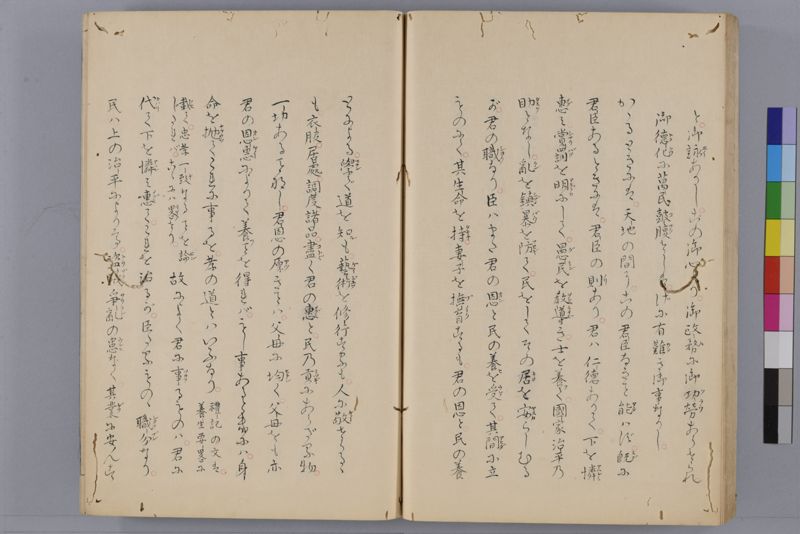
翻刻
【右丁】
と。御 詠(エイ)ありし。この御心□【よヵ】り。御政⁻務(ム)に御 功(ク)⁻労(ラウ)あらせられ。
御 徳(トク)⁻化(クワ)に万⁻民 鼓(コ)⁻腹(フク)せしは。げに有 難(カタ)き御事なりし。
かゝるときには。天⁻地の間に。この君⁻臣なきこと能(アタ)はず。既(スデ)に
君⁻臣あるときには。君⁻臣の則(ノリ)あり。君は仁⁻徳ありて。下を憐(アハレミ)
恵(メグ)み。賞(シヤウ)⁻罰(バツ)を明(アキラカ)にして。愚(グ)⁻民(ミン)を教(ヲシヘ)₋導(ミチビ)き。士を養 ̄フて。国⁻家治⁻平の
助(タスケ)となし。乱(ラン)を鎮(シヅメ)暴(バウ)を防(フセギ)て。民をしてその居(キヨ)を安(ヤスカ)らしむる
が。君の職)(シヨク)なり。臣はまた君の恩(オン)と民の養 ̄ヒを受(ウケ)て。其 間(アヒダ)に立
ものにて。其生⁻命を持(タモチ)。妻⁻子を撫(ブ)⁻育(イク)するも。君の恩と民の養
【左丁】
とによる。学(マナン)で道を知 ̄ルも。芸(ゲイ)⁻術(ジユツ)を修⁻行するも。人に敬(ケイ)せらるゝ
も。衣⁻服。居⁻処。調⁻度。諸⁻品。尽(コト〴〵)く君の恵(メグミ)と。民の貢(ミツギ)にあらざる物。
一⁻切あることなし。君⁻恩の厚(アツ)きことは。父⁻母に均(ヒトシ)く。父⁻母をも亦
君の恩(オン)⁻恵(ケイ)によつて養 ̄フことを得れば。もし事あるときには。身⁻
命を拋(ナゲウツ)てこれに事るを。孝の道とはいふなり。《割書:礼⁻記の文は。|養⁻生要⁻略に》
《割書:載(ノセ)て。忠孝一⁻致(チ)なることを論(ロン)|じたれば。こゝには略(リヤク)せり》故によく君に事(ツカフ)るものは。君に
代(カハリ)て下を憐(アハレ)み恵(メグミ)て。これを治るが。臣たるものゝ職(シヨク)⁻分(ブン)なり。
民は上の治⁻平によりて。盗(トウ)⁻賊(ゾク)争(サウ)⁻乱(ラン)の患(ウレヒ)なく。其 業(ゲフ)に安んす
現代語訳
【右丁】
と御詠みになった。この御心より、御政務に御功労をなされ、御徳化によって万民が太平を謳歌したのは、まことに有難い御事であった。
このようなときには、天地の間にこの君臣関係がないことはできない。すでに君臣があるときには、君臣の法則がある。君主は仁徳があって下を憐れみ恵み、賞罰を明らかにして愚民を教え導き、士を養って国家治平の助けとなし、乱を鎮め暴を防いで、民をしてその居住を安らかにするのが君主の職務である。臣もまた君の恩と民の養いを受けて、その間に立つ者であって、その生命を保ち、妻子を養育するのも、君の恩と民の養い
【左丁】
によるものである。学んで道を知るのも、芸術を修行するのも、人に敬われるのも、衣服・居処・調度・諸品、ことごとく君の恵みと民の貢ぎでないものは一切ない。君恩の厚いことは父母と等しく、父母をもまた君の恩恵によって養うことを得るので、もし事があるときには、身命を投げ打ってこれに仕えるのを孝の道というのである。《割注:礼記の文は養生要略に載せて、忠孝一致なることを論じたので、ここでは省略した》故によく君に仕える者は、君に代わって下を憐れみ恵んで、これを治めるのが、臣たる者の職分である。
民は上の治平によって、盗賊争乱の患いもなく、その業に安んじて
英語訳
【Right page】
Thus he composed this poem. From this heart of his, he devoted himself to governmental affairs, and through his virtuous influence, all the people enjoyed great peace—truly a most precious achievement.
At such times, it is impossible for this ruler-subject relationship not to exist between heaven and earth. Once there are rulers and subjects, there are principles governing rulers and subjects. The ruler possesses benevolent virtue, shows compassion and kindness to those below, makes rewards and punishments clear, teaches and guides the ignorant people, nurtures scholars to assist in governing the nation peacefully, quells disturbances and prevents violence, allowing the people to live peacefully in their dwellings—this is the duty of a ruler. The subject also receives the ruler's benevolence and the people's support, standing between them, and maintaining his life and nurturing his wife and children also depends on the ruler's benevolence and the people's support.
【Left page】
Learning and understanding the Way, practicing arts, being respected by others, clothing, dwelling, furnishings, various goods—absolutely everything comes from the ruler's benevolence and the people's tribute. The depth of the ruler's benevolence equals that of one's parents, and since one can support one's parents through the ruler's benevolent favor, when circumstances arise, throwing away one's life to serve is called the way of filial piety. {{Marginal note: The text from the Book of Rites is included in the "Essentials of Nurturing Life" where the unity of loyalty and filial piety is discussed, so it is omitted here}} Therefore, those who serve their ruler well show compassion and kindness to those below on behalf of the ruler, governing them—this is the duty of one who is a subject.
The people, through the peaceful governance from above, have no troubles from thieves, bandits, conflicts, or disorders, and live peacefully in their occupations.