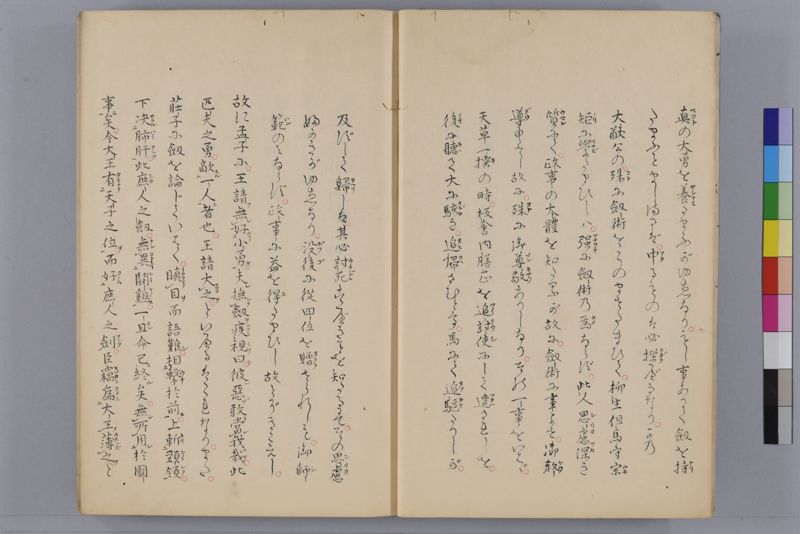
翻刻
【右丁】
真(マコト)の大⁻勇を養(ヤシナヒ)たまふがゆゑなり。もし事ありて剣を持(トリ)
たまふことましまさば。中(アタ)るものは必 挫(クダク)べきなり。かの
大⁻猷公の、殊(コト)に剣⁻術をこのませたまひて。柳₋生但₋馬₋守 宗(ムネ)
矩(ノリ)に学(マナビ)たまひしは。強(アナカチ)に剣⁻術の為(タメ)ならず。此₋ 人 思(シ)⁻慮(リヨ)深(フカ)き
質(ウマレ)にて。政⁻事の大⁻体を知たるが故に。剣⁻術に事よせ。御 教(ケウ)⁻
導(ダウ)申せし故に。殊(コト)に御 尊(ソン)⁻敬(キヤウ)ありしなり。その一⁻事をいはゞ。
天₋草一⁻揆(キ)の時。板₋倉内⁻膳₋正を追(ツイ)⁻討(タウ)⁻使(シ)にして遣(ツカハ)されしを。
後(ノチ)に聴(キヽ)て大に駭(オドロ)き。追(オヒ)₋帰(カヘ)さむとて。馬にて《振り仮名:追₋駆|オツカケ》たりしが。
【左丁】
及ずして帰(カヘリ)しは。其必 討(ウチ)₋死(ジニ)すべきことを知たるにて。その思(シ)⁻慮(リヨ)
ふかきがゆゑなり。没(ボツ)⁻後(ゴ)に従四⁻位を贈(オクラ)せられしも。御 師(シ)⁻
範(ハン)のみならず。政⁻事に益を得(エ)たまひし故とぞきこえし。
故に孟⁻子に。王請 ̄フ無 ̄レ_レ好 ̄ムコト_二小⁻勇 ̄ヲ_一。夫 ̄レ撫 ̄シテ_レ剣 ̄ヲ疾(ニクミ)₋視(ミテ)曰 ̄ク。彼 ̄レ悪 ̄ゾ敢 ̄テ当 ̄ン_レ我 ̄ニ哉(ヤ)。此
匹⁻夫之勇。敵 ̄スル_二 一₋人 ̄ニ_一者也。王請大 ̄ニセヨ_レ之 ̄ヲ、といへるはこれなり。また。
荘⁻子に剣を論じていはく。瞋(イカラシテ)_レ目 ̄ヲ而語₋難 ̄シ。相_二⁻撃(ウチ)於前 ̄ニ_一。上 斬(キリ)_二頚(ケイ)⁻領(レヲ)_一。
下 決(サクル)_二肺肝(ハイカン) ̄ヲ_一。此 庶(シヨ)⁻人之₋剣。無(ナシ)_レ異(コトナルコト)_二闘(トイ)⁻鶏(ケイ) ̄ニ_一。一⁻旦(タン)命已 ̄ニ₋終 ̄ル矣。無 ̄シ_レ所_レ用 ̄ル_二於国⁻
事 ̄ニ_一矣。今大⁻王 有(タモチテ)_二 天⁻子之位 ̄ヲ_一而 好(コノム)_二庶⁻人之 剣(ケンヲ)_一。臣 窃(ヒソカニ)為(タメニ)_二大⁻王 ̄ノ_一薄(ウスンズ)_レ之 ̄ヲ、と
現代語訳
【右丁】
真の大勇を養われているからである。もし事があって剣を取られることがあれば、当たるものは必ず砕けるであろう。あの大猷公が、殊に剣術をお好みになって、柳生但馬守宗矩に学ばれたのは、強いて剣術のためではない。この人は思慮深い性質で、政事の大体を知っているので、剣術に事寄せて御教導申し上げたからで、殊に御尊敬があったのである。その一事を言えば、天草一揆の時、板倉内膳正を追討使として遣わされたのを、後に聞いて大いに驚き、追い帰そうとして、馬で追いかけたが、
【左丁】
及ばずして帰ったのは、その必ず討ち死にすべきことを知ったからで、その思慮深いゆえである。没後に従四位を贈られたのも、御師範のみならず、政事に益を得られた故と聞こえた。
故に孟子に「王よ、小勇を好むことを請うなかれ。それ剣を撫でて疾視して曰く、彼はどうして敢えて我に当たろうか。これは匹夫の勇で、一人に敵する者である。王よ、請うてこれを大にせよ」と言っているのはこのことである。また荘子が剣を論じて言うには「目を瞋らして語り難く、前で相撃つ。上は頚領を斬り、下は肺肝を決く。これは庶人の剣で、闘鶏と異なることなし。一旦命已に終わり、国事に用いる所なし。今大王は天子の位を有して庶人の剣を好む。臣ひそかに大王のために之を薄んず」と
英語訳
【Right page】
It is because he cultivates true great courage. If an occasion arose and he were to take up a sword, whatever it strikes would surely be shattered. That the great Lord Daiyū particularly favored swordsmanship and studied under Yagyū Tajima-no-kami Munenori was not forcibly for the sake of swordsmanship itself. This person had a deeply thoughtful nature and understood the general principles of governance, so using swordsmanship as a vehicle, he offered guidance, and thus received particular respect. To mention one instance: during the Amakusa Rebellion, when Itakura Naizen-shō was sent as a punitive commander, hearing of this later, he was greatly alarmed and tried to call him back, pursuing on horseback,
【Left page】
but failing to reach him and returning—this was because he knew that [Itakura] would surely die in battle, due to his deep thoughtfulness. That he was posthumously granted the court rank of Jushii was not only for being an honored teacher but because benefits were gained in governance, so it was heard.
Therefore, in Mencius it says: "Your Majesty, please do not favor petty courage. To stroke one's sword and glare fiercely saying 'How dare he oppose me!'—this is the courage of a common man, fit only to face a single opponent. Your Majesty, please make it great." This refers to this very thing. Also, Zhuangzi, discussing swords, says: "Glaring with angry eyes, speaking harshly, striking before one's face, cutting necks and heads above, piercing lungs and liver below—this is the sword of common people, no different from cockfighting. In one day life ends, with no use in affairs of state. Now the great king possesses the position of Son of Heaven yet favors the sword of commoners. Your subject secretly considers this unworthy of the great king."