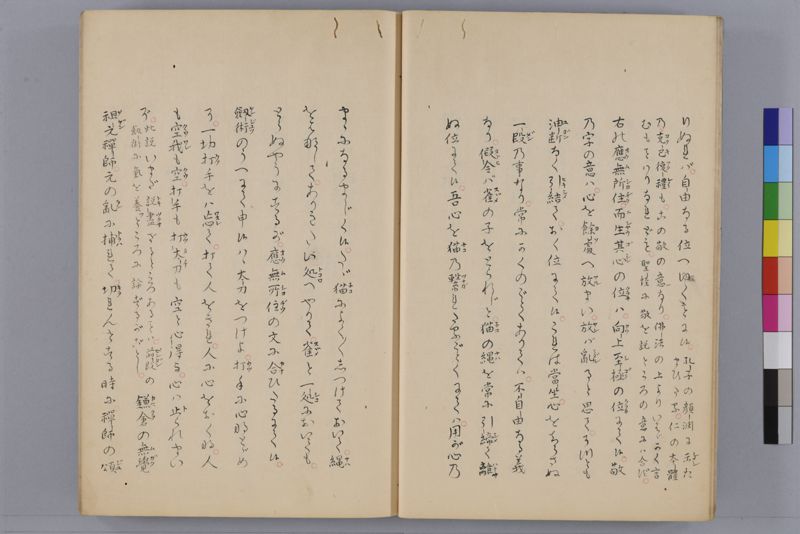
翻刻
【右丁】
りぬれば。自⁻由なる位へゆくことに候。《割書:孔₋子の顔⁻淵に示(シメシ)た|まひたる。仁の本⁻体》
《割書:の、克(コク)⁻己(キ)復(フク)⁻礼(レイ)も。この敬の意なり。仏⁻法の上よりいはゞかく言|むもことはりなれども。聖⁻経に敬を説ところの意には合ず。》
右の応無所住(オウムシヨヂウ)。而生其心(ニシヤウゴシン)の位(クラヰ)は。向(コウ)⁻上至(シ)⁻極(ゴク)の位(クラヰ)にて候。敬
の字の意は。心を《振り仮名:余⁻処|ヨソ》へ放(ヤル)まい。放(ヤレ)ば乱(ミダル)ると思て。そつとも
油(ユ)⁻断(ダン)なく《振り仮名:引⁻結|ヒキシメ》て。おく位にて候。これは当⁻坐。心をちらさぬ
一⁻段(ダン)の事なり。常にかくのごとくありては不⁻自⁻由なる義
なり。《振り仮名:仮₋令|タトヒ》ば雀(スヾメ)の子をとられじと。猫(ネコ)の縄(ナハ)を常に引⁻締(シメ)て離(ハナサ)
ぬ位にて候。吾心を猫(ネコ)の繋(ツナガ)れたるごとくにては。用が心の
【左丁】
まゝになるまじく候。たゞ猫(ネコ)によく〳〵しつけておいて。縄(ナハ)
をはなして。ありきたい処(トコロ)へやりて。雀(スヾメ)と一⁻処(シヨ)においても。
とらぬやうにするが。応無所住(オウムシヨヂウ)の文に合(カナ)ひたるにて候。
剣(ケン)⁻術(ジユツ)のうへにて申候はゝ太⁻刀をつけよ。打(ウツ)手に心なとゞめ
そ。一⁻切 打(ウツ)手をは忘(ワスレ)て。打て人をきれ。人に心をおくな。人
も空(クウ)我(ワレ)も空(クウ)。打⁻手も《振り仮名:打₋太⁻刀|ウツタチ》も空と心₋得よ。心は止(ト)られまい
ぞ。《割書:此説いまだ説(トキ)₋尽(ツクサ)ざるところあることは。前(ゼン)⁻段(ダン)の|剣⁻術に気を養 ̄フところに論ずるがごとし。》鎌倉(カマクラ)の無覚(ムガク)
祖(ソ)⁻元(ゲン)禅⁻師。元の乱(ラン)に捕(トラハ)れて。切(キラ)れんとする時に禅⁻師の頌(ジユ)
現代語訳
【右丁】
積み重ねれば、自由な位へ行くことになる。《割書:孔子が顔淵に示された仁の本体である克己復礼も、この敬の意である。仏法の上から言えばこのように言うのももっともだが、聖経で敬を説くところの意味には合わない。》
右の応無所住而生其心の位は、向上至極の位である。敬の字の意は、心を余所へやるまい、やれば乱れると思って、そっと油断なく引き締めておく位である。これは当座、心を散らさない一段の事である。常にこのようであっては不自由な義である。例えば雀の子を取られまいと、猫の縄を常に引き締めて離さない位である。わが心を猫が繋がれているようにしては、用が心の
【左丁】
ままにならないであろう。ただ猫によくよくしつけておいて、縄をはなして、歩きたい処へやって、雀と一処にいても、取らないようにするのが、応無所住の文に合致するのである。
剣術の上で申すならば太刀をつけよ。打つ手に心など留めそ。一切打つ手は忘れて、打って人を切れ。人に心を置くな。人も空、我も空。打ち手も打つ太刀も空と心得よ。心は止められまいぞ。《割書:この説いまだ説き尽くさないところがあることは、前段の剣術に気を養うところに論じるとおりである。》鎌倉の無覚祖元禅師、元の乱に捕らえられて、切られんとする時に禅師の頌
英語訳
【Right page】
When accumulated, one reaches the stage of freedom. 《Commentary: The克己復礼 (overcoming the self and returning to propriety), which is the essence of benevolence that Confucius showed to Yan Yuan, also has this meaning of reverence. From the Buddhist perspective, it would be reasonable to say this, but it does not match the meaning where reverence is explained in the sacred scriptures.》
The aforementioned stage of "ōmu-sho-jū ni-shō-go-shin" (応無所住而生其心, one should produce that mind which does not abide anywhere) is the stage of supreme advancement. The meaning of the character for reverence is the stage where one thinks "I must not let my mind go elsewhere, for if I do it will become disturbed," and keeps it gently but vigilantly restrained. This is a temporary matter of not scattering the mind. To be always like this would be unfree. For example, it is like constantly keeping a cat's rope tightly held, never releasing it, so that sparrows' young won't be taken. If we keep our mind like a tethered cat, our functions will not follow the mind's
【Left page】
will. Simply train the cat thoroughly, release the rope, let it go where it wants to walk, and even when it is together with sparrows, make it so it won't catch them - this accords with the text of "ōmu-sho-jū" (not abiding anywhere).
If we speak in terms of swordsmanship: draw your sword. Do not fix your mind on the striking hand. Forget all about the striking hand and strike to cut the person. Do not place your mind on the person. Both person and self are empty. Understand that both the striking hand and the striking sword are empty. The mind must not be stopped. 《Commentary: That this explanation still has aspects that have not been fully explained is as discussed in the previous section on cultivating qi in swordsmanship.》 Zen Master Mugaku Sogen of Kamakura, when captured during the Mongol invasion and about to be executed, composed this verse: