翻刻
【右丁】
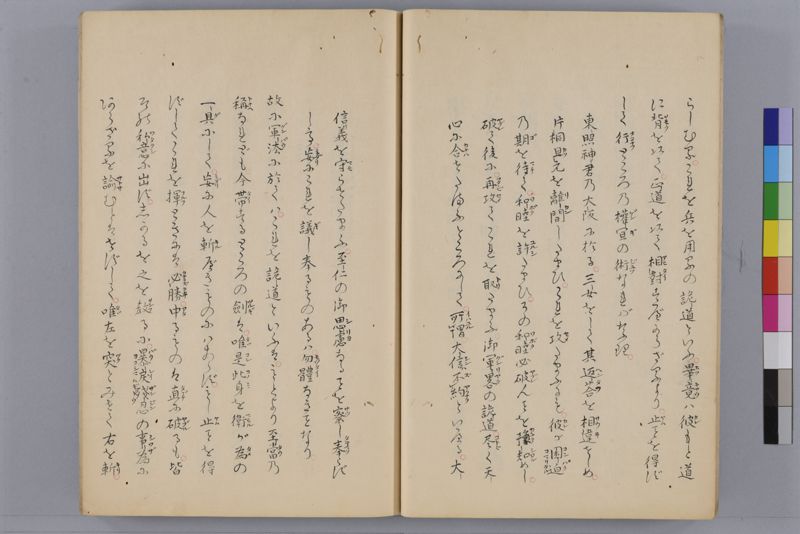
らしむる。これを兵を用るの詭⁻道といふ。畢(ヒツ)⁻竟(キヤウ)は彼(カレ)もと道
に背(ソモク)【ママ】を以て。正⁻道を以て相(アヒ)₋対(タイ)すべからざるより。止(ヤム)ことを得ず
して行(オコナフ)ところの権(ゲン)⁻宜(ギ)の術(ジユツ)なればなり。
東⁻照⁻宮⁻君の大⁻阪に於る。三⁻女をして其 返(ヘン)⁻答(タウ)を相(サウ)⁻違(ヰ)せしめ。
片₋桐 且(カツ)₋元を離(リ)⁻間(カン)したまひ。これを攻(セメ)たまふにも。彼(カレ)が《振り仮名:困⁻迫|コンパク|コマリタル》
の期(ゴ)を待(マチ)て。和(ワ)⁻睦(ボク)を許(ユルシ)たまひ。その和(ワ)⁻睦(ボク)必 破(ヤブレ)んことを《振り仮名:予₋知|カネテシロシ》めし。
破(ヤブレ)て後に。再攻(フタヽビセメ)てこれを取(トリ)たまふ。御 軍(グン)⁻略(リヤク)の詭⁻道。尽(コト〴〵)く天⁻
心に合(カナハ)せたまふところにして。《振り仮名:所_レ謂|イハユル》大⁻信(シン) ̄ハ不(ズ)_レ約(ヤクナラ)といへる。大⁻
【左丁】
信⁻義を守(マモ)らせたまふ。至⁻仁の御 思(シ)⁻慮(リヨ)なることを察(サツ)し奉(タテマツ)らず
して。妄(ミダリ)にこれを議(ギ)し奉るものあるは。勿体(モツタイ)なきことなり。
故に軍)(グン)⁻法(パウ)に於ては。これを詭⁻道といふは。もとより至⁻当(タウ)の
称(トナヘ)なれども今 帯(タイ)するところの剣(ツルギ)は。唯(タヾ)是(コレ)此身(コノミ)を衛(マモル)が為(タメ)の
一⁻具(グ)にして。妄(ミダリ)に人を斬(キル)べきものにはあらず。もし止(ヤム)ことを得
ずしてこれを揮(フルフ)ときには必(カナラズ)₋勝(カチ)。中)(アタ)るものは直(タヾチ)に破(ヤブル)るも。皆
その《振り仮名:私⁻意|ワタクシ》に出ず。しかるを之を強(ヲシフ)るに。《振り仮名:暴⁻戻残⁻忍|バウレイザンジン|ヨコシマムギドウ》の《振り仮名:事⁻為|シワザ》に
あらざるを諭(サトサ)むとはせずして。唯(タヾ)左を突(ツク)とみせて右を斬(キリ)。
現代語訳
【右丁】
らしめる。これを兵を用いるの詭道という。結局は彼がもと道に背くを以て、正道を以て相対すべからざるより、やむことを得ずして行うところの権宜の術なればなり。
東照宮君の大阪における、三女をしてその返答を相違せしめ、片桐且元を離間したまい、これを攻めたまうにも、彼が困迫の期を待って、和睦を許したまい、その和睦必ず破れんことを予知しめし、破れて後に、再び攻めてこれを取りたまう。御軍略の詭道、ことごとく天心に適わせたまうところにして、いわゆる大信は約ならずといえる、大
【左丁】
信義を守らせたまう。至仁の御思慮なることを察し奉らずして、妄りにこれを議し奉る者があるのは、もったいないことである。
故に軍法においては、これを詭道というのは、もとより至当の称なれども、今帯するところの剣は、ただこれこの身を守るための一具にして、妄りに人を斬るべきものではない。もしやむことを得ずしてこれを振るうときには必勝、中るものは直ちに破るも、皆その私意に出ず。しかるをこれを強いるに、暴戻残忍の仕業にあらざるを諭そうとはせずして、ただ左を突くとみせて右を斬り、
英語訳
【Right page】
This is called the way of deception in employing troops. Ultimately, since the enemy fundamentally goes against the Way, one cannot confront them with the righteous path, so this is an expedient technique employed unavoidably.
When Lord Toshogu was at Osaka, he had the three daughters give contradictory responses, sowed discord with Katagiri Katsumoto, and even when attacking, he waited for their time of distress, granted reconciliation, foreseeing that this reconciliation would inevitably break, and after it broke, he attacked again and captured it. The deceptive strategies in his military tactics all accorded with Heaven's will, embodying what is called "great faith does not require promises," great
【Left page】
He maintained faith and righteousness. It is presumptuous for anyone to criticize this without recognizing that it was the consideration of supreme benevolence.
Therefore, in military law, calling this the "way of deception" is naturally an appropriate designation. However, the sword one wears today is merely an implement to protect oneself, not something to recklessly cut people with. If one is compelled to wield it unavoidably, one must win; what strikes must immediately break through, but all this does not come from personal intent. Yet instead of teaching that compelling this is not a matter of violent, cruel, and brutal conduct, they merely show striking left while cutting right,