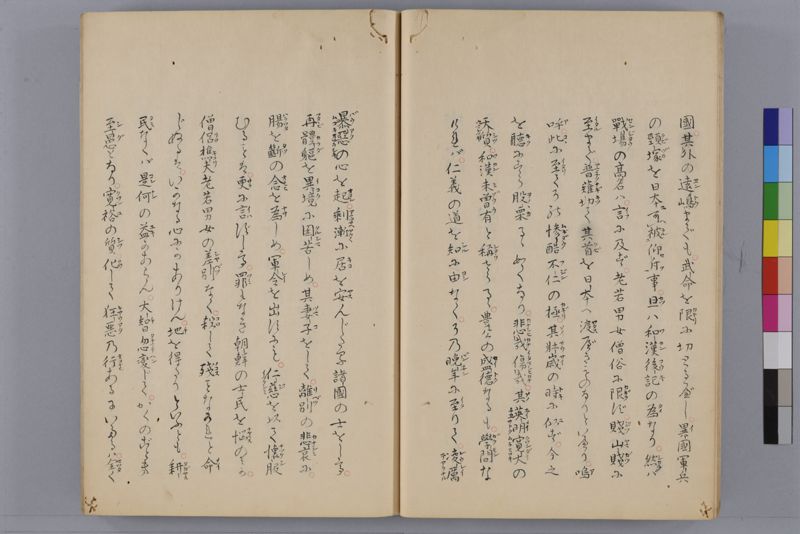
翻刻
【右丁】
国。其₋外の遠(ヱン)⁻島(トウ)までも。武⁻命を限(カキリ)に切とるべし。異(イ)⁻国軍⁻兵
の頸(クビ)₋塚(ヅカ)を日本 ̄ニ可(ヘ)_レ被(ラル)_二仰 ̄セ₋付 ̄ケ_一事。且(カツ)は和(ワ)⁻漢(カン)後(コウ)⁻記(キ)の為(タメ)なり。然(シカラ)ば
戦(セン)⁻場(ジヨウ)の高⁻名は。言(イフ)に及ず。老若男女僧俗に限(カギラ)ず。賤(シヅ)《振り仮名:山⁻賤|ヤマガツ》に
至(イタル)まで。普(アマネク)薙(ナギ)₋切(キツ)て其 首(クビ)を日⁻本へ渡(ワタス)べきものなりといへり。嗚(ア)
呼(ア)。此(コヽ)に至(イタリ)てその《振り仮名:惨⁻酷|ムギダウ》不(フ)⁻仁(ジン)の極(カギリ)。其(ソノ)壮(サウ)⁻歳(サイ)の時(トキ)に似(ニ)ず。今之
を聴(キク)にすら《振り仮名:股⁻栗|ヲノヽカ》るゝ如くなり。悲(カナシヒ)₋哉(カナ)傷(イタマシヒ)₋哉(カナ)。其(ソノ)《振り仮名:英⁻明|エイメイ|チヱサトク》《振り仮名:寛⁻大|クワンダイ|ムネヒロキ》の
《振り仮名:夭⁻質| シツ|ウマレツキ》。和漢(ワカン)未曾有(ミゾウウ)と称(シヨウ)せらるゝ。豊⁻公の盛(セイ)⁻徳(トク)なるも。学(ガク)⁻問(モン)な
ければ。仁義の道を知(シル)に由(ヨシ)なく。その晩(バン)⁻年(ネン)に至(イタ)りて。《振り仮名:凌⁻厲|レウレイ|テアラナル》
【左丁】
《振り仮名:暴⁻悪|バウアク|ムゴキオソラシキ》の心を起(オコシ)。剰(アマツサヘ)漸(ヤウ〳〵)に居(キヨ)を安(ヤス)んじたる諸⁻国の士をして。
再(フタヽビ)《振り仮名:体⁻軀|カラダ》を《振り仮名:異⁻境|イコク》に《振り仮名:困⁻苦|クルシマ》【囷は誤】しめ。其 妻(ツマ)₋子(コ)をして。離(リ)⁻別(ベツ)の《振り仮名:悲⁻哀|カナシミ》に。
腸(ハラワタ)を断(タツ)の念(オモヒ)を為(ナサ)しめ。軍⁻令(レイ)を出すにも。《振り仮名:仁⁻慈| ジ|イツクシミ》を以て《振り仮名:懐⁻服|ナツケシ》
むることは。更(サラ)に言(イハ)ずして。罪(ツミ)もなき朝⁻鮮の士⁻民を悩(ナヤマス)のみか。
僧⁻侶(リヨ)《振り仮名:樵⁻夫|キコリ》老若男女の差(シヤ)⁻別(ベツ)なく。殺(コロ)して残(ノコス)ことなかれと命(メイ)
じぬるは。いかなる心にかありけん。地(チ)を得たりといふとも。耕(タガヤス)⁻
民(タミ)なくば是(コレ)何(ナン)の益(エキ)かあらん。大⁻智(チ)忽(タチマチ)変(ヘン)じて。かくのごとき
至(シ)⁻愚(グ)となり。寛(クワン)⁻裕(ユ)の質(シツ)。化(クワ)して狂(キヤウ)⁻悪(アク)の行(オコナヒ)あるにいたるは。全(マツタ)く
現代語訳
【右丁】
国。その他の遠島までも、武力をもって限りなく切り取るべし。異国の軍兵の首塚を日本に造らせるべき事。かつは和漢後記のためなり。然らば戦場の高名は、言うに及ばず。老若男女僧俗に限らず、山賤に至るまで、あまねく薙ぎ切ってその首を日本へ渡すべきものなり」と言っている。嗚呼、ここに至ってその惨酷不仁の極み、その壮年の時に似ず。今これを聞くだけでも身震いするようである。悲しいかな、傷ましいかな。その英明寛大の生来の資質、和漢未曾有と称せられる豊公の盛徳なるも、学問がなければ、仁義の道を知る由もなく、その晩年に至って、凌厲
【左丁】
暴悪の心を起こし、あまつさえ漸く居を安んじた諸国の士をして、再び身体を異境に苦しませ、その妻子をして、離別の悲哀に、腸を断つ思いをさせ、軍令を出すにも、仁慈をもって懐服させることは、更に言わずして、罪もない朝鮮の士民を悩ますのみか、僧侶・樵夫・老若男女の差別なく、殺して残すことなかれと命じたのは、いかなる心であったのであろうか。地を得たといっても、耕す民がなければこれ何の益があろうか。大智がたちまち変じて、かくのごとき至愚となり、寛裕の質が化して狂悪の行いあるに至るは、全く
英語訳
【Right page】
countries. Even the distant islands beyond, should all be conquered without limit by military force. The matter of constructing mounds of heads of foreign soldiers in Japan. This is also for the sake of Japanese and Chinese historical records. Therefore, not only the distinguished military achievements on the battlefield, but regardless of old and young, men and women, monks and laypeople, even down to mountain peasants, all should be universally cut down and their heads transported to Japan," it states. Alas! Reaching this point of extreme cruelty and inhumanity, unlike his vigor in younger years. Even now, merely hearing this makes one shudder. How sad! How tragic! Despite his naturally gifted intelligence and magnanimity, the great virtue of Lord Toyotomi that was called unprecedented in Japan and China, without learning, there was no way to know the path of benevolence and righteousness, and in his later years, he developed fierce and
【Left page】
violent and evil intentions. Moreover, he made the warriors of various provinces who had gradually settled into peaceful lives once again suffer physically in foreign lands, and made their wives and children experience the sorrow of separation and heart-breaking thoughts. When issuing military orders, rather than using compassion to win hearts, he not only tormented the innocent people of Korea, but commanded that monks, woodcutters, old and young, men and women without distinction should all be killed leaving none alive - what manner of heart was this? Even if territory is gained, without farmers to cultivate it, what benefit could there be? Great wisdom suddenly transformed into such utter foolishness, and his magnanimous nature changed into mad and evil conduct - this was entirely