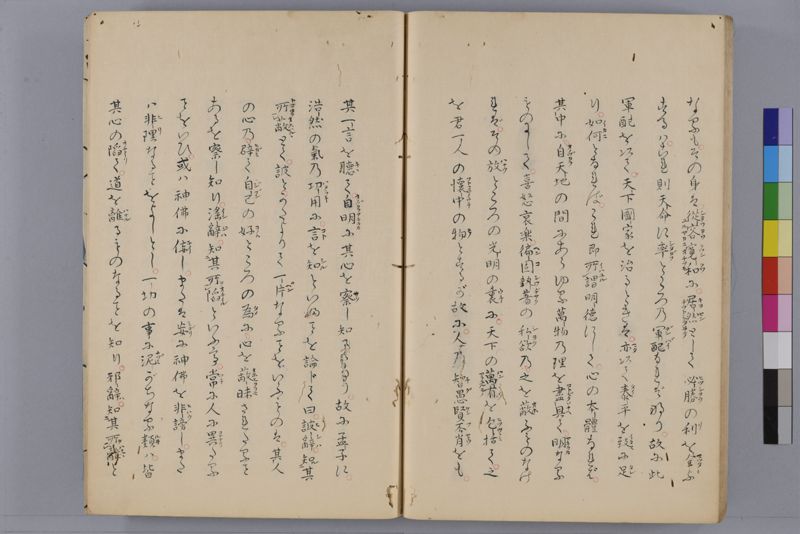
翻刻
【右丁】
なるも。その身は。《振り仮名:従⁻容|シヨウヨウ|ユルヤカニ》《振り仮名:寛⁻和|クワンクワ|オチツキ》に。《振り仮名:居⁻然|キヨセン|ヂツトシテヰテ》として必(ヒツ)⁻勝(シヨウ)の利(リ)を全(マツタ)ふ
するは。これ則天⁻命に率(シタガフ)ところの軍(グン)⁻配(バイ)なればなり。故に此
軍⁻配を以て。天⁻下国⁻家を治るときは。亦(マタ)以て泰(タイ)⁻平を致(イタス)に足(タレ)
り。如何(イカニ)となれば。これ即《振り仮名:所_レ謂|イハユル》明⁻徳にして。心の本⁻体なれば。
其-中に、自(オノヅカラ)天⁻地の間にあらゆる万⁻物の理を尽(コト〴〵ク)-具(ソナヘ)て、明(アキラカ)なる
ものにして。喜怒哀楽。徧(ヘン)⁻固(コ)執(シフ)⁻著(ヂヤク)の私(シ)⁻欲(ヨク)の、之を蔽(オホ)ふものなけ
れば。その放(ハナツ)ところの光⁻明の裏(ウチ)に。天下の《振り仮名:万⁻有|ハンユウ|アラユルモノ》を《振り仮名:包⁻括|ヒツツミ》て。之
を君一⁻人の懐(フトコロノ)-中(ウチ)の物(モノ)とするが故に。人の知愚(チグ)賢(ケン)不(フ)⁻肖(セウ)をも。
【左丁】
其一⁻言を聴(キヽ)て。自明(オノヅカラアキラカ)に其心を察(サツ)し知る□【事】なり。故に孟⁻子に。
浩⁻然の気の《振り仮名:功⁻用|ハタラキ》に。言(コト)を知(シル)といふことを論じて曰。詖(ヒ)⁻辞(シハ)。知 ̄ル_二其
所(トコロヲ)_一_レ蔽(オホハルヽ)とて。詖と、かたよりて一⁻片(ペン)なることをいふものは。其-人
の心の、辟(ヒガミ)て《振り仮名:自⁻己|ジブン》の好(コノム)ところの為(タメ)に、心を蔽(オホヒ)-昧(クラマ)されたること
あるを察し知り。淫(イン)⁻辞(ジハ)。知_二其所 ̄ヲ_一_レ陥(オチイル)といふて。常(ツネ)に人に異(コトナリ)たる
ことをいひ。或は神仏に佞(ネイ)し。または妄(ミダリ)に神仏を非(ヒ)⁻謗(ハウ)し。また
は非(ヒ)⁻理(リ)なることをよしとし。一⁻切の事に泥(ナヅミ)がちなる類(ルヰ)は。皆
其心の陥(オチイリ)て。道を離(ハナル)るものなることを知り。邪⁻辞 ̄ハ。知_二其所 ̄ヲ_一_レ離(ハナルヽ)と
現代語訳
【右丁】
なるも、その身は従容寛和に居然として必勝の利を全うするのは、これ則ち天命に従うところの軍配なればである。故にこの軍配をもって天下国家を治めるときは、また以て太平を致すに足る。如何となれば、これ即ちいわゆる明徳にして、心の本体なれば、その中に、自ずから天地の間にあらゆる万物の理を悉く具えて、明らかなるものにして、喜怒哀楽、偏固執著の私欲が、これを蔽うものがなければ、その放つところの光明の裏に、天下の万有を包括して、これを君一人の懐中の物とするが故に、人の知愚賢不肖をも、
【左丁】
その一言を聴いて、自ずから明らかにその心を察し知る事なり。故に孟子に、浩然の気の功用に、言を知るということを論じて曰く、詖辞は、その蔽わるるところを知るとて、詖と、偏よりて一片なることをいうものは、その人の心が、僻んで自己の好むところのために、心を蔽い昧まされたることあるを察し知り、淫辞は、その陥るところを知るといって、常に人に異なることをいい、或いは神仏に諂い、または妄りに神仏を非謗し、または非理なることを良しとし、一切の事に泥みがちなる類は、皆その心の陥って、道を離るるものなることを知り、邪辞は、その離るるところを知ると
英語訳
【Right page】
yet their person remains composed and gentle, sitting calmly while achieving complete victory. This is military command that follows the Mandate of Heaven. Therefore, when governing the realm with this military command, it is also sufficient to bring about great peace. Why is this so? Because this is what is called "bright virtue" and is the original substance of the mind. Within it, all the principles of the myriad things between heaven and earth are naturally and completely possessed in clarity. When there are no private desires of joy, anger, sorrow, pleasure, partiality, stubbornness, attachment, or clinging to obscure it, then within the brilliance it emits, it encompasses all things under heaven and makes them as objects within the ruler's own bosom. Therefore, regarding people's wisdom, foolishness, worthiness, or unworthiness,
【Left page】
by listening to just one word, one naturally and clearly perceives and knows their minds. Therefore, Mencius discusses the function of the vast qi in "knowing words," saying: "Regarding biased speech, I know what obscures it" - when speech is partial and one-sided, one perceives and knows that the person's mind has become warped and their heart obscured and darkened by what they personally favor. "Regarding excessive speech, I know where it falls into error" - those who constantly speak differently from others, either flattering gods and Buddhas, or wildly slandering gods and Buddhas, or considering unreasonable things good, and who tend to get mired in all matters, one knows that their minds have all fallen away and departed from the Way. "Regarding evil speech, I know what it departs from" -