翻刻
【右丁】
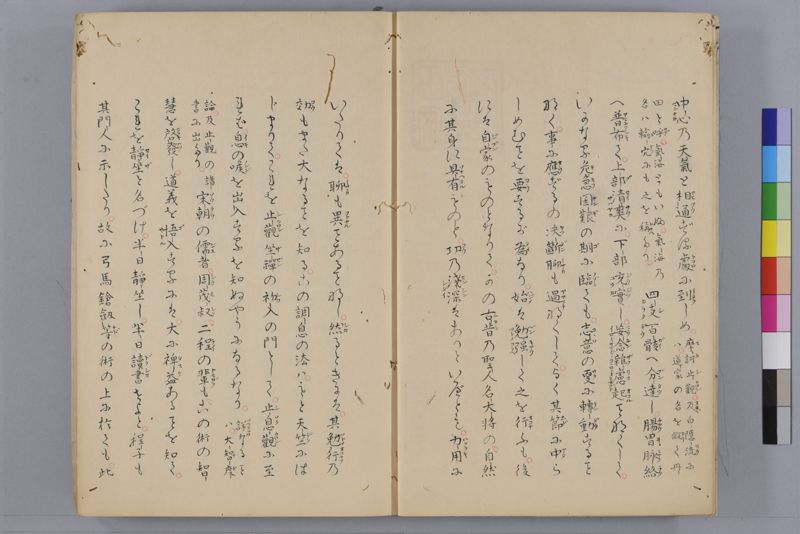
《振り仮名:忠⁻心| |マンナカ 》の天⁻気と相(アイ)-通(ツウ)ずる処(トコロ)に到(イタラ)しめ《割書:《振り仮名:摩⁻訶|マカ》《振り仮名:止⁻観|シクワン》。及(オヨビ)白⁻隠⁻流(リウ)に|は。道⁻家の名を仮(カリ)て丹⁻》
《割書:田と呼(ヨブ)。気⁻海ともいふ。気⁻海の|名は《振り仮名:輸⁻穴|ユケツ》にも之を称(トナヘ)たり。》《振り仮名:四肢百⁻骸| シ ガイ|カラタヂウ 》へ分(ブン)⁻達(タツ)し。腸(チヤウ)⁻胃(ヰ)脈(ミヤク)⁻絡(ラク)
へ《振り仮名:普⁻布|アマネクシキ》て。上⁻部(ブ)《振り仮名:清⁻爽|セイサウ|サハヤカ 》に。下⁻部《振り仮名:充⁻実|ジウジツ|ユタカ 》し。《振り仮名:妄⁻念|マウネン|イロ〳〵サマ〴〵ノ》 《振り仮名:雑⁻慮|ザフリヨ|コヽロノオモヒゴト》 起(オコル)ことなくして。
いかなる《振り仮名:危⁻急|キキフ》《振り仮名:困⁻難|ナンギ》の期(ゴ)に臨(ノゾミ)ても。《振り仮名:志⁻意|コヽロ》の更(サラ)に《振り仮名:転⁻動|テンダウ》すること
なく。事に応(オウ)ずるの《振り仮名:決⁻断|ケツダン》聊(イサヽカ)も過(アヤマチ)なくして。よく其 節(ホド)に中(アタ)ら
しめむことを要(ヨウ)するが為(タメ)なり。始(ハジメ)は《振り仮名:勉⁻強|ベンキヤウ|ツトメコラヘ》して之を行(オコナ)ふも。後
には《振り仮名:自⁻家|ジブン》のものとなりて。かの《振り仮名:古⁻昔|ムカシ》の聖⁻人名⁻大⁻将の、自⁻然
に其身に《振り仮名:具⁻有|ソナヘタル》ものと。功(コウ)の《振り仮名:浅⁻深|センシン|シダイ》はありといへども【濁点の付間違い】。《振り仮名:力⁻用|ハララキ》に
【左丁】
いたりては。聊(イサヽカ)も異(コトナル)ことあることなし。然(シカ)るときには。其《振り仮名:勉-行|ツトメオコナフ》の
効(コウ)もまた大なることを知る。この調⁻息の法は。もと天⁻竺(ヂク)には
じまりて。これを《振り仮名:止⁻観|シクワン》《振り仮名:坐⁻禅|ザゼン》の初(シヨ)⁻入の門として。《振り仮名:止⁻息⁻観|シソククワン》に至
れば。息(イキ)の喉(ノンド)を出-入するを知ぬやうになるなり。《割書:詳(ツマヒラカ)なること|は。大⁻智(チ)⁻度(ド)⁻》
《割書:論。及止⁻観の諸⁻|書に出たり》宋(ソウ)⁻朝(テウ)の儒(ジユ)⁻者、周(シウ)⁻茂(モ)⁻叔(シク)、二 程(テイ)の輩(トモガラ)も、この術の智⁻
慧を《振り仮名:啓-発|ヒラキハツ》し。道義を《振り仮名:悟⁻入|ゴ |サトル 》するには。大に《振り仮名:裨⁻益|タスケ》あることを知て。
これを静(セイ)⁻坐(ザ)と名づけ。半⁻日静⁻坐し。半⁻日 読(ドク)⁻書(シヨ)せよと。程⁻子も
其門⁻人に示したり。故に弓馬鎗剣-等(ナド)の術の上に於ても。此
現代語訳
【右丁】
中心の天気と相通ずる処に到らしめ(摩訶止観および白隠流には、道家の名を借りて丹田と呼ぶ。気海ともいう。気海の名は経穴にもこれを称した。)、四肢百骸へ分達し、腸胃脈絡へ普く行き渡らせて、上部を清爽に、下部を充実させ、妄念・雑慮が起こることなくして、いかなる危急困難の時に臨んでも、志意がさらに転動することなく、事に応ずる決断に少しも過ちなくして、よくその節度に中(あた)らしめることを要するためである。始めは勉強してこれを行うが、後には自分のものとなって、かの古昔の聖人名将の、自然にその身に具有するものと、功の浅深はあるといえども、力用に
【左丁】
いたっては、少しも異なることはない。そうなれば、その勉行の効果もまた大なることを知る。この調息の法は、もと天竺に始まって、これを止観・坐禅の初入の門として、止息観に至れば、息が喉を出入するのを知らないようになるのである。(詳しいことは、大智度論および止観の諸書に出ている。)宋朝の儒者、周茂叔、二程の輩も、この術が智恵を啓発し、道義を悟入するには、大いに裨益があることを知って、これを静坐と名づけ、半日静坐し、半日読書せよと、程子もその門人に示した。故に弓馬槍剣等の術の上においても、この
英語訳
【Right page】
center to reach the place where it communicates with the heavenly qi (In Mahāśamatha-vipaśyanā and the Hakuin school, borrowing the name from Daoism, this is called the dantian. It is also called the sea of qi. The name "sea of qi" was also applied to acupuncture points.), spreading it to the four limbs and hundred bones, pervading the intestines, stomach, and meridian networks, making the upper body clear and refreshed, the lower body充實 充实 充filled and substantial, without arising delusive thoughts or miscellaneous worries, so that even when facing any crisis or difficulty, one's will and intention will not waver at all, and decisions in responding to situations will have no errors whatsoever, being able to hit the proper measure. This is the purpose. At first one practices this through diligent effort, but later it becomes one's own, and like what the ancient sages and great generals naturally possessed in their bodies, though there are differences in the depth of accomplishment, when it comes to actual power and function,
【Left page】
there is no difference at all. When this happens, one knows that the effects of diligent practice are also great. This method of breath regulation originally began in India, used as the initial gateway to śamatha-vipaśyanā and seated meditation. When one reaches the stage of breath-cessation observation, one becomes unaware of the breath entering and leaving through the throat. (Details appear in the Mahāprajñāpāramitā-śāstra and various texts on śamatha-vipaśyanā.) The Confucian scholars of the Song dynasty - Zhou Maoshu and the two Cheng brothers - also knew that this technique greatly benefits the development of wisdom and the realization of moral principles, so they named it "quiet sitting" and taught that one should spend half the day in quiet sitting and half the day reading books. Master Cheng also instructed his disciples accordingly. Therefore, even in the arts of archery, horsemanship, spear, and sword, this