翻刻
【右丁】
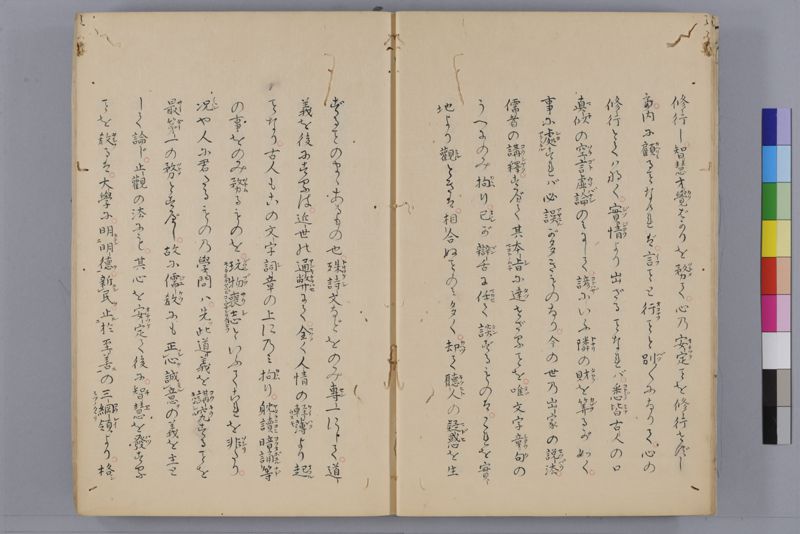
修⁻行し。智⁻慧才⁻覚(カク)ばかりを務(ツトメ)て。心の《振り仮名:安⁻定|オチツク》ことを修⁻行せずし
て。内に顧(カヘリミ)ることなければ言(イフ)ことと行(オコナフ)ことと別(ベツ)〳〵になりて。心の
修⁻行とてはなく。実(ジツ)⁻情(ジヨウ)より出ざることなれば。悉(コト〴〵ク)皆(ミナ)古⁻人の口
《振り仮名:真⁻似|マネ》の《振り仮名:空⁻言|ソラゴト》《振り仮名:虚⁻論|ウソバナシ》のみにして。諺(コトハザ)にいふ隣(トナリ)の財(タカラ)を算(カゾフ)るが如く。
事に《振り仮名:処|シヨ|アテヽミル》すれば必 誤(アヤマル)が多きものなり。今の世の出⁻家の《振り仮名:説⁻法|セツパウ》。
儒⁻者の《振り仮名:講⁻釈|コウシヤク》。すべて其《振り仮名:本⁻旨| シ|マコトノムネ 》に達(タツ)せざることを。唯(タヾ)文⁻字 章(シヨウ)⁻句(ク)の
うへにのみ拘(カヽハ)り。己(オノレ)が弁(ベン)⁻舌に任(マカセ)て談(タン)ずるものは。これを実⁻
地より観(ミル)ときは。相-合ぬことのみ多く。却(カヘツ)て聴(キク)-人(ヒト)の《振り仮名:疑⁻惑|マドヒ》を生
【左丁】
ずることのまゝあるもの也。殊(トリワケ)詩(シ)⁻文などをのみ専(セン)⁻一にして。道⁻
義を後にするは。近⁻世の《振り仮名:通⁻弊|アシキナラハセ 》にて。全(マツタ)く人⁻情の《振り仮名:軽⁻薄|ケイハク|ウスキ 》より起(オコル)
ことなり。古人もこの文⁻字 詞(シ)⁻章の上にのみ拘(カヽハ)り。《振り仮名:耽⁻読|ヤタラニヨミ》《振り仮名:諳⁻誦|ヨクオボユル》等(ナド)
の事をのみ務(ツトム)るものを。《振り仮名:玩物喪志|グワンブツサウシ|モノヲモテアソビコヽロザシヲウシナフ》といふてこれを非(ソシリ)たり。
況(イハン)や人に君たるものの学⁻問は。先 ̄ツ此道⁻義を《振り仮名:講⁻究|コウキウ|キハメシル 》することを
最(サイ)第(ダイ)⁻一の務(ツトメ)とすべし。故に儒(ジユ)⁻教(ケウ)にも正 ̄フシ_レ心 ̄ヲ誠 ̄ニスル_レ意 ̄ヲの義を主と
して論じ。止⁻観の法にも。其心を《振り仮名:安⁻定|オチツケ》て後に。智(チ)⁻慧(ヱ)を発(ハツ)する
ことを教(ヲシフ)るは。大⁻学に。明 ̄カニシ_二明⁻徳 ̄ヲ_一。新 ̄ニシ_レ民 ̄ヲ。止 ̄ル_二於至⁻善 ̄ニ_一の《振り仮名:三⁻綱⁻領| コウレイ|ミツノクヽリ 》より。格 ̄シ
現代語訳
【右丁】
修行し、智慧才覚ばかりを務めて、心の安定することを修行せずして、内に顧みることがなければ、言うことと行うこととが別々になって、心の修行というものはなく、実情より出ないことなので、ことごとく皆古人の口真似の空言虚論のみであって、諺にいう隣の財を数えるが如く、事に当ててみれば必ず誤ることが多いものである。今の世の出家の説法、儒者の講釈、すべてその本旨に達しないことを、ただ文字章句の上にのみこだわり、己の弁舌に任せて談ずるものは、これを実地より観るときは、相応しないことのみ多く、かえって聞く人の疑惑を生
【左丁】
ずることがままあるものである。とりわけ詩文などのみを専一にして、道義を後にするのは、近世の悪しき習慣であって、まったく人情の軽薄より起こることである。古人もこの文字詞章の上にのみこだわり、耽読暗誦等のことのみを務めるものを、「玩物喪志(物を弄んで志を失う)」といってこれを非難した。ましてや人に君たるものの学問は、まずこの道義を究明することを最第一の務めとすべきである。故に儒教にも「心を正しくして意を誠にする」の義を主として論じ、止観の法にも、その心を安定させて後に、智慧を発することを教えるのは、大学に「明徳を明らかにし、民を新たにし、至善に止まる」の三綱領より、格
英語訳
【Right page】
If one practices only cultivating wisdom and intellect, without practicing the stabilization of the mind, and without looking inward, then what one says and what one does become separate, and there is no cultivation of the mind. Since this does not come from genuine feeling, it is all merely empty words and false theories imitating the ancients, like the proverb says "counting one's neighbor's wealth." When put to the test in actual situations, such approaches are bound to err frequently. The dharma talks of today's monks and the lectures of Confucian scholars, when they fail to reach the true essence and merely stick to written words and phrases, relying on their own eloquence to discourse—when observed from actual practice, they are mostly inappropriate and often create doubt and confusion among listeners.
【Left page】
Particularly focusing exclusively on poetry and prose while relegating moral principles to secondary importance is a corrupt custom of recent times, arising entirely from the superficiality of human nature. The ancients also criticized those who only concerned themselves with written words and phrases, engaging solely in intensive reading and memorization, calling this "losing one's will through playing with things." How much more should the learning of those who rule over people make the investigation of moral principles their foremost duty. Therefore, Confucianism also primarily discusses the principle of "rectifying the heart and making the intention sincere," and the method of śamatha-vipaśyanā teaches that after stabilizing the mind, one should develop wisdom. This follows from the three guiding principles in the Great Learning: "manifesting bright virtue, renovating the people, and abiding in the highest good," leading to the investigation of...