翻刻
【右丁】
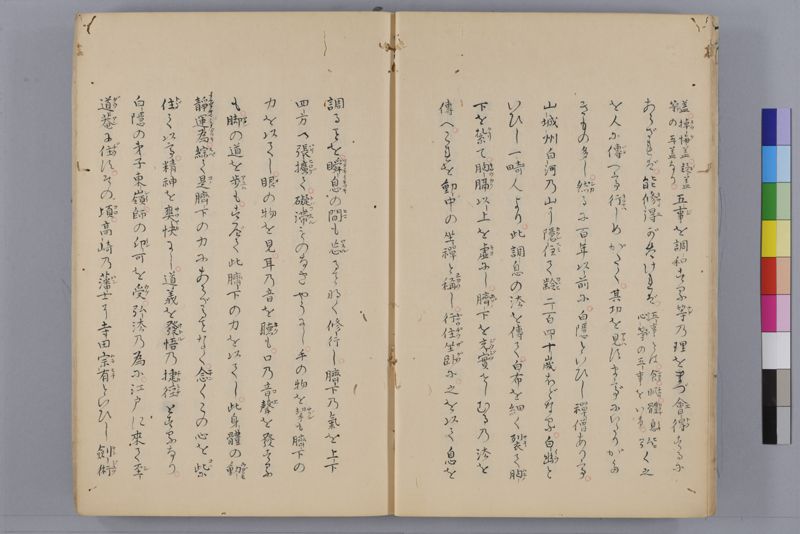
《割書:蓋。《振り仮名:棹⁻悔|テウケ》⁻蓋。疑(ギ)⁻蓋|等(ナド)の五⁻蓋なり。》五⁻事(ジ)を調⁻和する等(ナド)の理をまづ会(エ)⁻得(トク)するに
あらざれば。能《振り仮名:修⁻得|オサメエ》がたければ。《割書:五⁻事とは。食(シヨク)。眠(ネムリ)。体(カタチ)。息(イキ)|心(コヽロ)⁻等(ナド)の五⁻事をいふ。》弘(ヒロ)く之
を人に伝(ツタ)へて行(オコナハ)しめがたく。其功を見(アラハ)すまでにいたりがた
きもの多し。然(シカ)るに百⁻年以⁻前に。白⁻隠といひし禅⁻僧ありて。
山-城-州白-河の山に隠(カクレ)-住(スミ)て齢(ヨハヒ)二⁻百四⁻十⁻歳ほどなる。白⁻幽(イウ)と
いひし一⁻畸(キ)⁻人より。此調⁻息の法を伝て。白⁻布を細く裂(サキ)て胸(ムネノ)⁻
下を紮(クヽリ)て。胸(キヤウ)⁻膈(カク)以⁻上を虚(キヨ)にし。臍(ホゾノ)⁻下を充(ジウ)⁻実(ジツ)せしむるの法を
伝へ。これを動⁻中の坐⁻禅と称(シヨウ)し。行(ギヤウ)住(ヂウ)坐(ザ)臥(グワ)に。之を以て息を
【左丁】
調ることを瞬(マタヽキ)-息(イキツキ)の間(ヒマ)も忘(ワスル)ことなく修⁻行し。臍⁻下の気を上⁻下
四⁻方へ張(ハリ)⁻拡(ヒロゲ)て。《振り仮名:礙⁻滞|トヾコホル》ものなきやうにし。手の物を挈(サグル)も臍⁻下の
力を以てし。眼(メ)の物を見。耳の音を聴(キク)も。口の《振り仮名:音⁻声|コエ》を発する
も。脚(アシ)の道を歩(アユム)も。すべて此臍⁻下の力を以てし。此身⁻体の動(ウゴクモ)⁻静(オチツクサマ〳〵ノ)《振り仮名:運⁻為|ハタラキ》。綜(スベ)て是(コノ)臍⁻下の力にあらざることなく。念(ネン)〳〵この心を此(コヽ)に
住(トヾメ)て以て。精⁻神を《振り仮名:爽⁻快|サワヤカ》にし。道⁻義を《振り仮名:発⁻悟|サトル》の《振り仮名:捷⁻径|チカミチ》とするなり。
白⁻隠の弟子東⁻嶺(レイ)、師の印⁻可を受(ウケ)。弘⁻法の為に。江戸に来て至(シ)⁻
道(ダウ)⁻菴(アン)に住(ヂウ)す。その頃(コロ)。高-崎の藩(ハン)⁻士に寺田 宗(ムネ)-有(モチ)といひし剣(ケン)⁻術(ジユツ)
現代語訳
【右丁】
【割書:蓋、掉悔蓋、疑蓋等の五蓋である。】五事を調和する等の理をまず会得するのでなければ、うまく修得することが難しいので、【割書:五事とは、食、眠、体、息、心等の五事をいう。】広くこれを人に伝えて行わせることが難く、その功を現すまでに至ることが難しいものが多い。しかるに百年以前に、白隠といった禅僧があって、山城州白河の山に隠れ住んで齢二百四十歳ほどなる、白幽という一畸人より、この調息の法を伝えて、白布を細く裂いて胸下を縛って、胸膈以上を虚にし、臍下を充実せしむるの法を伝え、これを動中の坐禅と称し、行住坐臥に、これを以て息を
【左丁】
調えることを瞬息の間も忘れることなく修行し、臍下の気を上下四方へ張り拡げて、滞ることがないようにし、手で物を提げるのも臍下の力を以てし、眼で物を見、耳で音を聴くのも、口で声を発するのも、脚で道を歩むのも、すべてこの臍下の力を以てし、この身体の動静の働き、すべてこの臍下の力によらないことはなく、念々この心をここに留めて以て、精神を爽快にし、道義を悟るの近道とするのである。白隠の弟子東嶺、師の印可を受け、弘法のために江戸に来て至道庵に住す。その頃、高崎の藩士に寺田宗有といった剣術
英語訳
【Right page】
[Note: The five hindrances are: hindrance of sensual desire, hindrance of restlessness and worry, hindrance of doubt - these are the five hindrances.] Unless one first comprehends the principles of harmonizing the five matters, it is difficult to master them well, and [Note: The five matters refer to food, sleep, body, breath, and mind - these five matters.] it is difficult to widely transmit this to people for practice, and many find it difficult to reach the point of manifesting its benefits. However, about a hundred years ago, there was a Zen monk called Hakuin who, living in seclusion in the mountains of Hakukawa in Yamashiro Province, learned this method of breath regulation from an eccentric person called Hakuyū, who was about 240 years old. Hakuyū transmitted the method of tearing white cloth into strips and binding it below the chest, making the area above the chest cavity empty and making the area below the navel full and substantial. This was called "meditation in movement," and in walking, standing, sitting, and lying down, using this to regulate the breath
【Left page】
without forgetting for even a moment's breath, practicing by expanding the qi below the navel in all directions - up, down, and all around - so that there is no stagnation. Whether lifting something with the hands, seeing with the eyes, listening to sounds with the ears, speaking with the mouth, or walking along a path with the legs - all is done with the power from below the navel. All the workings of this body in movement and stillness are based on nothing other than this power from below the navel. Moment by moment, keeping the mind settled here, making the spirit refreshed and clear - this becomes the shortcut to awakening to moral principles. Hakuin's disciple Tōrei received his master's certification and came to Edo for the purpose of spreading the dharma, residing at Shidō-an. Around that time, among the retainers of the Takasaki domain was one called Terada Munemochi, skilled in swordsmanship