翻刻
【右丁】
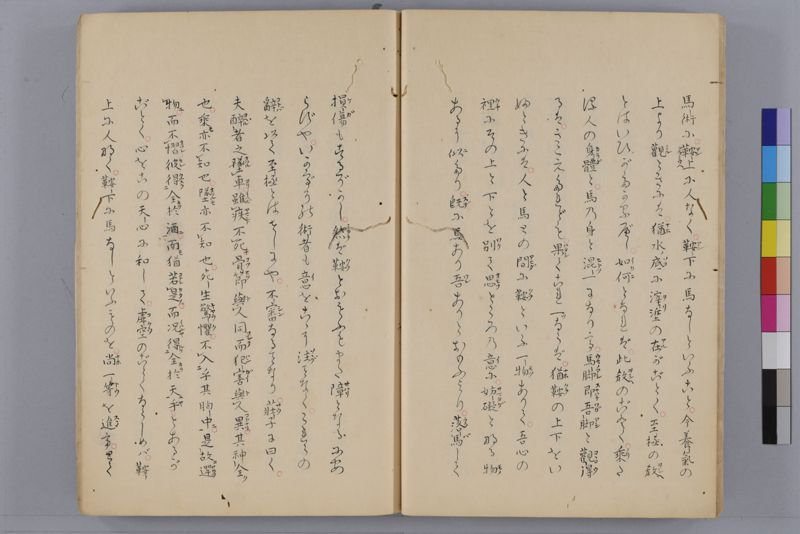
馬⁻術に。《振り仮名:鞍⁻上|アン |クラノウヘ 》に人なく。鞍(アン)⁻下に馬なしといふこと。今養⁻気の
上より観(ミル)ときは。猶(ナホ)水 ̄ノ底(ソコ)に《振り仮名:滓⁻垽|ヲリ》の在(アル)がごとく。至⁻極の教(ヲシヘ)
とはいひがたかるべし。如何(イカニ)となれば。此 教(ヲシヘ)のごとく。乗(ノリ)た
る人の《振り仮名:身⁻体|カラダ》と。馬の身と《振り仮名:混⁻一|ヒトツ》になりて。《振り仮名:馬⁻脚|ウマノアシ》即(スナハチ)吾(ワガ)-脚(アシ)と《振り仮名:観⁻得|コヽロウ》
るは。きこえたれども。果(ハタシ)てこれ一 ̄ツならば。猶(ナホ)鞍(クラ)の上下をい
ふときには。人と馬との間(アヒダ)に鞍(クラ)といふ一⁻物(モツ)ありて。吾心の
裡(ウチ)にその上と下とを別(ワケ)て思(オモフ)ところの意(イ)に。《振り仮名:妨⁻礙|サマタゲ》となる物(モノ)
あるに似(ニ)たり。既(スデ)に馬あり吾(ワレ)ありとおもふより。落(ラク)⁻馬(バ)して
【左丁】
《振り仮名:損⁻傷|ケガ》もするぞかし。然(シカラ)ば鞍(クラ)とおもふもまた障(サハリ)となるにあ
らずや。いかでその術⁻者も意(イ)をこゝに注(ソヽグ)ことなく。これらの
辞(コトバ)を以て至⁻極とはせしにや。不⁻審(シン)なることなり。荘(サウ)⁻子に曰く。
夫 醉(ヨヘル)-者之 墜(オツル)_レ車 ̄ヨリ。雖(イヘドモ)_レ疾(ヤマシト)不_レ死 ̄ナ。骨(コツ)⁻節(セツ)與(ト)_レ 人同 ̄フシテ。而《振り仮名:犯⁻害|ハンガイ》與(ト)_レ 人 異(コトナリ)。其神-全 ̄ク
也。乗 ̄モ亦不_レ知也。堕(オツルモ)亦不_レ知也。死⁻生《振り仮名:驚⁻懼|キヤウク》。不_レ入_二乎其胸⁻中 ̄ニ_一。是-故 ̄ニ𨕣(サカフ)
_レ物 ̄ニ。而不_レ慴(オソレ)。彼(カレ)得(ウルスラ)_二全 ̄キヲ於酒 ̄ニ_一。而 ̄モ猶 若(コトシ)_レ是(カクノ)。而 況(イハンヤ)得 ̄ルヲ_二全 ̄キヲ於天 ̄ニ_一乎(ヤ)、とあるが
ごとく。心をこの天⁻心に和して。虚(コ)⁻空(クウ)のごとくならしめば。鞍⁻
上に人なく。鞍⁻下に馬なしといふものを。尚(ナホ)一⁻等(トウ)を進(スヽメ)て。とて
現代語訳
【右丁】
馬術に、「鞍上に人なく、鞍下に馬なし」ということがある。今、養気の観点から見ると、なお水の底に滓があるようなもので、至極の教えとは言い難いであろう。なぜならば、この教えのように、乗っている人の身体と馬の身体が一つになって、馬の脚がすなわち我が脚と心得るのは理解できるが、果たしてこれが一つであるならば、なお鞍の上下を言う時には、人と馬との間に鞍という一つの物があって、我が心の内にその上と下とを別けて思うところの意に、妨げとなる物があるに似ている。既に馬があり我があると思うより、落馬して
【左丁】
怪我もするのである。そうであれば、鞍と思うこともまた障害となるのではないか。どうしてその術者も意をここに注ぐことなく、これらの言葉をもって至極としたのであろうか。不審なことである。荘子に曰く、「酔った者が車から落ちても、激しく痛んでも死なない。骨節は人と同じであって、しかし害を受けることは人と異なる。その神が完全だからである。乗ることも知らず、堕ちることも知らず、死生驚懼が胸中に入らない。それ故に物に逆らっても恐れない。彼が酒によって完全を得てもなおこのようである。ましてや天によって完全を得る場合はどうであろうか」とあるように、心をこの天心に和して、虚空のようにならしめば、鞍上に人なく、鞍下に馬なしというものを、なお一等を進めて、
英語訳
【Right page】
In horsemanship, there is a saying: "There is no person above the saddle, no horse below the saddle." When viewed now from the perspective of qi cultivation, this is still like sediment at the bottom of water, and can hardly be called the ultimate teaching. Why is this so? While it is understandable that, according to this teaching, the body of the rider and the body of the horse become one, and the horse's legs are understood to be one's own legs, if this truly becomes one, when we still speak of above and below the saddle, there seems to be one thing called the saddle between person and horse, and there appears to be something in our mind that becomes an obstruction to the intention that separately thinks of above and below. Once we think that there is a horse and there is myself, we fall from the horse and
【Left page】
get injured. If so, wouldn't thinking of the saddle also become an obstacle? How could those practitioners not focus their attention here, and instead consider these words as the ultimate? This is puzzling. Zhuangzi says: "When a drunken person falls from a cart, though severely hurt, he does not die. His bones and joints are the same as others, yet the harm he suffers differs from others. This is because his spirit is complete. He knows not that he rides, knows not that he falls; death, life, surprise, and fear do not enter his breast. Therefore he encounters things without fear. If he can achieve such completeness through wine, how much more so when completeness is achieved through Heaven?" As stated, if we harmonize our mind with this heavenly heart and make it like empty space, we can advance the teaching of "no person above the saddle, no horse below the saddle" by one more level,