翻刻
【右丁】
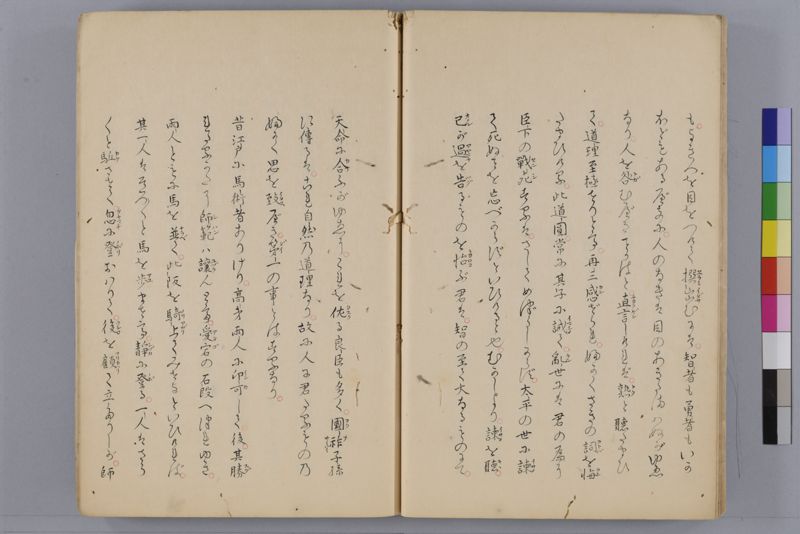
も。よき人を目をつけて撰(ヱラミ)-出(イダサ)むには。智⁻者も勇⁻者もいか
ほどもあるべきに。人のなきは目のあきたまはぬがゆゑ
なり。人を咎(トガ)むべきことかはと。直(チヨク)⁻言(ゲン)しければ。熟(トク)と聴たまひ
て。道⁻理至⁻極せりとて。再⁻三 感(カン)ぜられ。ふかくさきの詞(コトバ)を悔(クヒ)
たまひける。此道⁻円。常に其-子に誡(イマシメ)て。乱(ラン)⁻世には君の為に
臣⁻下の戦(セン)⁻死(シ)するは。さしてめずらしからず。大⁻平の世に諫(イサメ)
て死ぬことを忘べからずといひけるとや。むかしより。諫(イサメ)を聴(キヽ)。
己(オノレ)が過(アヤマチ)を告(ツグ)るものを怡(ヨロコ)ぶ君は。智の至て大なるものにて。
【左丁】
天⁻命に合(カナ)ふがゆゑに。これを佐(タスク)る良⁻臣も多く。国(コク)⁻《振り仮名:祚|ソ|サイハイ 》子⁻孫
に伝るは。これ自⁻然の道⁻理なり。故に人に君たるものの
ふかく思を致(イタス)べき。第(ダイ)⁻一の事とはするなり。
昔江⁻戸に 馬⁻術⁻者ありけり。高⁻弟両⁻人に印(イン)⁻可(カ)して後。其 勝(スグ)
れたるかたに師(シ)⁻範(ハン)は譲(ユヅラ)んとて。愛宕(アタゴ)の石-段へつれゆき。
両⁻人ともに馬を並(ナラベ)て。此-阪を《振り仮名:騎⁻上|ノリアガリ》てみせよといひければ。
其一⁻人はそろ〳〵と馬を歩(アユ)ませて。静(シヅカ)に登(ノボ)る。一⁻人はさら
〳〵と駆(カケ)#1させて。忽(タチマチ)に登(ノボリ)おはりて。後(ウシロ)を顧(フリカヘリ)て立たりしが。師
現代語訳
【右丁】
も、よい人を目をつけて選び出すには、智者も勇者もいくらでもいるはずなのに、人がいないのは目が開いていないからです。人を咎めるべきことでしょうか」と直言したところ、よく聞かれて「道理至極である」として、何度も感心され、深く先ほどの言葉を後悔された。この道円は、常にその子に戒めて「乱世には君のために臣下が戦死するのは、さして珍しいことではない。太平の世に諫めて死ぬことを忘れてはならない」と言ったということである。昔より、諫めを聞き、自分の過ちを告げる者を喜ぶ君主は、智の至って大なる者で、
【左丁】
天命に適うがゆえに、これを助ける良臣も多く、国の政権が子孫に伝わるのは、これは自然の道理である。故に人に君たる者が深く思いを致すべき第一の事とするのである。
昔、江戸に馬術者がいた。高弟二人に印可をした後、その優れた方に師範を譲ろうとして、愛宕の石段へ連れて行き、「二人とも馬を並べて、この坂を騎馬で登ってみせよ」と言ったところ、その一人はそろそろと馬を歩ませて、静かに登る。一人はさらさらと駆けさせて、たちまちに登り終わって、後ろを振り返って立っていたが、師は
英語訳
【Right page】
there should be plenty of wise and brave people if one keeps an eye out to select good people, but the lack of good people is because one's eyes are not open. How can this be a matter of blaming others?" When he spoke so directly, [the lord] listened carefully and said "This is the ultimate truth," and was moved to admiration repeatedly, deeply regretting his earlier words. This Dōen constantly admonished his son, saying: "In times of war, it is not particularly rare for retainers to die in battle for their lord. In times of peace, one must not forget to be prepared to die for one's admonishments." From ancient times, rulers who listen to admonishments and rejoice in those who point out their mistakes possess the greatest wisdom,
【Left page】
and because they conform to Heaven's mandate, they have many good retainers to assist them, and the transmission of state power to their descendants is the natural order of things. Therefore, this should be the foremost consideration for those who rule over people.
Long ago, there was a master of horsemanship in Edo. After granting certification to his two top disciples, he wanted to pass on the position of master instructor to the superior one, so he took them to the stone steps of Atago and said: "Both of you line up your horses and show me how you can ride up this slope." One of them slowly walked his horse forward and quietly ascended. The other galloped up briskly, quickly reached the top, and stood there looking back, but the master