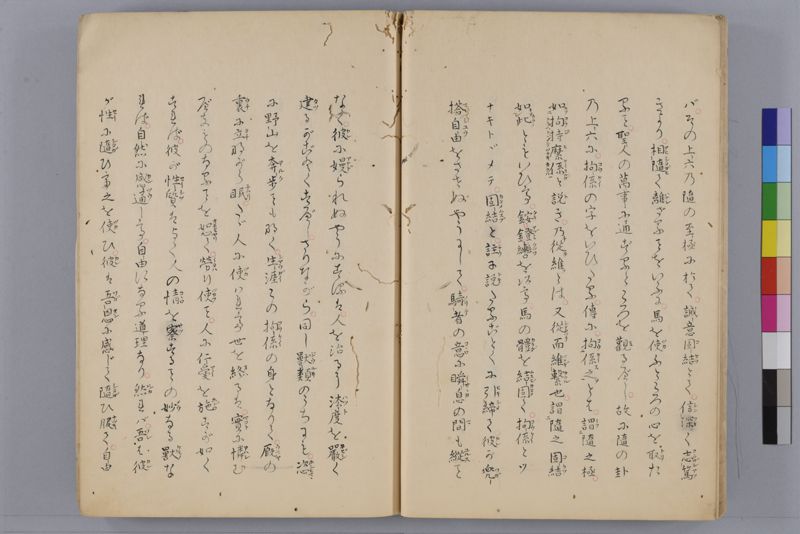
翻刻
【右丁】
ば。その上⁻六の随の至⁻極に於て。誠⁻意固(コ)⁻結(ケツ)とて。信(シン)-深(フカ)く志(コヽロザシ)-篤(アツ)
きより。相(アヒ)-随(シタガヒ)て離(ハナレ)ざることをいふに。馬を使(ツカ)ふところの心を取(トリ)た
ること。聖⁻人の万⁻事に通ずるところを観(ミ)るべし。故に随の卦
の上⁻六に。拘(コウ)⁻係(ケイ)の字をいひたる。伝に。拘(コウ)_二係(ケイ) ̄ス之 ̄ヲ_一とは。謂(イフ)_三随之極。
如 ̄キヲ_二《振り仮名:拘持|コウジ|トラヘトヾメテ 》#1《振り仮名:縻係|ヒケイスルガ|ツナギカクル》_一と説(ト)き。乃 ̄チ従 ̄テ維 ̄クとは。又 従(シタカツテ)而 維(ツナギ)-繫(カクル)也。謂_二随之 固(コ)⁻結(ケツ)
如 ̄キヲ_一_レ此(カクノ)ともいひて。鞍(クラ)#2、鐙(アブミ)、轡(クツワ)を以て、馬の体(カラダ)を結(ムスビ)⁻固(カタメ)て。拘(コウ)⁻係(ケイ)とツ
ナキトヾメテ。固(カタメ)⁻結(ムスブ)と。註(チウ)に説(トキ)たるごとくに引(ヒキ)-締(シメ)て。彼(カレ)が兜(ワガ)⁻
搭(マヽ)自(ジ)⁻由(ユウ)をさせぬやうにして。《振り仮名:騎⁻者|ノリテ》の意(コヽロ)に《振り仮名:瞬⁻息|イサヽカ 》の間(マ)も縦(ユルス)こと
【左丁】
なく。彼(カレ)に嫚(アナド)られぬやうにするは。人を治るに《振り仮名:法⁻度|ハツト 》を厳(キビシ)く
建(タツ)るがごとくすべし。さりながら。同し獣(ジウ)⁻類(ルヰ)のうちにも。恣(ホシヒマヽ)
に野-山を《振り仮名:奔⁻歩|アルク》こともなく。生(シヤウ)⁻涯(ガイ)この拘(コウ)⁻係(ケイ)の身となりて。廏(ウマヤ)の
裏(ウチ)に立(タチ)ながら眠(ネムリ)。たゞ人に使(ツカ)はれて世を終(オハ)るは。実(マコト)に憐(アハレ)む
べきものなることを恕(オモヒヤリ)て。労(イタハ)り使(ツカフ)こと。人に仁⁻愛(アイ)を施(ホドコ)すが如く
すれば。彼が性(セイ)⁻質(シツ)はよく人の情(コヽロ)を察(サツ)することの妙(メウ)なる獣(ケモノ)な
れば。自⁻然に感(カン)⁻通(ツウ)して。自⁻由になる道⁻理なり。然(シカ)れば。吾(ワレ)は彼(カレ)
が性(セイ)に随(シタガ)ひて之を使(ツカ)ひ。彼(カレ)は吾(ワガ)-恩(オン)に感じて随(シタガ)ひ服(ナツキ)て。自⁻由
現代語訳
【右丁】
ば、その上六の随の至極において、誠意固結といって、信が深く志が篤いことから、相互に従って離れないことを言うのに、馬を使う際の心構えを取り上げたことは、聖人の万事に通ずるところを観ることができる。故に随の卦の上六に、拘係の字を言ったのである。伝に「拘係之」とは、「随の極みを謂う。拘持縻係するが如し」と説き、また「乃従維」とは、また「従いて維繫なり。随の固結、此の如きを謂う」とも言って、鞍、鐙、轡をもって、馬の体を結び固めて、拘係と繋ぎ止めて、固結すると、註に説いたように引き締めて、彼の勝手自由をさせないようにして、騎者の意に瞬息の間も縦すこと
【左丁】
なく、彼に侮られないようにするのは、人を治めるに法度を厳しく建てるが如くすべきである。しかしながら、同じ獣類のうちにも、恣に野山を奔歩することもなく、生涯この拘係の身となって、厩の内に立ちながら眠り、ただ人に使われて世を終わるのは、実に憐むべきものであることを恕して、労り使うこと、人に仁愛を施すが如くすれば、彼の性質はよく人の情を察することの妙なる獣であるから、自然に感通して、自由になる道理である。然れば、吾は彼の性に随って之を使い、彼は吾が恩に感じて随い服いて、自由
英語訳
【Right page】
then, in the supreme stage of Following (sui) at the top six line, what is called "sincere intention firmly bound" - from deep faith and earnest will comes mutual following without separation. The fact that the mindset of using horses is taken up here shows that we can observe how the sage penetrates all matters. Therefore, in the top six line of the hexagram Sui, the characters "restraint and binding" (kōkei) are mentioned. The commentary says "to restrain and bind" means "the extreme of following, like constraining and tethering." Also "then following and binding" means "following and being tied. It refers to the firm binding of following being like this." As explained in the annotations, one tightens the saddle, stirrups, and bridle to bind and secure the horse's body, restraining and tethering it firmly, not allowing it any willful freedom, and not permitting even a moment's laxity from the rider's intention,
【Left page】
ensuring the horse cannot despise the rider - this should be like establishing strict laws when governing people. However, among the same class of beasts, [the horse] cannot freely roam the wild mountains and fields, but becomes bound for life, sleeping while standing in the stable, merely serving humans until death - considering how pitiful this truly is, and using them with care as if showing benevolence to people. Since their nature is that of wondrous beasts who can keenly perceive human feelings, they will naturally respond and become compliant - this is the natural principle. Therefore, I use them in accordance with their nature, and they, moved by my kindness, follow and submit, becoming free