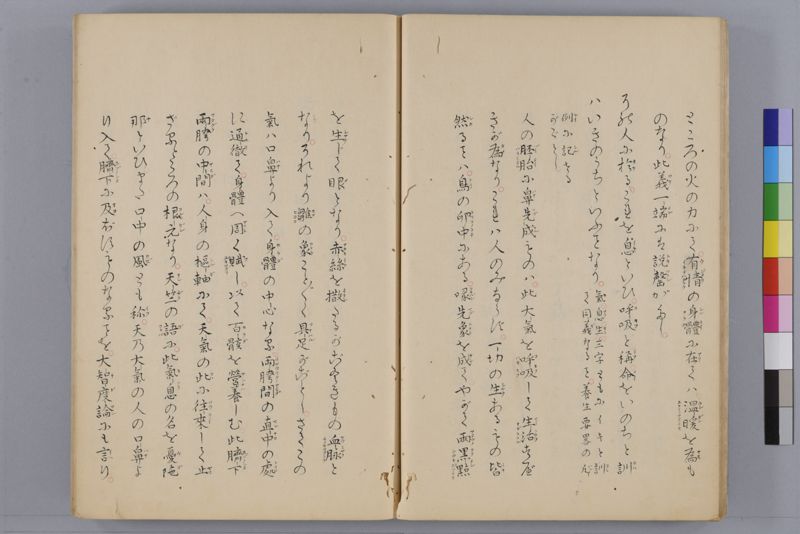
翻刻
【右丁】
ところの火の力にて。有情(ウジヨウ|イキテハタラク)の身体(シンタイ|カラダ)に在(アリ)ては、《振り仮名:温-暖|ウンダン|ホカ〳〵ノアタヽマリ》を為(ナス)も
のなり。此/義(ワケ)《振り仮名:一-端| タン》には《振り仮名:説-罄|トキツクシ》がたし。
その人に於(オケ)る、これを息(イキ)といひ。《振り仮名:呼-吸|コキフ》と称(イフ)。命(メイ)をいのちと訓(ヨム)
はいきのうちといふことなり。《割書:気(キ)。息(ソク)。生(セイ)、三字ともにイキと訓(ヨミ)|て《振り仮名:同-義| ギ》なること。養生要略の《振り仮名:凡-|ハン 》》
《《割書:例(レイ)に記(シル)せる|がごとし》
人の《振り仮名:胚-胎|バイタイ|ハラミタル》に鼻(ハナ)《振り仮名:先-成|マヅナル》ものは。此大-気を《振り仮名:呼-吸|コキフ|ハキスフ》して《振り仮名:生-活|セイクワツ|ナガラフル》すべ
きが為(タメ)なり。これは人のみならず。一-切の生(シヤウ)あるもの皆(ミナ)
然(シカ)ることは。鳥(トリ)の《振り仮名:卵-中|タマコノウチ》にある。喙(クチバシ)先(マヅ)象(カタチ)を成(ナシ)て。やがて両(フタツノ)《振り仮名:黒-点|コクテン|クロキポツチリ》
【左丁】
を生(シヤウ)じて眼(メ)となり。《振り仮名:赤-糸|アカキイト》を撒(チラシ)たるがごときもの《振り仮名:血-脈|ケツミヤク|チノカヨフミチ》と
なり。それより雛(ヒナ|ヒヨコ)の象(カタチ)こと〴〵く《振り仮名:具足|ソナハル》がごとし。さてこの
気は口/鼻(ハナ)より入て。《振り仮名:身-体|カラダ》の中心なる、《振り仮名:両-胯間|リヤウマタノアヒダ》の《振り仮名:直-中|マンナカ》の処(トコロ)
に《振り仮名:通-徹|トホリ》て。身-体へ周(アマネ)く賦(フ|ユキワタリ)し。以て《振り仮名:百-骸|カラダ》を《振り仮名:営-養|ヤシナハ》しむ。此《振り仮名:臍-下|ホゾノシタ》
《振り仮名:両-胯|マタグラ》の《振り仮名:中-間|アイダ》は。人-身の《振り仮名:枢軸|シンギ》にて。天-気の此(コヽ)に《振り仮名:往-来|ワウライ》して止(ヤマ)
ざるところの《振り仮名:根元|コンゲン》なり。《振り仮名:天-竺|テンヂク》の語(ゴ|コトバ)に。此《振り仮名:気-息|キソク》の名を憂陀(ウダ)
那(ナ)といひ。また口-中の風(カゼ)とも称(イフ)。天の大-気の人の《振り仮名:口-鼻| ハナ》よ
り入て。《振り仮名:臍-下|ホゾノシタ》に及(オヨ)ぼすものなることを。《振り仮名:大-智-度-論| チドロン》にも言(イへ)り。
現代語訳
【右丁】
ところの火の力によって、有情(生きて働くもの)の身体においては、温暖を作り出すものである。この道理の一端を説き尽くすことは難しい。
人においては、これを息といい、呼吸と称する。命を「いのち」と訓むのは「息の内」ということである。(気・息・生の三字はともに「いき」と訓んで同じ意味であることは、養生要略の凡例に記されている通りである。)
人の胎児において鼻が先に形成されるのは、この大気を呼吸して生活するためである。これは人だけでなく、一切の生きるものすべてが同様である。鳥が卵の中にあるとき、くちばしが先に形を成し、やがて二つの黒点
【左丁】
を生じて眼となり、赤い糸を散らしたようなものが血脈となり、それから雛の形がことごとく備わるようである。さて、この気は口や鼻から入って、身体の中心である両股の間の真ん中の所に通徹して、身体に広く行き渡り、もって全身を栄養する。この臍下両股の間は、人身の枢軸であって、天の気がここに往来して止まないところの根元である。天竺の言葉では、この気息の名を憂陀那といい、また口中の風とも称する。天の大気が人の口鼻から入って、臍下に及ぶものであることを、大智度論にも述べている。
英語訳
[Right page]
Through the power of fire inherent [in qi], it creates warmth in the bodies of sentient beings (living and active entities). It is difficult to fully explain even one aspect of this principle.
In humans, this is called "breath" (iki) and is termed "respiration" (kokyū). The reason "life" (mei) is read as "inochi" is because it means "within the breath." (The three characters for qi, breath, and life are all read as "iki" and have the same meaning, as recorded in the general examples of the "Essentials of Health Cultivation.")
In human embryos, the nose forms first because it is meant to breathe this great qi and sustain life. This applies not only to humans but to all living things. When a bird is in its egg, the beak first takes shape, then two black dots
[Left page]
appear and become eyes, and what looks like scattered red threads becomes blood vessels, after which the complete form of the chick emerges. Now, this qi enters through the mouth and nose, penetrates to the center of the body at the exact middle between the two thighs, spreads widely throughout the body, and thereby nourishes the entire frame. This area below the navel and between the thighs is the pivot of the human body and the fundamental source where heavenly qi circulates without cease. In the language of India, this breath is called "udana" and is also termed "wind in the mouth." The great qi of heaven enters through the human mouth and nose and reaches below the navel, as is also stated in the Mahāprajñāpāramitā-śāstra.