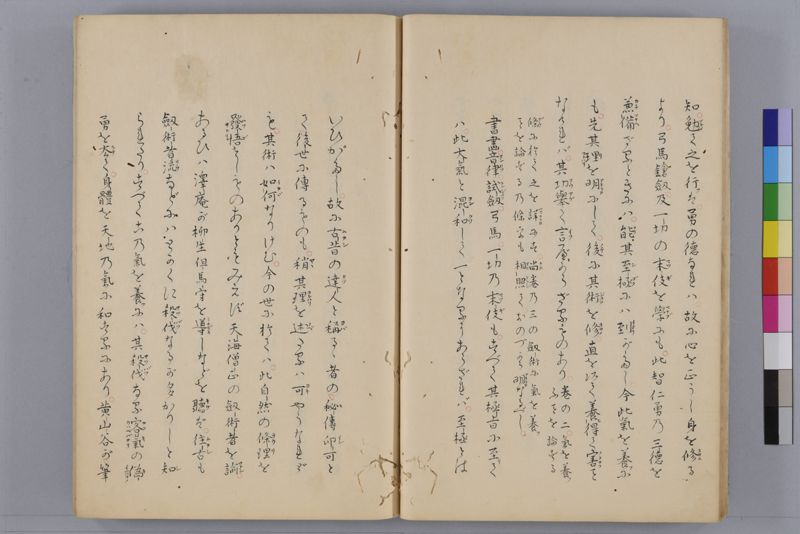
翻刻
【右丁】
知。/勉(ツトメ)て之を行 ̄フは。勇の徳なれは。故に心を正うし身を/修(オサム)る
より。弓馬鎗剣。及一-切の《振り仮名:末-伎|マツギ》を/学(マナブ)にも。此智仁勇の三-徳を
《振り仮名:兼-備|カネソナへ》ざるときには。/能(ヨク)其《振り仮名:至-極|シゴク》には/到(イタリ)がたし。今此-気を養 ̄フに
も。先其《振り仮名:理|リ|コトハリ》 を/明(アキラカ)にして。後(ノチ)に其/術(ジユツ)を修(オサメ)。直を以て養 ̄ヒ-得て害(ソコナフ)こと
なければ。其/功(コウ)挙(アゲ)て言(イフ)べからざるものあり。《割書:巻の二。気を養 ̄フ|ふ【マヽ】ことを論ずる》
《割書:条(デウ)に於て之を/詳(ツマヒラカ)にす。/尚(ナホ)巻の三の剣-術に気を養 ̄フ|ことを論ずるの条をも《振り仮名:相-照|アヒテラシ》て。おのづから/明(アキラカ)なるべし。》
書画。/音律(オンリツ)。《振り仮名:試-剣|ケンジユツ》。弓馬。一-切の《振り仮名:末-伎|マツギ》も。すべて其極-旨に至 ̄リて
は。此大-気と《振り仮名:混-和|コンクワ》して一となるにあらざれば。至-極とは
【左丁】
いひがたし。故に《振り仮名:古-昔|ムカシ》の達(タツ)-人と称(ヨバ)るゝ者の、秘(ヒ)-伝/印(イン)-可と
て、後-世に伝るものも。稍(ヤヽ)其/理(コトハリ)を/述(ノべ)たるは可(ヨキ)やうなれど
も。其術は《振り仮名:如-何|イカヾ》なりけむ。今の世に於ては。此自⁻然の《振り仮名:条-理|テウリ》を
《振り仮名:発-悟|ハツゴ|サトリ》せしものありともみえず。天-海僧-正の剣⁻術⁻者を諭(サトシ)。
あるひは沢-庵が柳⁻生但⁻馬⁻守を導(ミチビキ)しなどを聴(キケ)ば。《振り仮名:往-古|ムカシ》も
剣-術-者-流(リウ)などにはとかくに《振り仮名:殺-伐|サツバツ》なるが多かりしと知(シ)
られたり。すべてこの気を養 ̄フには。其《振り仮名:殺-伐|サツバツ》なる《振り仮名:客-気|カクキ|ウハべバカリ》の《振り仮名:偽|キ|イツハリノ》-
勇を/去(ステ)て。身⁻体を天⁻地の気に和するにあり。黄-山-谷が、筆
現代語訳
【右丁】
知り、勉めてこれを行うのは勇の徳である。故に心を正しくし身を修めることから、弓馬槍剣及び一切の末技を学ぶにも、この智仁勇の三徳を兼ね備えないときには、よくその至極には到達しがたい。今この気を養うにも、先にその理を明らかにして、後にその術を修め、直をもって養い得て害することなければ、その功は挙げて言うべからざるものがある。(巻の二、気を養うことを論ずる条において、これを詳しくする。なお巻の三の剣術に気を養うことを論ずる条をも相照らして、自ずから明らかになるであろう。)
書画、音律、剣術、弓馬、一切の末技も、すべてその極旨に至っては、この大気と混和して一となるのでなければ、至極とは
【左丁】
言いがたい。故に古昔の達人と称される者の、秘伝印可として後世に伝わるものも、やや其の理を述べたるは良いようであるけれども、其の術はいかがであったろうか。今の世においては、この自然の条理を発悟したものがあるとも見えない。天海僧正の剣術者を諭し、或いは沢庵が柳生但馬守を導いたなどを聞けば、往古も剣術者流などにはとかく殺伐なるが多かったと知られる。すべてこの気を養うには、その殺伐なる客気の偽勇を去って、身体を天地の気に和するにある。黄山谷が、筆
英語訳
[Right page]
To know through hardship and practice it through effort is the virtue of courage. Therefore, from rectifying the mind and cultivating the self to learning archery, horsemanship, spear and sword techniques, and all lesser arts, if one does not possess these three virtues of wisdom, benevolence, and courage combined, it is difficult to reach their ultimate mastery. Now, in nourishing this qi as well, first clarify the principles, then cultivate the techniques. If one can nourish it directly without causing harm, the achievement is beyond description. (This is detailed in the section discussing nourishing qi in Volume Two. Furthermore, by also referring to the section in Volume Three that discusses nourishing qi in swordsmanship, this will naturally become clear.)
Calligraphy and painting, music, swordsmanship, archery and horsemanship, and all lesser arts - in reaching their ultimate principles, unless one harmonizes and becomes one with this great qi, it cannot be called
[Left page]
ultimate mastery. Therefore, regarding what the masters of ancient times called secret transmissions and certifications that have been passed down to later generations, while those that somewhat describe the principles seem good, what were their actual techniques like? In today's world, there appears to be no one who has awakened to these natural principles. When we hear of Monk Tenkai instructing swordsmen, or Takuan guiding Yagyu Tajima-no-kami, we understand that even in ancient times, many among the schools of swordsmen were inclined toward violence and killing. In nourishing this qi, one must abandon that violent superficial false courage and harmonize the body with the qi of Heaven and Earth. Huang Shangu's brush