翻刻
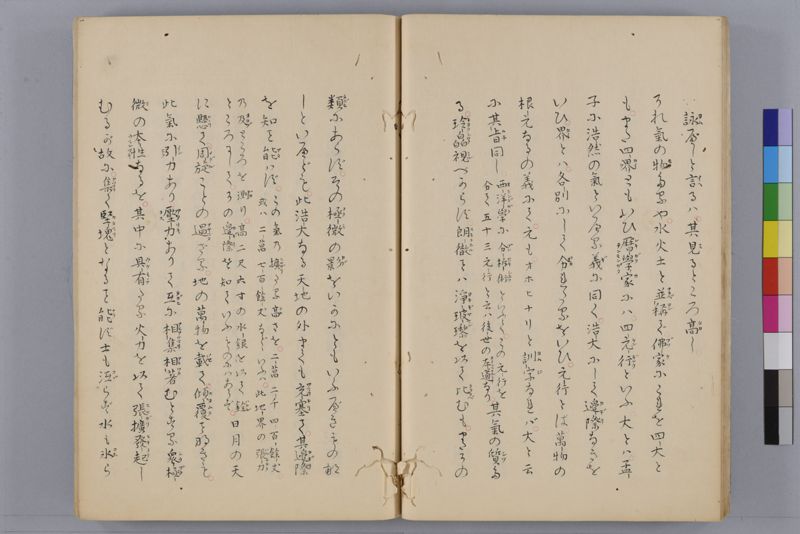
/詠(ヨム)べしと言(イへ)るは。其/見(ミ)るところ高(タカ)し。
それ気の物(モノ)たるや。水火土と《振り仮名:並-称|ナラべヨン》で。《振り仮名:仏-家|ブツケ》にこれを四-大と
も。また四-《振り仮名:界|カイ|ケ》ともいひ。《振り仮名:暦-学-家|レキガクカ|テンモンカタ》には。《振り仮名:四-元-行| ケンギヤウ》といふ。大とは。孟-
子に浩-然の気といへる/義(ギ)に同く。浩-大にして《振り仮名:辺-際|カギリ》なきを
いひ。/界(カイ)とは。各-別にして/分(ワカ)れたるをいひ。元-行とは。万-物の
根-元なるの義にて。元も。オホヒナリと/訓(ヨム)-/字(ジ)なれば大と云
に其-/旨(ムネ)同し《割書:《振り仮名:西-洋-学|オランダガク》に《振り仮名:分-析-術|ブンセキシユツ》といふて。この元-行を|分て五十三元-行と云は。後-世の《振り仮名:左-道|ヨコシマナルミチ》なり。》其気の質(シツ)た
る。《振り仮名:玲-皛|キヨクシロク》視(ミル)べからず。《振り仮名:朗-徹|スキトホル》ことは《振り仮名:浄-玻-璃|ヨキギヤマン》を以て比(タクラベ)むも。またその
/類(タグヒ)にあらず。その《振り仮名:極-微|コクミ》の影(カゲ)をいかにともいふべきものな
しといへども。此浩-大なる天-地の外まても《振り仮名:充-塞|ツマリキリ》て。其《振り仮名:辺-際|カギリ》
を知こと能(アタ)はず。《割書:この気の拡(ヒロガリ)たる高(タカ)さを。二-万 二-千 四-百-余-丈。|或は二-万 七-百-余丈などゝいふは。此地-界の《振り仮名:張-力|ハルチカラ》》
《割書:の及(オヨブ)ところを測(ハカ)り。高二尺六寸の水-銀を以て銓(ハカル)|ところにして。その《振り仮名:辺⁻際|カギリ》を知ていふものにはあらず。》日月の天
に懸(カヽリ)て、《振り仮名:周-旋|メグル》ことの過(アヤマタ)ざる。地の万-物を載(ノセ)て、《振り仮名:傾-覆|カタムク》ことなきも。
此気に《》振り仮名:引-力|イン |ヒク 》あり、《振り仮名:壓-力|アツリキ|オス 》ありて互(タガヒ)に《振り仮名:相-集|アヒアツマリ》《振り仮名:相-著|アヒツカ》むとする《振り仮名:衆-極|シウゴク》-
/微(ミ)の《振り仮名:本-性||ウマレツキ》なるを。其中に《振り仮名:具-有|ウケモチ》たる火-力を以て《振り仮名:張-拡|ヒロガリ》《振り仮名:発-起|ヒキタテ》し
むるが故に。集(アツマリ)て《振り仮名:堅-塊|カタマリ》となること/能(ナラ)ず。土も沍(コヾ)らず水も氷(コホ)ら
現代語訳
詠むべしと言ったのは、その見るところが高いのである。
それ気という物は、水火土と並べて称され、仏家ではこれを四大とも、また四界とも言い、暦学家では四元行という。大とは、孟子が浩然の気と言った意味と同じく、浩大にして限りがないことを言い、界とは、各別にして分かれていることを言い、元行とは、万物の根元であるという意味で、元も「おおいなり」と読む字であるから大と言うのとその趣旨は同じである。《西洋学で分析術といって、この元行を分けて五十三元行というのは、後世の邪道である。》その気の性質は、清く白く見ることはできない。透き通ることは良いガラスと比べても、またその
類ではない。その極めて微細な影をどのように表現すべきものもないと言っても、この浩大な天地の外までも充満して、その限りを知ることはできない。《この気の広がった高さを二万二千四百余丈、或いは二万七百余丈などというのは、この地界の張力の及ぶところを測り、高さ二尺六寸の水銀を以て量るところであって、その限界を知って言うものではない。》日月が天に懸かって、回ることに過ちがなく、地が万物を載せて、傾くことがないのも、この気に引力があり、圧力があって互いに相集まり相着こうとする衆極微の本性を、その中に具有する火力を以て張拡発起させるが故に、集まって堅い塊となることができず、土も凍らず水も氷ら
英語訳
He said it should be composed - his perspective is indeed lofty.
Now, the substance called ki (vital energy) is named alongside water, fire, and earth. Buddhist schools call these the Four Great Elements, or sometimes the Four Realms, while astronomers call them the Four Primary Elements. "Great" has the same meaning as Mencius's "vast flowing qi" - referring to something vast and boundless. "Realms" refers to things that are separate and divided. "Primary Elements" means the fundamental source of all things, and since "primary" is read as "great" in Japanese, it has the same meaning as "great." {Western learning has something called analytical techniques that divide these primary elements into fifty-three elements, which is a heterodox path of later times.} The nature of this ki is pure and white, yet invisible. Its transparency cannot be compared even to fine glass - it is not of that
category. Though there is no way to describe its extremely subtle manifestation, it fills even beyond this vast heaven and earth, and its limits cannot be known. {When they say this expanded ki reaches heights of 22,400-odd or 20,700-odd jō, they are measuring where this earthly realm's tensile force extends, using mercury two shaku and six sun in height as a measure - they are not speaking from knowledge of its true boundaries.} The sun and moon hang in heaven and revolve without error, and the earth bears all things without tilting, because this ki has attractive force and pressure force, and the countless minute particles naturally tend to gather and adhere to each other, but the fire power contained within causes expansion and activation, so they cannot collect into solid masses, soil does not freeze, and water does not turn to ice