翻刻
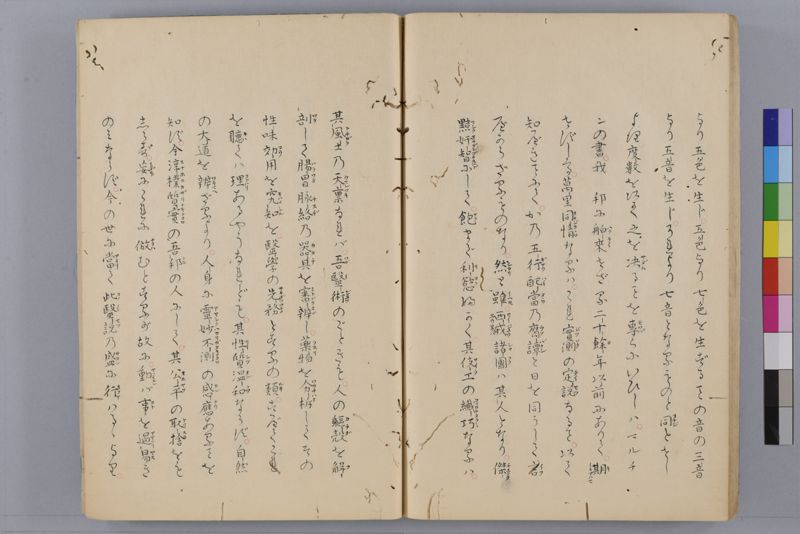
より五-色を生じ。五-色より 七-色を生ずることの音の三-音
より 五-音を生じ。それより七音となるものと同(オナジ)とせし
より。度-数を以て之を決(サダム)ることを専(モッパ)らにいひしは。マルチ
ンの書。我 邦に《振り仮名:舶-来|ハクライ》せざる二-十-余(ヨ)-年以-前にありて。《振り仮名:期|キ|イヒアハセ》
せずして。萬-里《振り仮名:同⁻情|オナジコヽロ》なるは。これ《振り仮名:実-測|ジツソク》の《振り仮名:定-説|テイセツ》なること。以て
知べきことにて。かの五-行(ギヤウ)《振り仮名:配⁻当|ハイタウ》の《振り仮名:腐-譚|ウソバナシ》と曰を同うして言(イフ)
べからざるものなり。然(シカリ)と雖(イヘトモ)。《振り仮名:西-戎|セイジユウ|エウロツパ》《振り仮名:諸-国|シヨコク》は其-人となり。傑(チエタク)-
点(マシク)《振り仮名:奸-智|セチガシコクスルド》にして。飽(アク)まで《振り仮名:利-慾|リヨク》ふかく。其《振り仮名:伎-工|サイク》の《振り仮名:繊-巧|コマカクタクミ》なるは。
其-《振り仮名:風-土|トチガラ》の《振り仮名:天-稟|ウマレツキ》なれば。吾(ワガ)《振り仮名:医-術|イジユツ》のごときも。人の《振り仮名:躯-殻|カラダ》を解(フ)-
剖(ワケ)して《振り仮名:腸-胃|ハラワタ》《振り仮名:脈-絡|チスヂ》の《振り仮名:器-具|カタチ》を《振り仮名:審⁻弁|ミトヾケタヾ》し。《振り仮名:薬-物|クスリ》を《振り仮名:分-析|ワカチハナ》してその
性-味 効(コウ)-用を《振り仮名:究-知|キハメシル》を。医-学の先(サキダツ)-務(ツトメ)とするの類(ルイ)。すべてこれ
を聴(キヽ)ては理(コトハリ)あるやうなれども。其《振り仮名:性-質|セイシツ》《振り仮名:温-和|オンクワ》ならず。自-然
の大-道を弁(ワキマヘ)ざるより。人-身に《振り仮名:霊-妙|アヤシク》《振り仮名:不-測|ハカリガタキトコロ》の《振り仮名:感応|カンナウ》あることを
知ず。今《振り仮名:淳-樸|スナホニ》《振り仮名:質-実|カザリナキトコロ》の吾-邦(ク二)の人にして。其《振り仮名:公-平|オホヤケ》の《振り仮名:取-捨|トリステ》をも
しらず。妄(ミダリ)にこれに倣(ナラハ)むとするが故に。動(ヤヽモスレ)ば事(コト)を《振り仮名:過-易|アヤマリヤス》き
のみならず。今の世に当(アタリ)て此(コノ)《振り仮名:医-説|イセツ》の盛(サカン)に行(オコナ)はるゝより。
現代語訳
(前ページより続き)三色より五色を生じ、五色より七色を生ずることが、音の三音より五音を生じ、そこから七音となるものと同じであるとしたことから、度数(割合)をもってこれを決めることを専らに述べたのは、マルチン(マルティン)の書物が我が国に舶来する二十余年以前のことであって、示し合わせることなく、万里を隔てて同じ考えに至ったことは、これが実測に基づく定説であることをもって知るべきことであり、あの五行配当の腐った話と同列に論じるべきものではない。
しかしながら、西戎(ヨーロッパ)諸国の人となりは、才知に長けており、計略にたけて抜け目なく、限りなく利欲が深く、その細工の細かく巧みなることは、その風土の生まれつきによるものである。それゆえ、我が医術のようなものも、人の身体を解剖して腸胃や脈絡(血管)の構造を詳しく調べ、薬物を分析してその性質・味・効用を究め知ることを、医学の先立つ務めとするといった類のこと、すべてこれを聞けば一応道理があるように思われるが、その性質は温和ではなく、自然の大道をわきまえないことから、人体に霊妙にして測り難い感応があることを知らない。今、素直で飾りのない我が国の人が、その公平な取捨選択もわきまえず、みだりにこれに倣おうとするがゆえに、ともすれば事を過ちやすいばかりでなく、今の世においてこの医説が盛んに行われるより、
英語訳
(Continued from the previous page) The idea that three colors generate five colors, and five colors generate seven colors—just as three musical tones generate five tones, which in turn become seven tones—and the insistence on settling this through precise measurement (ratios) was articulated more than twenty years before Martin's writings arrived in our country by ship. The fact that, without any prior arrangement, minds separated by ten thousand leagues arrived at the same conclusion demonstrates that this is an established theory grounded in empirical measurement, and it must not be spoken of in the same breath as the decayed tales of the Five Elements correspondence system.
That said, the character of the people of the Western barbarian nations (Europe) is such that they are gifted with intelligence, cunning, and sharp-witted shrewdness; their desire for profit and gain knows no bounds. Their craftsmanship is minute and skillful—all of this being innate to the nature of their land and climate. Therefore, even in something like their medicine, they take as their primary duty such things as dissecting the human body to examine in detail the structure of the intestines, stomach, and blood vessels, and analyzing medicinal substances to thoroughly ascertain their properties, taste, and effects. When one hears all of this, it seems to have a certain logic to it; yet their disposition is not gentle and harmonious, and because they do not understand the Great Way of Nature, they are ignorant of the fact that the human body possesses mysterious and unfathomable spiritual responsiveness (kan'nō). Now, because the people of our country—straightforward and unaffected as they are—do not know how to make a fair and discerning selection, and rashly seek to imitate these ways, not only do they tend to fall easily into error, but furthermore, because this medical theory has come to be practiced so prevalently in today's world...