翻刻
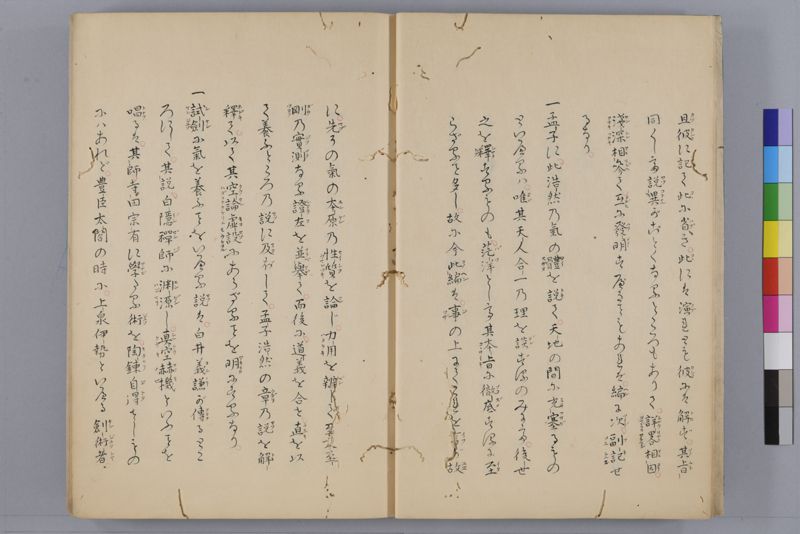
【右丁】
且(カツ)彼(カシコ)に《振り仮名:記|□□□#1》て此(コヽ)に省(ハブ)き。此(コヽ)には演(ノブ)れとも彼(カシコ)には解(トカ)ず。其(ソノ)旨(ムネ)-
同くして《振り仮名:説-異|セツコトナル》がごとくなるところもありて。《振り仮名:詳-略|シヤウリヤク|ツマビラカアラマシ》《振り仮名:相-因|アヒヨリ》。
《振り仮名:浅-深|センシン|アサキフカキ》《振り仮名:相-参|アヒマジヘ》て。互(タガヒ)に《振り仮名:発-明|ハツメイ》すべきこともあれば。編(ヘン)に次(ツイデ)、《振り仮名:副-記|フキ|ソエ シルス 》せ
るなり。
一孟-子に、此浩-然の気の体(タイ|スガタ)を説(トキ)て。天-地の間に《振り仮名:充-塞|ミチフサガ》るもの
といへるは。唯(タヾ)其天-人合-一の理を談(ダン)ずるのみにて。後-世
之を釈(シヤク|トク )するものも、《振り仮名:茫-洋|バウ》として其《振り仮名:本-旨||コヽロイキ 》に《振り仮名:徹-底|ソコズメ》するに至(イタ)
らざること多し。故に《振り仮名:此-編|コノヘン》は。事(ジ|ワザ )の上にてこれを言(イフ)が故(ユヱ)
【左丁】
に。先(マヅ)その気の《振り仮名:本-原|ホンゲン》の《振り仮名:性-質|セイシツ|ウマレツキ》を論(ロン)じ。《振り仮名:力-用||ハタラキ 》を弁(ベン)じて至大至-
剛(ガウ|ツヨク )の《振り仮名:実-測|ジツソク》なる《振り仮名:証-左|シヨウコ》を《振り仮名:並-挙|ナラベアゲ》て。而後に、道-義を合せ、直(ナホキ)を以
て養ふところの説(セツ)に及(オヨ)ぼして。孟-子浩-然の章(クダリ)の説(セツ)を解(トキ)-
釈(ホドキ)て。以て其《振り仮名:空-論|クウロン|ムダコトヲ 》《振り仮名:虚⁻設|キヨセツ|カリニモウケタル》にあらざることを明(アキラカ)にするなり。
一《振り仮名:試-剣|シケン|ケンジュツ 》に気を養ふことをいへる説(セツ)は。白井義謙( ヨシノリ)が伝(ツタフ)るとこ
ろにして。其-説、《振り仮名:白-隠禅師| インゼンジ》に《振り仮名:淵-源|エンゲン|ハジマリ 》し。《振り仮名:真-空|シンクウ|クウキ 》《振り仮名:赫-機|カクキ|ノビ 》といふことを
唱(トナフ)るは。其-師、寺-田宗-有に学(マナビ)たる術(ジユツ)を、《振り仮名:陶-錬|キタヒテ》《振り仮名:自-得|ジトク》せしもの
にはあれど。豊-臣太-閤の時に。上-泉伊-勢といへる《振り仮名:剣-術-者|ケンジユツシヤ》。
現代語訳
【右丁】
また、あちらに記してここでは省き、ここでは詳しく述べてもあちらでは解説しない。その趣旨は同じでも説明が異なるようなところもあって、詳細と簡略が相互に依存し、浅いものと深いものが相互に混じり合って、互いに発明すべきこともあるので、編の次に副記したのである。
一、孟子が、この浩然の気の体について説いて、天地の間に充満するものと言ったのは、ただその天人合一の理を談じるのみであって、後世これを解釈する者も、茫漠として其の本旨に徹底するに至らないことが多い。故にこの編は、実事の上でこれを言うが故に、
【左丁】
まずその気の本原の性質を論じ、力用を弁じて至大至剛の実測なる証拠を並べ挙げて、その後に、道義を合わせ、直を以て養うところの説に及ぼして、孟子浩然の章の説を解釈して、以てその空論・虚設ではないことを明らかにするのである。
一、試剣において気を養うことを言った説は、白井義謙が伝えるところであって、その説は白隠禅師に淵源し、真空赫機ということを唱えるのは、その師である寺田宗有に学んだ術を陶錬して自得したものではあるけれど、豊臣太閤の時に、上泉伊勢という剣術者が
英語訳
【Right page】
Moreover, what is recorded there is omitted here, and what is explained in detail here is not clarified there. Even where the intent is the same but the explanations differ, the detailed and abbreviated mutually depend on each other, and the shallow and deep intermingle, with things that should mutually illuminate each other. Therefore, I have appended this as a supplement to the main text.
1. When Mencius explained the nature of this vast qi, saying it fills the space between heaven and earth, he was merely discussing the principle of the unity of heaven and humanity. Those who have interpreted this in later generations often remain vague and fail to penetrate to its fundamental meaning. Therefore, this text speaks of it in terms of actual practice,
【Left page】
first discussing the original nature and qualities of this qi, examining its functions, and presenting evidence of its actual measurement as supremely great and supremely strong. Then, after combining this with moral principles and extending to the explanation of nurturing through uprightness, I interpret Mencius's chapter on the vast qi to clarify that this is not empty theorizing or hypothetical speculation.
1. The explanation about nurturing qi in swordsmanship is what Shirai Yoshinori transmitted. This teaching originates from Zen Master Hakuin, and his advocacy of "true void and brilliant function" (shinkū kakuki) was something he refined and personally attained from the techniques he learned from his master Terada Muneyuki. However, during the time of Toyotomi Taikō, there was a swordsman named Kamiizumi Ise who...