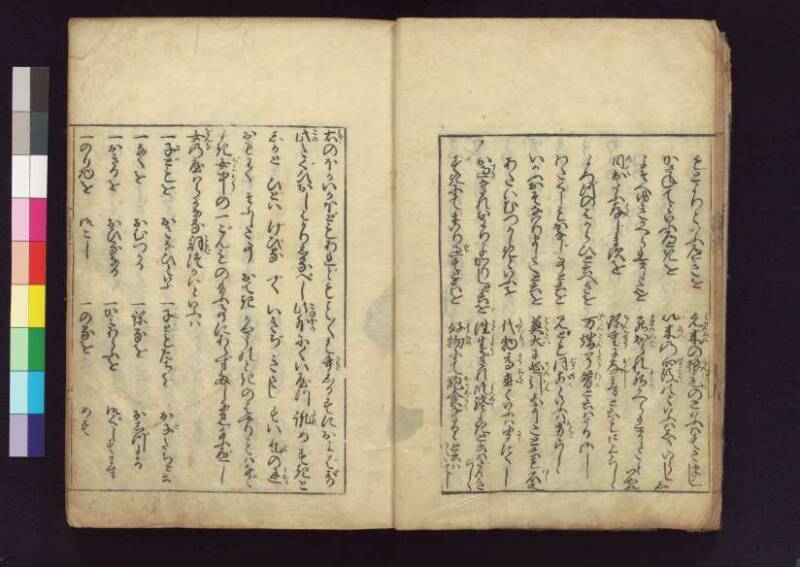
翻刻
もとよりといふへきを 元来(くはんらい)の根元(こんけん)のといふはすさまじ
かさねてといふへきを 以来(いらい)の向後(けうこう)のといふはしさいらしし
よそへゆきかへられましたを 罷出(まかりいで)られ罷(まかり)かへられましたもいや也
目出(めて)たふ存(そん)じますを 珍重(ちんちやう)に存(ぞんし)ますと云も口上らしゝ
よろづのはからひと云べきを 万端了簡(ばんたんれうけん)と云はうるさし
わたくしもおなじ事と云を みども同前(どうぜん)といふは男(おとこ)らしゝ
いかにおそなはりましたと云を 莫大(ばくたい)に延引(えんいん)しましたと云も石(いし)也
あたいむつかしきといふを 代物高直(たいもつかうちき)といふは聞(きゝ)にくし
お過(すき)なされおわりよかりしと云を 往生(わうしやう)なされ臨終(りんしう)よきと云はだんきらしし
すきにてまいり《振り仮名:過|す■》すと云を 好物(こうふつ)にて飽食(ほうしよく)なさるゝと云はかたてし
右(みぎ)のほかいかほどもあれどもこと〳〵く書(かき)しるすにおよばず
此(この)たぐひおしはかりしるべし此外(このほか)にくいやつ 誰(たれ)め すきと
しかと ひどい げびる やく いきぢ きさし すい 気(き)の通(とおる)
おもわく そふした事 おてき かやうのときのはやりことばなど
よき女中(ぢよちう)の一ごんもの給ふ事にあらずたしなみ給ふべし
女(をんな)のやはらかなる詞(ことば)つかいといふは
一 子(こ)どもを おさなひといふ 一 子(こ)どもたちを お子(こ)たちと云
一なくを おむつかる 一ねるを おしづまる
一おきるを おひるなる 一かみあらふを 御ぐしすます
一のり物を 御こし 一のるを めす
現代語訳
「もともと」というべきを「元来の根元の」というのは興ざめである
「重ねて」というべきを「以来の向後の」というのは事務的らしい
「よそへ行って帰られました」を「罷出られ罷り帰られました」というのも嫌である
「めでたく存じます」を「珍重に存じます」というのも口上書らしい
「よろずの計らい」というべきを「万端了簡」というのはうるさい
「私も同じ事」というのを「身共同前」というのは男らしい
「いかにお遅くなりました」というのを「莫大に延引しました」というのも堅い
「値段が難しい(高い)」というのを「代物高直」というのは聞きにくい
「お亡くなりになられ最期がよかった」というのを「往生なされ臨終よき」というのは男性的である
「好きで参ります」というのを「好物にて飽食なさる」というのは堅苦しい
右の他にもいくらでもあるが、ことごとく書き記すまでもない。この類推して知るべきである。この外に「くいやつ」「誰め」「すきとしか」「ひどい」「げびる」「やく」「いきじ」「きさし」「すい」「気の通る」「思わく」「そうした事」「おてき」、このような時の流行言葉など、よき女中が一言も言うものではない。慎み給うべきである。
女性の柔らかな言葉遣いというのは
一、子どもを「お幼い」という 一、子どもたちを「お子たち」という
一、泣くのを「お睦る」 一、寝るのを「お静まる」
一、起きるのを「お昼なる」 一、髪を洗うのを「御櫛済ます」
一、乗り物を「御輿」 一、乗るのを「召す」
英語訳
Saying "ganrai no kongen no" when one should say "motoyori" (originally) is off-putting
Saying "irai no kōgo no" when one should say "kasanete" (again) sounds bureaucratic
Saying "makari-ide rare makari-kaerare mashita" instead of "yoso e iki kaeraremashita" (went out and returned) is also disagreeable
Saying "chinchō ni zonji masu" instead of "medetaku zonji masu" (I think it felicitous) sounds like formal correspondence
Saying "bantan ryōken" instead of "yorozu no hakarai" (various arrangements) is tiresome
Saying "midomo dōzen" instead of "watakushi mo onaji koto" (I am the same) sounds masculine
Saying "bakudai ni enin shimashita" instead of "ika ni oso nawarimashita" (how late it has become) is also stiff
Saying "taimotsu kōchiki" instead of "atai muzukashiki" (the price is high) is unpleasant to hear
Saying "ōjō nasare rinjū yoki" instead of "osuki nasare owari yokarishi" (passed away with a good end) sounds masculine
Saying "kōbutsu nite hōshoku nasaru" instead of "suki nite mairi suru" (I am fond of it and partake) is too formal
Besides the above, there are countless more examples, but there is no need to write them all down. One should understand by analogy from these examples. Besides these, vulgar words like "kuiyatsu," "dare me," "suki toshika," "hidoi," "gebiru," "yaku," "ikiji," "kisashi," "sui," "ki no tōru," "omowaku," "sō shita koto," "oteki," and such fashionable words of the time - a proper lady should never utter even one of these words. You should be prudent about this.
Women's gentle speech patterns are:
- Calling children "osanai" (little ones) - Calling children "oko-tachi" (young ones)
- Calling crying "omutsukaru" - Calling sleeping "oshizumaru" (to quiet down)
- Calling waking up "ohiru naru" - Calling hair washing "gokushi sumasu" (arranging the hair)
- Calling vehicles "gokoshi" (palanquins) - Calling riding "mesu" (to summon/take)