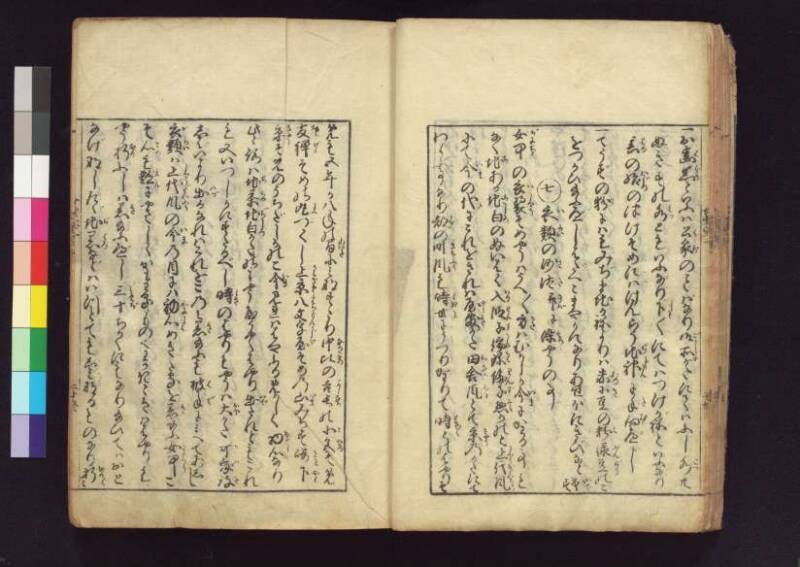
翻刻
一お歯黒(はぐろ)といふは公家(くけ)のことばなり御所(ごしよ)がたにてはふし水(みつ)共
ぬきすの水(みつ)ともいふなり下(した)〳〵にてはつけがねといふなり
春(はる)の始(はじめ)のつけそめにはけんらう地神(ぢじん)に手向(たむく)べし
一てうずの粉(こ)にはもみぢまちかねよりは赤小豆(あつき)の粉(こ)緑豆(ぶんどう)のこ
をつかひ給ふべしはだへこまやかになりあせぼにきびなど出(いで)す
㊆ 衣類(いるい)の沙汰(さた)《割書:幷(ならび)に|》染(そめ)やうの事
女中(ぢよちう)の衣裳(いしやう)そめやうはうへ〳〵方(かた)はむかしか今(いま)にかわる事も
なく地(ち)あか地白(ちしろ)のぬいはく入(いり)緞子(とんす)繻珍(しゆちん)綸子(りんず)惣(そう)かのこ上代風(じやうだいふう)
にて今(いま)の代(よ)にこれをきれは屋敷(やしき)がた田舎風(いなかふう)とて京(きやう)のかたにて
わらふ事なり都(みやこ)の町風(まちふう)も時世(ときよ)にうつりかわりて時々(とき〳〵)のはやりそ
めも五年か八年の間(あいた)にみなすたり中比(なかころ)の吉長(よしなが)の小色(こいろ)そめ
《振り仮名:友禅|ゆ■ぜん》そめの丸(まる)づくし上京(かみぎやう)八文字屋(はちもんじや)そめの山(やま)みちす崎(さき) 下(しも)
京(きやう)そめのうちだしかのこ今(いま)みれははやふるめかしく初心(しよしん)なり
此ころは地茶(ぢちや)地白(ぢしろ)かたのもやうやうやくはやり出(いで)たれどもこれ
も又いつしかにすたるべし時(とき)のはやりもやうは大(おほ)かた哥舞伎(かぶき)
しばいより出(いづ)るなれはこれをこのみ着(き)給ふも破手(はで)にみへてあしし
衣類(いるい)は上代風(じやうだいふう)の今(いま)の目には初心(しよしん)めきたるを着(き)給ふ女中(ちよちう)こ
そ心(こゝろ)も艶(えん)にやさしくおもわるゝもの也わかきときははやりも
やう折(をり)ふしは着(き)給ふべし三十(みそぢ)ちかくにもなり給ひてはおと
なげなしたゞ地黒(ぢくろ)などはいつとてもしみなるものなり折々(おり〳〵)
現代語訳
一、お歯黒というのは公家の言葉である。御所方では「鉄漿水(ふしみず)」とも「抜きすの水」とも言う。下々では「つけがね」と言う。春の始めの初めて付ける時には、堅牢地神に手向けをすべきである。
一、洗顔粉には紅葉待兼よりは小豆の粉、緑豆の粉を使い給うべし。肌がきめ細かくなり、汗疹や面皰などが出ない。
第六 衣類の沙汰 並びに染め様のこと
女中の衣装の染め様は、上々方は昔から今に変わることもなく、地赤、地白の刺繍箔入り、緞子、繻珍、綸子、総絞りなど上代風にて、今の代にこれを着れば、屋敷方や田舎風として京の方で笑われることである。都の町風も時世に移り変わって、時々の流行染めも五年か八年の間にみな廃れる。中頃の吉長の小色染め、友禅染めの丸づくし、上京八文字屋染めの山路、崎、下京染めの打ち出し絞り、今見れば早や古めかしく野暮である。
この頃は地茶、地白、肩の模様がようやく流行り出したけれども、これもまたいつの間にか廃れるだろう。時の流行模様は大方歌舞伎芝居より出るのだから、これを好んで着給うのも派手に見えて良くない。衣類は上代風の、今の目には野暮めいたるを着給う女中こそ、心も艶やかで優雅に思われるものである。若い時は流行模様を折々は着給うべし。三十路近くにもなり給うては大人らしく。ただ地黒などはいつでも地味なものである。折々
英語訳
1. "Ohaguro" (tooth blackening) is a court noble's term. At the imperial palace, it is also called "fushi water" or "nukisu water." Among commoners, it is called "tsukegane." When first applying it at the beginning of spring, one should make an offering to the Kenrō Jijin (earth deity).
1. For face powder, rather than "momiji machikane," one should use azuki bean powder or mung bean powder. This makes the skin smooth and prevents heat rash and acne from appearing.
Sixth: Matters of Clothing and Dyeing Methods
Regarding the dyeing of women's clothing, those of the highest ranks continue unchanged from ancient times to now, wearing embroidered gold-leafed fabrics in plain red and plain white, damask, shuuchin, rinzu silk, and all-over tie-dye in classical style. If one wears these in the present day, they would be laughed at in Kyoto as being mansion-style or country-style. The town fashion of the capital also changes with the times, and trendy dyes of each period all become obsolete within five to eight years. The Yoshinaga small-color dyeing of middle times, the Yuzen-dyed round patterns, the Kamigyo Hachimonjiya-dyed mountain paths and promontories, the Shimogyo-dyed raised tie-dye - when seen now, they already appear old-fashioned and unsophisticated.
Recently, plain tea-colored, plain white, and shoulder patterns have begun to become popular, but these too will soon become obsolete. Fashionable patterns of the time mostly originate from kabuki theater, so favoring and wearing these appears too flashy and is not good. For clothing, women who wear classical styles that appear unsophisticated to modern eyes are thought to have refined and elegant hearts. When young, one should wear fashionable patterns occasionally. When approaching thirty, one should dress more maturely. Plain black is always subdued, suitable for any time. Occasionally...