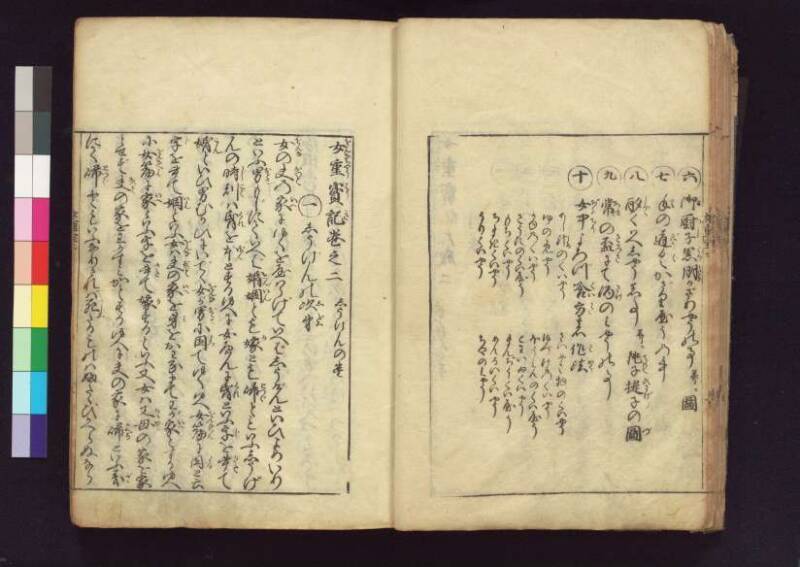
翻刻
㊅ 御厨子(みつし)黒朋(くろたな)かざりやうの事《割書:幷に|》図
㊆ 手(て)の道具(だうぐ)かざりやうの事
㊇ 酌(しやく)くはへしやうの事)《割書:幷に|》銚子(てうし)提子(ひさげ)の図(づ)
㊈ 常(つね)の盃(さかつき)にて酒(さけ)のみやうの事
㊉ 女中(ぢよちう)よろづ喰方(くいかた)の作法(さはう)
めし汁(しる)のくいやう さいやき物のくいやう
ゆのみやう ゆづけのくいやう
かゆのくいやう ほうはんのくいやう
ざうにのくいやう こわいゐくいやう
もちくいやう まんぢうくいやう
ちまきくいやう めんるいくいやう
うりくいやう ちやのみやう
女重宝記(をんなちやうはうき)巻之二 しうげんの巻
㊀ しうげんの次第(しだい)
女(をんな)の夫(おつと)の家(いへ)にゆくをやはらげていへばしうげんといひよめいり
といふ男(おとこ)もじにていへば婚姻(こんいん)とも嫁(か)とも婦(とつぐ)ともいふしうげ
んの時刻(じこく)は昏(くれ)を本(ほん)とするゆへに女へんに昏(くれ)といふ字(じ)を書(かき)て
婚(こん)といひ男むかひにいでゝ女(をんな)が男(おとこ)に因(よつ)てゆくゆへ女篇(をんなへん)に因(よる)と云
字(じ)を書て姻(いん)といふ女(をんな)は夫(おつと)の家(いへ)を身(み)をおわるまてわが家(いへ)とするゆへ
に女篇(をんなへん)に家(いへ)といふ字を書(かき)て嫁(か)するといふ又女は父母(ちゝはゝ)の家を家
とせず夫(おつと)の家をわがすみかとするゆへに夫の家に婦(かへる)といふ義(ぎ)
にて婦(とつぐ)ともいふなりされば死(しし)たるものはふたゝびかへらぬなら
現代語訳
六、御厨子・黒棚飾り様の事 並びに図
七、手の道具飾り様の事
八、酌加え様の事 並びに銚子・提子の図
九、常の盃にて酒の飲み様の事
十、女中万事食べ方の作法
飯・汁の食い様 菜・焼き物の食い様
湯の飲み様 湯漬けの食い様
粥の食い様 法飯の食い様
雑煮の食い様 強飯食い様
餅食い様 饅頭食い様
粽食い様 麺類食い様
瓜食い様 茶の飲み様
女重宝記 巻之二 祝言の巻
一、祝言の次第
女が夫の家に行くことを和らげて言えば祝言と言い、嫁入りと言う。男文字で言えば婚姻とも嫁とも嫁ぐとも言う。祝言の時刻は日暮れを基本とするゆえに、女偏に昏(暮れ)という字を書いて婚と言い、男が迎えに出て女が男によって行くゆえ、女偏に因(よる)という字を書いて姻と言う。女は夫の家を身を終わるまで我が家とするゆえに、女偏に家という字を書いて嫁すると言う。また女は父母の家を家とせず、夫の家を我が住処とするゆえに、夫の家に帰るという意義にて嫁ぐとも言うなり。されば死したる者は再び帰らぬなら
英語訳
6. Matters concerning the decoration of the sacred cupboard and black shelves, with diagrams
7. Matters concerning the decoration of hand implements
8. Matters concerning sake serving etiquette, with diagrams of sake vessels and water pitchers
9. Matters concerning how to drink sake with ordinary cups
10. Proper eating etiquette for women in all matters
How to eat rice and soup; how to eat vegetables and grilled foods
How to drink hot water; how to eat rice with hot water
How to eat rice gruel; how to eat temple meal
How to eat New Year soup; how to eat steamed sticky rice
How to eat rice cakes; how to eat steamed buns
How to eat wrapped rice cakes; how to eat noodles
How to eat melons; how to drink tea
Women's Treasure Record, Volume Two: The Scroll of Wedding Ceremonies
1. The Order of Wedding Ceremonies
When a woman goes to her husband's house, speaking gently, it is called "shūgen" (wedding celebration), or "yome-iri" (bride entering). In masculine terminology, it is also called "kon'in" (marriage), "ka" (bride), or "totugu" (to marry). The time for wedding ceremonies is fundamentally at dusk, therefore the character "kon" (marriage) is written with the woman radical and "kon" (dusk). Since the man goes out to meet her and the woman goes because of the man, the character "in" (matrimonial bond) is written with the woman radical and "yoru" (to depend on). Since a woman makes her husband's house her own home until the end of her life, the character "ka" (to marry) is written with the woman radical and "ie" (house). Also, since a woman does not consider her parents' house as home but makes her husband's house her dwelling place, in the sense of returning to her husband's house, it is also called "totugu" (to marry). Therefore, those who have died do not return again...