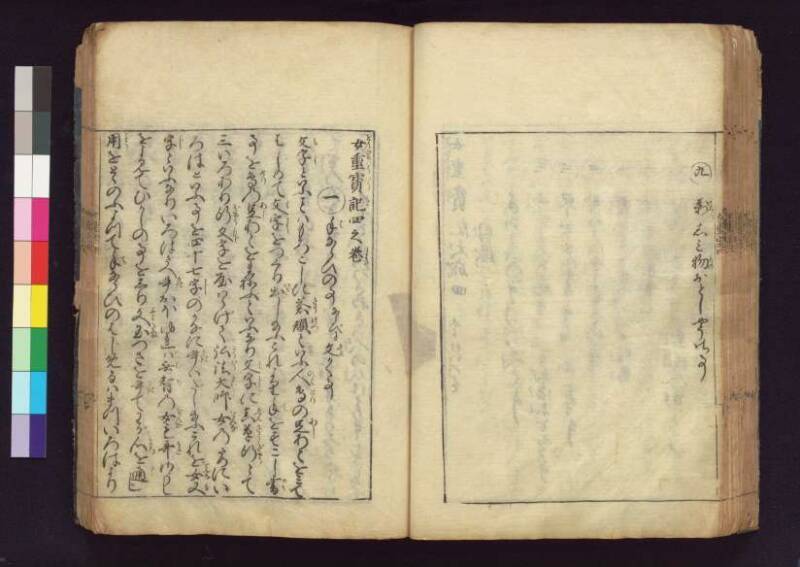
翻刻
㊈ 万(よろつ)しみ物(もの)おとしやうの事
女重宝記(をんなちやうはうき)四之 巻(まき)
㊀手(て)ならひの事《割書:ならびに|》文(ふみ)かく事
文字(もじ)といふことはもろこしに蒼頡(さうけつ)といふ人(ひと)鳥(とり)の足(あし)あとをみて
はじめて文字(もし)をつくり出(いだ)し給ふこれより手(て)をすこし書(かく)
事を鳥(とり)の足(あし)あとをまねぶといふなり文字(もじ)に真草行(しんさうぎやう)とて
三いろあり行文字(ぎやうもじ)をやはらげて弘法大師(こうはうだいし)女(をんな)のためにい
ろはといふ事を四十七 字(じ)のかなに書(かき)いだし給ふこれを女文(をんなも)
字(じ)といふなりいろはさへ書(かき)おぼゆれば無智(むち)の女(をんな)も哥(うた)さうし
をよみてむかしの事をしり文(ふみ)玉(たま)つさを書(かき)てわが心(こゝろ)を通(つう)じ
用(よう)をとゝのふよつて手(て)ならひのはじめるはまづいろはより
現代語訳
九 あらゆる染み物を落とす方法の事
女重宝記 四の巻
一 手習いの事 ならびに文を書く事
文字ということは、中国で蒼頡という人が鳥の足跡を見て初めて文字を作り出されたことに始まる。これより、手で少し字を書くことを「鳥の足跡を真似る」というのである。文字には真・草・行という三種類がある。行書体を柔らかくして、弘法大師が女性のために「いろは」ということを四十七文字のかなに書き表された。これを女文字というのである。いろはさえ書き覚えれば、無学な女性でも歌や草子を読んで昔の事を知り、手紙や文を書いて自分の心を通じ合わせ、用事を整えることができる。よって手習いを始めるには、まず「いろは」から
英語訳
9. On methods for removing all kinds of stains
Women's Treasure Record, Volume Four
1. On practicing calligraphy, including writing letters
The concept of writing characters began in China when a person named Cangjie observed bird footprints and first created written characters. From this, writing characters by hand came to be called "imitating bird footprints." There are three types of characters: regular script (shin), cursive script (sō), and semi-cursive script (gyō). Softening the semi-cursive style, Kōbō Daishi created the "iroha" in forty-seven kana characters for the benefit of women. This is called women's script. If one can learn to write even the iroha, even an uneducated woman can read poems and tales to learn about the past, write letters and documents to communicate her heart, and manage her affairs. Therefore, when beginning to practice calligraphy, one should start with the iroha.