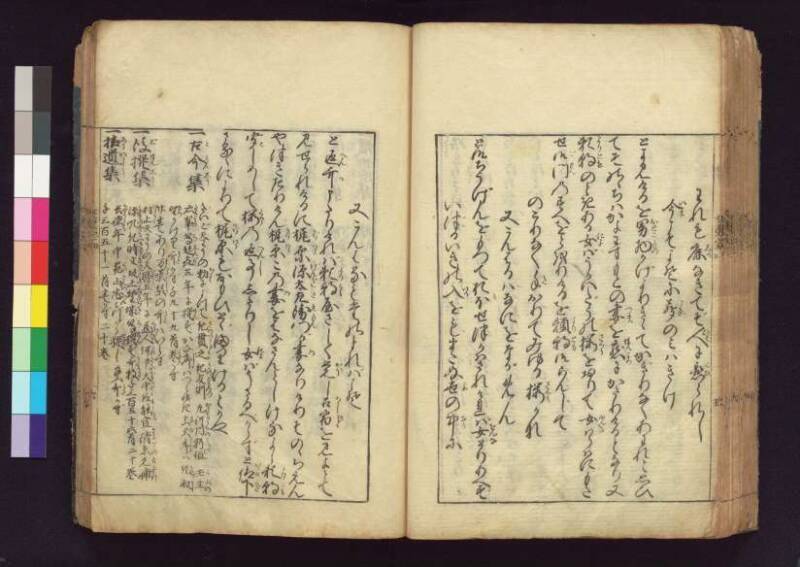
翻刻
われも鹿(しか)なきてぞ人(ひと)に恋(こひ)られし
今(いま)こそよそに声(こゑ)のみはきけ
とよみけるを男(おとこ)物(もの)かげよりきゝてかぎりなくあわれと思ひ
てそのゝちはかよわすもとの妻(つま)を懇(ねんころ)にかたりけるとなり又
頼朝(よりとも)のときある女(によ)ばうかいだうの桜(さくら)をおりて女(おんな)はらはにもた
せ御門(ごもん)のすへをとをりけるを頼朝(よりとも)御らんじて
のこりなく手(て)おりてみゆる桜(さくら)かな
又こんはるはなにをながめん
と御ちうげんをもつておほせつかはされければ女(をんな)とりあへず
いづるいきの入(いる)をもまたぬ世(よ)の中(なか)に
又こんはるもたのまればこそ
と返哥(へんか)申たりければ頼朝(よりとも)やさしく覚(おほ)し召(めし)宿(やど)を見よとて
見せられけるに梶原源太左衛門(かぢはらげんださえもん)が妻(め)なりけりそのゝちえん
やつきたりけん梶原(かぢはら)この妻(め)をはなさんとしけるよし頼朝(よりとも)
聞(▢こ)しめして桜(さくら)の返事(へんし)したりし女(によ)ばうさるべからずと仰下(おゝせくだ)
さるゝによりて梶原(かぢはら)もおもひとゞまりけるとかや
一 古今集(こきんしう) 《割書:だいご天わうの勅(ちよく)によつて紀貫之(きのつらゆき) 紀友則(きのとものり) 凡河内躬恒(おうしかうちのみつね) 壬生(みぶの)|忠峰(たゝみね)等(ら)延喜(えんぎ)五年に撰(せん)ずかな序(じよ)はつらゆき真名序(まなしよ)は紀淑(きのよし)》
《割書:望(もち)かけり哥(うた)かず千九十九首 巻(くはん)かず|廿巻あり万葉集(まんようしう)の哥(うた)はいらず》
一 後撰集(ごせんしう) 《割書:村上(むらかみ)天わうの天 暦(りやく)五年に蔵人(くらんと)伊尹(これたゝ)大中臣能宣(おほなかとみよしのぶ)清原元輔(きよはらのもとすけ)|源順(みなもとのしたかふ)紀時文(きのときふん)坂上望城(さかのうへのもちき)等(ら)撰(せん)ず哥数(うたかす)千三百五十六首二十巻》
一 拾遺集(しういしう) 《割書:長徳(ちやうとく)年中 花山院(くはさんのいん)みづから撰(せん)じ給ふ哥(うた)かず|千三百五十一首巻かず二十巻》
現代語訳
われも鹿鳴きて人に恋われし
今こそよそに声のみは聞け
と詠んだのを男が物陰より聞いて、限りなく哀れと思い、その後は通わず元の妻を懇ろに語らったということです。また頼朝の時、ある女房が街道の桜を折って女童に持たせ、御門の裾を通りかかったのを頼朝がご覧になって
残りなく手折って見ゆる桜かな
また来む春は何を眺めん
と中間を通してお尋ねになったところ、女は取り敢えず
出づる息の入るをも待たぬ世の中に
また来む春も頼まればこそ
と返歌申し上げたので、頼朝は優雅にお思いになり、宿を見よとて見せられたところ、梶原源太左衛門の妻でした。その後縁者が来たのでしょうか、梶原がこの妻を離縁しようとした由を頼朝がお聞きになって「桜の返事をした女房は離してはならぬ」と仰せ下されたので、梶原も思い止まったということです。
一 古今集《醍醐天皇の勅によって紀貫之・紀友則・凡河内躬恒・壬生忠岑等が延喜五年に撰ず。仮名序は貫之、真名序は紀淑望が書けり。歌数千九十九首、巻数二十巻あり。万葉集の歌は入らず》
一 後撰集《村上天皇の天暦五年に蔵人伊尹・大中臣能宣・清原元輔・源順・紀時文・坂上望城等が撰ず。歌数千三百五十六首、二十巻》
一 拾遺集《長徳年中、花山院自ら撰じ給う。歌数千三百五十一首、巻数二十巻》
英語訳
I too cried like a deer and was loved by someone
Now I can only hear that voice from afar
When the man heard this poem from behind cover, he was deeply moved with compassion, and thereafter stopped his visits to the other woman and spoke tenderly with his original wife. Also, during Yoritomo's time, a court lady broke off cherry blossoms from the roadside and had a young girl carry them as she passed by the gate. When Yoritomo saw this, he sent through a retainer the poem:
Cherry blossoms picked completely bare
What shall we gaze upon when spring comes again?
The woman immediately replied with this poem:
In this world where we cannot wait for the next breath after exhaling
It is only because we trust that spring will come again
Yoritomo found this elegant and ordered that her residence be investigated. It turned out she was the wife of Kajiwara Genta Saemon. Later, when relatives came and Kajiwara attempted to divorce this wife, Yoritomo heard of it and declared "The court lady who replied about the cherry blossoms must not be divorced," so Kajiwara abandoned his intention.
1. Kokin-shū (Collection of Ancient and Modern Poems) - Compiled by imperial order of Emperor Daigo by Ki no Tsurayuki, Ki no Tomonori, Ōshikōchi no Mitsune, Mibu no Tadamine and others in the 5th year of Engi. The kana preface was written by Tsurayuki, the Chinese preface by Ki no Yoshimochi. Contains 1,099 poems in 20 volumes. Does not include poems from the Man'yōshū.
2. Gosen-shū (Later Collection) - Compiled in the 5th year of Tenryaku under Emperor Murakami by Kurōdo Koretada, Ōnakatomi no Yoshinobu, Kiyohara no Motosuke, Minamoto no Shitau, Ki no Tokifumi, Sakanoue no Mochiki and others. Contains 1,356 poems in 20 volumes.
3. Shūi-shū (Collection of Gleanings) - Compiled by Emperor Kazan himself during the Chōtoku era. Contains 1,351 poems in 20 volumes.