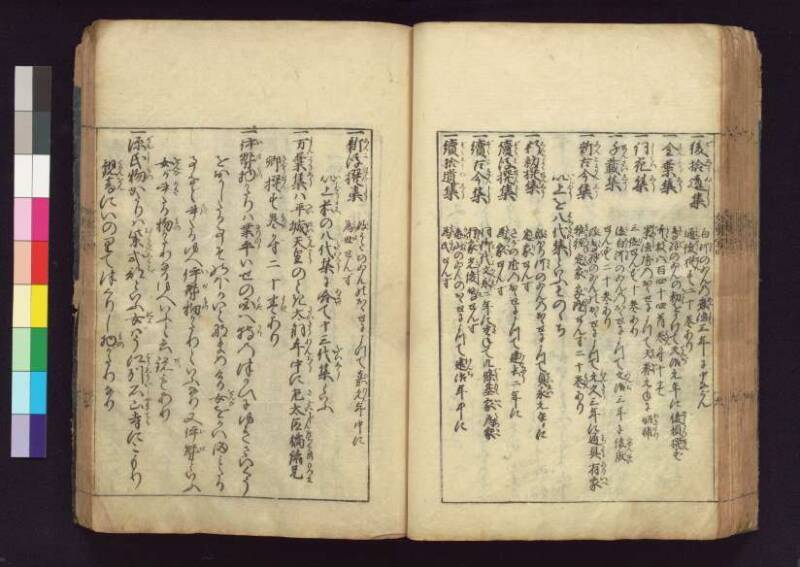
翻刻
一 後拾遺集(ごしうゐしう) 《割書:白 河(かわ)のゐんの応徳(あふとく)三年に中なごん|通俊(みちとし)撰(せん)す二十巻あり》
一 金葉集(きんようしう) 《割書:鳥羽(とば)のゐんの勅(ちよく)をうけて天治(てんぢ)元年に俊頼(としより)撰(せん)ず|哥(うた)数六百四十四首 巻(くはん)かす十巻》
一 詞花集(しくはしう) 《割書:崇徳(じゆとく)院のおゝせによつて天養(てんやう)元年に昭輔(あきすけ)|三 位(ゐ)せんず十巻あり》
一 千載集(せんさいしう) 《割書:後白河(こしらかわ)のゐんのおゝせによつて文治(ぶんぢ)三年に俊成(しゆんせい)|せんず二十巻あり》
一 新古今集(しんこきんしう) 《割書:後鳥羽(ごとば)のゐんのおゝせによつて元久(げんきう)三年に通具(みちとも)有家(ありいへ)|雅経(まさつね)定家(ていか)家隆(かりう)せんず二十 巻(くはん)あり》
以上(いじやう)を八代集(はちたいしう)といふそのゝち
一 新勅撰集(しんちよくせんしう) 《割書:後(こ)ほり河(かわ)のゐんのおゝせによつて貞永(ていえい)元年に|定家(ていか)せんず》
一 続後撰集(ぞくごせんしう) 《割書:さがの院のおゝせによつて建長(けんちやう)二年に|為家(ためいへ)せんず》
一 続古今集(ぞくこきんしう) 《割書:同 御代(みよ)文永(ふんえい)二年に重(かさ)ねて九 条(でう)基家(もといへ)為家(ためいへ)|行家(ゆきいへ)光俊(みつとし)等(ら)せんず》
一 続拾遺集(ぞくしうゐしう) 《割書:亀山(かめやま)のゐんのおゝせによつて建治(けんち)年中に|為氏(ためうち)せんず》
一 新後撰集(しんこせんしう) 《割書:後(こ)うたのゐんのおゝせによつて嘉元(かけん)年中に|為世(ためよ)せんず》
以上(いじやう)前(まへ)の八 代集(たいしう)に合(あわせ)て十三 代集(だいしう)といふ
一 万葉集(まんようしう)は平城天皇(へいせいてんわう)のとき太銅(たいたう)年中(ねんぢう)に左太臣(さだいじん)橘諸兄(たちはなのもろえ)
卿(きやう)撰(せん)ず巻(くはん)かず二十 巻(まき)あり
一 伊勢物(いせもの)かたりは業平(なりひら)いせの国(くに)へ狩(かり)のつかひにゆきさいくう
をおかしたる事そのほかいとなまめける女(をんな)をかいまみたる
事など書(かき)たるゆへ伊勢物(いせもの)がたりといふなり又 伊勢(いせ)といふ
女(をんな)が書(かき)たる物(もの)かたりなるゆへいふと云 説(せつ)もあり
一 源氏物(げんしもの)かたりは紫式部(むらさきしきぶ)といふ女(によ)ばう江州(ごうしう)石山寺(いしやまてら)にこもり
観音(くはんをん)にいのりてつくりし物(もの)がたりなり
現代語訳
一 後拾遺集《白河院の応徳三年に中納言通俊が撰す。二十巻あり》
一 金葉集《鳥羽院の勅を受けて天治元年に俊頼が撰ず。歌数六百四十四首、巻数十巻》
一 詞花集《崇徳院の仰せによって天養元年に昭輔三位が撰ず。十巻あり》
一 千載集《後白河院の仰せによって文治三年に俊成が撰ず。二十巻あり》
一 新古今集《後鳥羽院の仰せによって元久三年に通具・有家・雅経・定家・家隆が撰ず。二十巻あり》
以上を八代集という。その後
一 新勅撰集《後堀河院の仰せによって貞永元年に定家が撰ず》
一 続後撰集《嵯峨院の仰せによって建長二年に為家が撰ず》
一 続古今集《同御代の文永二年に重ねて九条基家・為家・行家・光俊等が撰ず》
一 続拾遺集《亀山院の仰せによって建治年中に為氏が撰ず》
一 新後撰集《後宇多院の仰せによって嘉元年中に為世が撰ず》
以上を前の八代集に合わせて十三代集という。
一 万葉集は平城天皇の時、大同年中に左大臣橘諸兄卿が撰ず。巻数二十巻あり。
一 伊勢物語は業平が伊勢の国へ狩の使いに行き、斎宮を犯した事、その他大変優美な女性を垣間見た事などを書いたゆえ伊勢物語という。また伊勢という女が書いた物語なるゆえいうという説もある。
一 源氏物語は紫式部という女房が江州石山寺にこもり、観音に祈って作った物語である。
英語訳
1. Goshūi-shū (Later Collection of Gleanings) - Compiled by Middle Counselor Michitoshi in the 3rd year of Ōtoku under Retired Emperor Shirakawa. Contains 20 volumes.
2. Kin'yō-shū (Collection of Golden Leaves) - Compiled by Toshiyori in the 1st year of Tenji by imperial order of Retired Emperor Toba. Contains 644 poems in 10 volumes.
3. Shika-shū (Collection of Verbal Flowers) - Compiled by Third Rank Akisuke in the 1st year of Ten'yō by order of Retired Emperor Sutoku. Contains 10 volumes.
4. Senzai-shū (Collection of a Thousand Years) - Compiled by Shunzei in the 3rd year of Bunji by order of Retired Emperor Go-Shirakawa. Contains 20 volumes.
5. Shin kokin-shū (New Collection of Ancient and Modern Poems) - Compiled by Michitomo, Ariie, Masatsune, Teika, and Ietaka in the 3rd year of Genkyū by order of Retired Emperor Go-Toba. Contains 20 volumes.
The above are called the Eight Imperial Anthologies (Hachidaishū). After these:
6. Shin chokusen-shū (New Imperial Collection) - Compiled by Teika in the 1st year of Jōei by order of Retired Emperor Go-Horikawa.
7. Zoku gosen-shū (Continued Later Collection) - Compiled by Tameie in the 2nd year of Kenchō by order of Retired Emperor Saga.
8. Zoku kokin-shū (Continued Ancient and Modern Collection) - Compiled again in the 2nd year of Bun'ei of the same reign by Kujō Motoie, Tameie, Yukie, Mitsutoshi and others.
9. Zoku shūi-shū (Continued Collection of Gleanings) - Compiled by Tameuchi during the Kenji era by order of Retired Emperor Kameyama.
10. Shin gosen-shū (New Later Collection) - Compiled by Tameyo during the Kagen era by order of Retired Emperor Go-Uda.
The above, combined with the previous eight anthologies, are called the Thirteen Imperial Anthologies.
11. The Man'yōshū was compiled by Minister of the Left Tachibana no Moroe during the Daidō era in the time of Emperor Heizei. Contains 20 volumes.
12. The Tales of Ise (Ise Monogatari) gets its name because it describes how Narihira went to Ise Province as an envoy for hunting, violated the Saigū (Ise Priestess), and glimpsed other very elegant women. There is also a theory that it is called this because it was written by a woman named Ise.
13. The Tale of Genji is a story created by a court lady called Murasaki Shikibu, who secluded herself at Ishiyama Temple in Ōmi Province and prayed to Kannon.