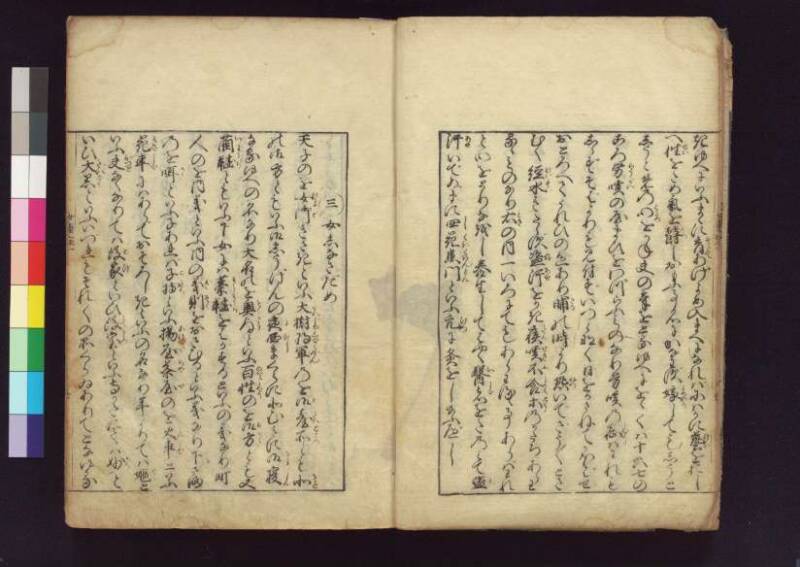
翻刻
きゆへにいふまゝに育(そたて)あげよめ入まへになればにはかに芸(けい)をおし
へ性(せい)をこめ気を欝(うつ)しおもふ事心にかなわず嫁(よめいり)してもしうと
しうとめの心(こゝろ)をかね夫の気をとるゆへにをゝくは十六七の
ころ労咳(らうがい)のやまひをわづらふものなり労咳の症(しやう)はわれも
しらずそばよりも見付ずいつとなく日をかさねてかほばせ
おとろへてうれひの色あり晡(さる)の時より熱(ねつ)いでざう〳〵とさ
むく経水(けいすい)きたらず盗汗(ねあせ)をかき疾(たん)咳(せき)不食等(ふしよくたう)のかたちあらわ
るゝものなり右(みき)の内一いろにてもあらわるゝ事あらばわれ
と心をとりなをし養生してはやく医者(いしや)をたのみて盗(ね)
汗(あせ)いでぬまに四花患門(しくはくわんもん)といふ穴(けつ)に灸をし給ふべし
㊂ 女しなさだめ
天子のを女御(によご)きさきといふ大樹将軍(たいじゆしやうぐん)のを御台所(みたいどころ)とも北(きた)
の御方ともいふ御しうげんの夜(よ)西(にし)まくらに北むきに御寝(ぎよしん)
なるゆへの名なり大名のを奥様(をくさま)といふ百性(ひやくしやう)のを御方(おかた)とも又
藺鞋(いわらぢ)ともいふ下女には藁鞋(わらわらぢ)をはかするといふの義なり町
人のを内義といふ内の義則(ぎそく)をおさむるといふ義なり下(しも)ざま
のを咡(かゝ)といふ子あれば子持(こもち)といふ揚屋(あけや)茶屋(ちやや)のを火車(くはしや)といふ
花車(きやしや)にはあらでおそろしきといふの名なり年よりては嫗(ばゝ)と
いふ夫(おつと)なくなりては後家(こけ)といひ後室(こうしつ)といふ寺がたにては妙(めう)と
いひ大黒(だいこく)といふいづれもそれ〳〵の品くらゐありてとなゆる
現代語訳
そのため言うままに育てあげ、嫁入り前になると急に芸を教え、性格を抑制し、気を鬱屈させ、思うことが心にかなわず、嫁入りしても舅・姑の心を兼ね、夫の気を取るため、多くは十六、七歳の頃に労咳の病を患うものである。労咳の症状は自分でも分からず、周りからも見つけられず、いつとなく日を重ねて顔色が衰え、憂いの色がある。午後三時頃から熱が出て、ぞくぞくと寒く、月経が来ず、寝汗をかき、痰・咳・食欲不振等の症状が現れるものである。右の症状の内、一つでも現れることがあれば、自ら心を取り直し養生して、早く医者を頼み、寝汗が出ないうちに四花患門という穴に灸をしなさい。
【二】女性の身分の定め
天子の妻を女御・后という。大樹将軍の妻を御台所とも北の御方ともいう。御就寝の夜、西枕で北向きにお休みになるゆえの名である。大名の妻を奥様という。百姓の妻を御方とも又は藺鞋ともいう。下女には藁鞋を履かせるという意味である。町人の妻を内儀という。内の義則を治めるという意味である。下層の女性を嚊という。子供がいれば子持ちという。揚屋・茶屋の女性を火車という。花車ではなく恐ろしいという意味の名である。年を取ると嫗という。夫が亡くなると後家といい、後室という。寺方では妙といい、大黒という。いずれもそれぞれの身分・階級があって呼ばれる。
英語訳
Therefore, children are raised according to their whims, but when it comes time for marriage, they are suddenly taught arts, their nature is suppressed, their spirits become melancholic, their desires cannot be fulfilled in their hearts. Even after marriage, they must consider the feelings of their parents-in-law and attend to their husband's moods, so many suffer from consumption (tuberculosis) around the age of sixteen or seventeen. The symptoms of consumption are not recognized by the sufferer herself, nor noticed by those around her. Days pass imperceptibly as her complexion weakens and shows signs of melancholy. From around 3 PM, fever appears with chills, menstruation stops, night sweats occur, and symptoms such as phlegm, coughing, and loss of appetite manifest. If even one of these symptoms appears, one should take heart, practice self-care, quickly consult a doctor, and apply moxa to the acupoints called "Four Flowers Affliction Gate" before night sweats begin.
[Section 2] Determination of Women's Social Status
The Emperor's wife is called nyōgo or kōgo (empress). The Shogun's wife is called midaidokoro or kita-no-okara. This name comes from sleeping facing north with the pillow to the west during conjugal nights. A daimyo's wife is called okusama. A farmer's wife is called okata or iwaraji (straw sandals), meaning that female servants wear straw sandals. A merchant's wife is called naigi, meaning one who manages the inner rules of the household. Lower-class women are called kaka. If they have children, they are called komochi. Women of pleasure quarters and teahouses are called kashya (fire cart), named not for flower carts but for being frightening. Elderly women are called baba. When their husbands die, they are called koke (widow) or kōshitsu. In temple contexts, they are called myō or daikoku. Each has their respective social rank and class by which they are called.