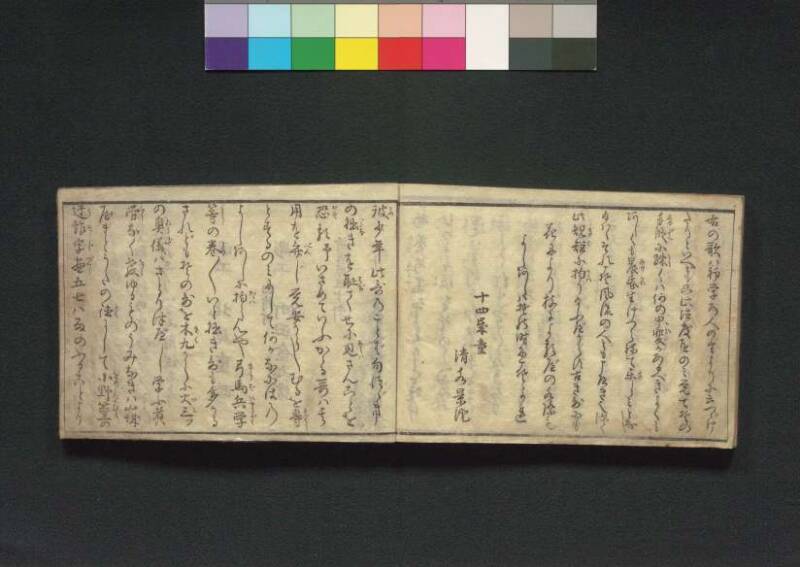
翻刻
右の歌は初学の人のたよりに云つゞけ
たりといへども只此法度をのみ覚てその
手段(しゆだん)に疎(うと)くは何の甲斐(かひ)かあるべきよくも
あしくも晨昏(あけくれ)生けつらねて楽(たの)しみとなし
給はゝそれこそ風流の人とも申へき也深く
此 規矩(きく)に拘(かゝは)り給ふべからす古き哥にも
花により枝によるべの水際も
よしあしはその時にこそよれ
十四歳童
清水景澄
彼(かの)少年此哥のことば向つゞき
の拙(つたな)きを恥(はぢ)て世に見(あらは)さんことを
恐(おそ)る《割書:予》いさめていふかゝる哥は其
用を弁(べん)じ覚安からしむるを専(もつはら)
とするのみにして何かなにはの
よしあしに拘(かゝは)らんや弓馬兵学(きうばひやうがく)
等(とう)の巻(まき)〳〵いと拙き哥も多かる
されどもその哥を木九(きく)からに火三(ひみ)ッ
の奥儀(おうぎ)は。さとりつべし学ふ者は
労(らう)なく教(をし))ゆるものうみなきは山城
やまとうたの徳(とく)にして小野篁(をのゝたかむら)の
迂詐字尽(うそじづくし)五七は雨のふることより
現代語訳
右の歌は初学の人の便りに言い続けたりといえども、ただこの法度をのみ覚えてその手段に疎くば何の甲斐があるべきか。よくも悪くも明け暮れ生け続けて楽しみとなし給わば、それこそ風流の人とも申すべきなり。深くこの規矩に拘わり給うべからず。古き歌にも
花により枝によるべの水際も
良し悪しはその時にこそ寄れ
十四歳童
清水景澄
かの少年この歌の言葉の続きの拙きを恥じて世に現さんことを恐る。予が諌めて言うには、かかる歌はその用を弁じ覚え易からしむるを専らとするのみにして、何か難波の良し悪しに拘わらんや。弓馬兵学等の巻々いと拙き歌も多かるされども、その歌を聞くからに秘密の奥義は悟りつべし。学ぶ者は労なく、教ゆる者に倦みなきは、山城大和歌の徳にして、小野篁の嘘字尽し五七は雨の降ることより
英語訳
The above poems were composed as guidance for beginners, but if one merely memorizes these rules while remaining unskilled in actual technique, what benefit could there be? Whether good or poor, if you continuously arrange flowers from dawn to dusk and make it your pleasure, then truly you may be called a person of refined taste. Do not be deeply bound by these rigid rules. As an old poem says:
Depending on flowers, depending on branches, the water's edge too—
What is good or bad depends entirely on the moment
Fourteen-year-old boy
Shimizu Keichō
That youth was ashamed of the poor flow of words in these poems and feared to reveal them to the world. I admonished him saying: Such poems are intended solely to clarify their practical use and make them easy to remember—why should one be concerned with the literary merits of Naniwa poetry? In the various volumes of archery, horsemanship, and military studies, there are many quite crude poems, yet from hearing such poems one can grasp the secret teachings. That learners need not labor and teachers do not tire is the virtue of Yamashiro and Yamato poetry, and Ono no Takamura's acrostic poems in five and seven syllables are [as natural as] the falling of rain...