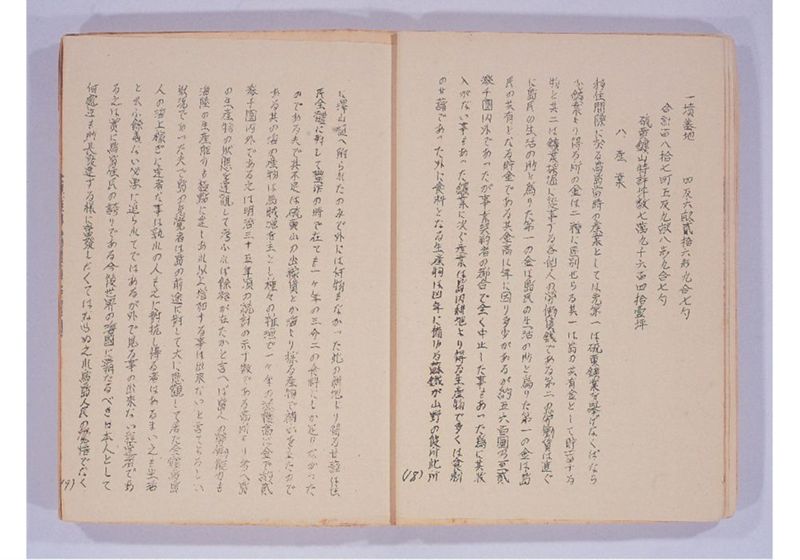
翻刻
一墳墓地 四反六畝式拾六歩九合七勺
合計百八拾七町五反九畝八歩九合七勺
硫黄鉱山特許坪数七萬九千六百四拾壹坪
八.産業
移住間際に於る鳥島当時の産業として以先第一は硫黄鉱業を挙げなくばなら
む鉱業より得る所の金は二種に区別せらる其一は島の共有金として貯蓄する
物と其二は鉱採掘以降事する各個人の労働賃銭でである第二の労働賃は直ぐ
に島民の生活の助と為りた第一の金は島民の生活の助と為りた第一の金は島
民の共有となる貯金である其金高は年に因り多少があるが約五六百圓乃百貳
参千圓内外であったが事業契約者の都合で全く中止した事もあった為に其収
入がない事もあった鉱業に次ぐ産業は島内耕地より得る生産物で多くは食料
の甘蕗であった外に食料となる生産物は凶年に備ゆる蘇鉄が山野の彼所此所(18)
に澤山植へ附られたのみで外には何物もなかった此の耕地より得る甘蕗は住
芹全体に対して豊作の時で在ても一ヶ年の三分二の食料にしか足りなかった
のである夫で其不足は硫黄山の出稼賃とか海より採る産物で補いを立たので
ある其の海の産物は烏賊漁を主とし種々の稚漁で一ヶ年の漁獲高は金で約貳
参千圓内外である之は明治三十五年頃の統計の示す数である高所より考へ島
の生産物の状態を達観して考ふれば余裕が在たかと言へば島人の労働能力も
海陸の生産能力も極点に達しあれ以上増加する事は出来ないと言てよろしい
状況であった夫で島の先覚者は島の前途に對して大に悲観して居た全体鳥島
人の海上稼ぎに達者な事は孰出の人もえに対抗し得る者はあるまいえも生活
と云ふ余義ない必要に迫られてではあるが外で見る事の出来ない程達者であ
る之は實に鳥島住民の誇りである今後世界の海國に覇たるべき日本人として
何処迄も助長発達する様に奮発しなくてはならぬ之此鳥島人民の覚悟でなく(19)
現代語訳
一、墳墓地 四反六畝二十六歩九合七勺
合計 百八十七町五反九畝八歩九合七勺
硫黄鉱山特許坪数 七万九千六百四十一坪
八.産業
移住直前における鳥島の産業として、まず第一に硫黄鉱業を挙げなければならない。鉱業から得られる収入は二種類に区別される。その一つは島の共有金として貯蓄するものであり、もう一つは鉱山採掘に従事する各個人の労働賃金である。第二の労働賃金は直ちに島民の生活の助けとなった。第一の金は島民の共有となる貯金である。その金額は年によって多少の差があるが、おおよそ五、六百円から千二、三百円前後であった。しかし、事業契約者の都合によって全く中止されたこともあり、その収入がない年もあった。鉱業に次ぐ産業は、島内の耕地から得られる生産物であり、その多くは食料となる甘藷(サツマイモ)であった。他に食料となる生産物としては、凶年に備えるためのソテツが山野のあちこちに多く植えられていたのみで、それ以外は何もなかった。この耕地から得られる甘藷は、島民全体に対して豊作の時であっても、一か年の三分の二の食料にしか足りなかった。そのため、その不足分は硫黄山の出稼ぎ賃金や海から採れる産物で補われていた。海の産物はイカ漁を主とし、さまざまな種類の漁業で、一か年の漁獲高は金額にして約二、三千円前後であった。これは明治三十五年頃の統計が示す数字である。高い視点から島の生産物の状態を俯瞰して考えてみると、余裕があったかと言えば、島民の労働能力も海陸の生産能力もすでに極限に達しており、それ以上増加させることはできないと言ってよい状況であった。そのため、島の先覚者たちは島の将来に対して大いに悲観していた。そもそも鳥島の人々の海上での働きぶりの達者なことは、どこの出身の人も容易に対抗できる者はあるまい。それも生活という余儀ない必要に迫られてのことではあるが、外では見ることのできないほどの腕前である。これは実に鳥島住民の誇りである。今後、世界の海洋国として覇を唱えるべき日本人として、どこまでも奨励・発展させるよう奮発しなければならない。これは鳥島人民の覚悟でなく(次頁へ続く)
英語訳
One, cemetery land: 4 tan 6 se 26 bu 9 gō 7 shaku
Total: 187 chō 5 tan 9 se 8 bu 9 gō 7 shaku
Sulfur mine licensed area: 79,641 tsubo
8. Industries
When considering the industries of Tori-shima in the period just before its evacuation, the sulfur mining industry must first be cited as the primary one. The income derived from mining was divided into two categories. The first was savings accumulated as communal funds for the island, and the second was the wages earned by individual laborers engaged in mining operations. The second category — individual wages — directly contributed to the livelihood of the islanders. The first category constituted communal savings shared among the islanders. The amount varied from year to year, but was generally somewhere between approximately five to six hundred yen and one thousand two to three hundred yen. However, there were also years when operations were entirely halted due to circumstances on the part of the business contractors, resulting in no income at all. The next industry after mining was the agricultural produce obtained from the island's cultivated fields, most of which consisted of sweet potatoes for food. The only other food crop was the cycad (sago palm), planted widely across the hills and fields as a precaution against years of poor harvest, and beyond that there was nothing else. Even in a good harvest year, the sweet potatoes produced from these fields were sufficient to supply only two-thirds of the annual food requirements of the entire island population. The shortfall was therefore made up by wages earned from working at the sulfur mountain and by products harvested from the sea. The sea's bounty centered mainly on squid fishing, supplemented by various other types of fishing, with an annual catch valued at approximately two to three thousand yen. These figures are drawn from statistics around the year Meiji 35 (1902). When surveying the state of the island's production from a broader perspective, one could not say there was any surplus — it would be fair to say that both the labor capacity of the islanders and the productive capacity of land and sea had already reached their absolute limits, with no possibility of further increase. For this reason, the island's forward-thinking leaders were deeply pessimistic about the island's future. Indeed, the skill of the people of Tori-shima in working at sea is such that people from virtually anywhere else would have difficulty matching them. Although this proficiency was born of necessity — driven by the unavoidable demands of survival — their level of skill is something rarely seen elsewhere. This is truly a source of pride for the inhabitants of Tori-shima. As Japanese people, who should henceforth bear mastery over the world's oceans as a maritime nation, they must strive with all their might to further promote and develop this capability. This must be the resolve of the people of Tori-shima, not merely... (continues on next page)