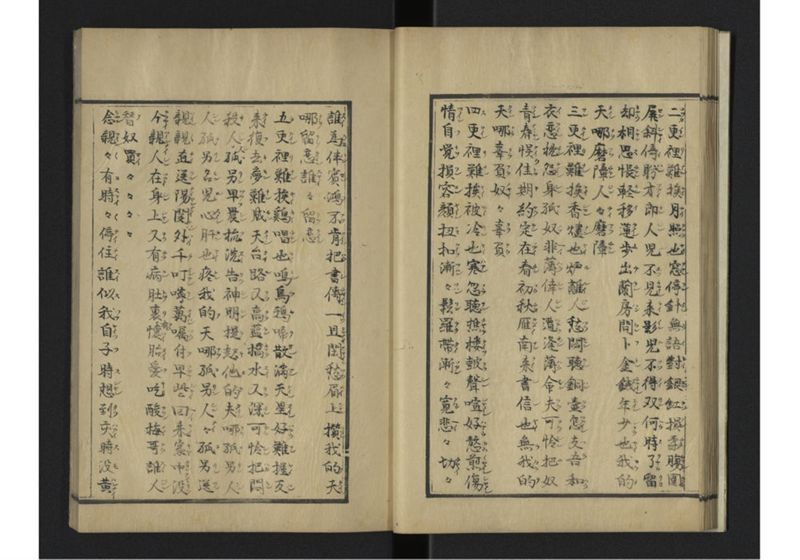
翻刻
二(ロツカ)更(イン)裡(リ)難(ナン)挨(ヤイ)月(ヤイ)照(ケヤウ)也(ヤイ)窓(テヤン)停(テン)針(チン)無(ウ)語(イ)對(トイ)銀(二ン)缸(カン)損(クン)柔(チウ)腸(ケヤン)圍(ウイ)
屏(セン)斜(シヤイ)倚(イ)盻(ハン)才(ツアイ)即(ラン)人(ジン)児(ル)不(ホツ)見(キヤイン)来(ライ)影(イン)児(ル)不(フツ)得(タイ)双(サン)何(ハウ)時(ス)了(リヤウ)留(リヨ)
却(キヤウ)相(シヤン)思(ス)帳(チヤン)軽(キン)移(イ)蓮(ライン)歩(ホ)出(チ)蘭(ラン)房(ハン)問(ウン)卜(フ)金(キン)銭(チヤイン)年(ニヤイン)少(シヤウ)也(ヤイ)我(カウ)的(テ)
天(タイン)哪(ナヲ)障(チヤン)人(ジン)々(チイ)磨(マウ)障(チヤン)
三(サン)更(カイン)難(ナン)挨(ヤイ)香(シヤン)燼(ナン)也(ヤイ)炉(ル)離(ルイ)人(ジン)愁(ツウ)閟(モン)聴(テ
銅ン)銅(ハン)壺(ツフ)怎(ツアイン)支(ツ)吾(ウ)和(ハウ)
衣(イ)恋(フイン)枕(チン)怨(カイン)身(シン)孤(マ)奴(ノフ)《振り仮名:非|■イ【フイヵ】》薄(ハウ)倖(シン)人(ジン)遭(ツアウ)逢(ホン)薄(ハウ)命(シン)夫(ツウ)可(カウ)怜(シン)把(ハ)奴
青(ツイン)春(ナイケン)【ママ「ナイチン」】悞(ナイウ)佳(キヤ)期(キ)約(ヤウ)定(テン)在(ツアイ)春(チン)初(ツウ)秋(チヨ)雁(カンナイ)南(ナン)来(ライ)書(シ)信(シン)也(ヤイ)無(ウ)我(カウ)的(テ)
天(タイン)哪(ナウ)辜(コウ)負(フウ)奴(ノヤイ)々 辜(コウ)負(フウ)
四(ス)更(カイン)裡(リ)難(ナン)挨(ヤイ)被(ヒイ)冷(リン)也(ヤイ)寒(ハアン)忽/(フウ)聴(テン)撨(チヤラ)楼(ライツ)鼓(コウ)聲(シン)喧(シヤイン)好(ハアウ)憨(カウ)煎(イヤイン)傷(シヤイン)
情(ツイン)自(ツ)覚(キヲ)損(ソン)容(ヨン)顔(ヤイン)扭(ニヨ)扣(カイツ)漸(ソアン)々 鬆(リン)帯(タイ)漸(ソアン)々 寛(クハン)悲(へイ)々 切(チヤイ)々
誰(スイ)為(ラエ)伴(ハン)賨(セン)鴻(フ)不(フツ)肯(アイン)把(ハウ)書(シ)傳(チヤイン)一(イツ)且(タンナイ)閑(ヒヤイン)愁(ツウ)眉(メイ)上(シヤン)攅(ツアン)我 的(テ)天(タイン)
哪(ナウ)留(リツ)恋(ライン)誰(スヤイ)々 留(リツ)恋(ライン)
五(ウ)更(カイン)裡(リ)難(ナン)挨(ヤイ)鶏(キイ)唱(チヤン)也(ヤイ)鳴(ミン)烏(ウ)鴉(ヤ)啼(テ)散(サン)満(マン)天(タイン)星(スイン)好(ハアウ)難(ナン)握(ヤイ)反(ハン)
来(ライ)復(フ)去(キ)夣(モン)難(ナン)成(チン)天(タイン)台(タイ)路(ル)又(ヨウ)高(ヤウ)藍(ラン)橋(キヤウ)水(スイ)又(ヨウ)深(タン)可(カウ)怜(レン)把(ハカ)悶(モン)
殺(サ)人(ジン)孤(コ)另(リン)早(ツアフ)晨(シン)梳(フ)洗(スイ)告(カウ)神(シン)明(シン)提(テ)起(キ)他(タ)的(テ)夫(タイン)哪(ナヲ)孤(コ)另(リン)人(ジン)
人(シン)孤(コ)另(リン)名(ミン)児(ル)心(スイン)肝(カン)く(ヤイ)疼(トン)我 的(テ)天 哪(ナヲ)孤(コ)人(シン)々(ナイ)孤(コ)另(リン)送(ソン)
親(ツイン)親(く)直(チイ)送(ソン)陽(ナイヤン)関(ナイハン)外(ハイ)千(チ)叮(インチン)嚀(リン)萬(ナイハン)嘱(ツウ)付(フ)早(ツアク)些(シヤイ)囘(へイ)来(ライ)家(キヤ)中(チヨン)没(ナイモウ)
今(カウヤイ)親(ツインナイ)人(シン)在(ツアイ)身(シン)上(シヤン)又(ヨウ)有(ユウ)病(ロン)肚(トヲ) 裏(リ)有(コウ)懐(ハイ)胎(タイ)愛(ア)吃(キリ)酸(サウン)梅(メイ)哥(カウ)誰(スイ)人(ジン)
替(テ)奴 買(マイ) 々 々 々 々
念(ヒヤン)親(ツイン)々(く)有(ヨ)時(スズイ)々(く)停(テイ)住(チイ)誰(スイ)似(ス)我(ワツ)自(ヤイツ)子(ツ)時(ス)想(シヤン)到(タウ)亥 (ハアイ)時(ス)没(モ)黄(ハンナイ)
現代語訳
【五更調(ごこうちょう)― 五つの夜更けの歌】
二更(にこう)の裏(うち)、耐え難し。月は窓を照らし、針仕事も言葉もなく、銀の燈台に向かいて座す。柔らかき腸(はらわた)は千々に乱れ、屏風にもたれかかり、あの人の影を待ち望むも来たらず。二人そろうことも叶わず、いつになれば(この思いの)留まるところを知らん。相思の帳(とばり)を軽く払い、蓮の歩みで閨(ねや)を出でて、金銭占いに運勢を問う。若き身よ、ああ、我が天よ、人を悩ませること幾重にも、悩ませること。
三更(さんこう)の裏(うち)、耐え難し。香炉の火は燃え尽き、離れ離れの愁いに門を閉ざして聴けば、銅壺(銅の水時計)の音、いかにして堪えよう。衣は枕に縋り、孤独な身を恨む。私は薄情な人に巡り合い、薄命の夫を得て哀れなり。私の青春を誤らせ、佳き期日も違えてしまった。春の初めに約束を交わしたに、秋になり雁が南へ来ても、便りの手紙もなし。ああ、我が天よ、私を裏切ること幾重にも、裏切ること。
四更(しこう)の裏(うち)、耐え難し。夜着は冷たく寒けれど、ふと遠き楼閣の太鼓の音が鳴り響くを聴く。なんと心を焦がし、傷つけることよ。情けに自ずと容貌も衰え、帯も少しずつ緩み、次第に寛くなりぬ。悲しみは切なく、誰が伴となるか。雁(かりがね)は書を伝えることを肯ぜず、しばし閑かなる愁いが眉の上に積もる。ああ、我が天よ、誰に恋い慕うというのか、誰に。
五更(ごこう)の裏(うち)、耐え難し。鶏鳴き、烏鴉(からす)が啼き、満天の星は散りゆく。どうにもならぬ、行きつ戻りつの夢も成らず。天台への道は高く、藍橋の水は深し。哀れにも人を苦しめ、孤独にて、早暁(そうぎょう)に身を整え、神明に祈る。彼の名を口にするや、「ああ、我が天よ、孤独の人よ」と。孤独にして、その名を呼べば、心の肝(きも)まで疼く。ああ、我が天よ、孤独の身よ、孤独の身を。
親しき人よ、直ちに送り出して、陽関の外まで。千度も万度も言いつけた、「早く帰っておいで。家の中にはもう親がいない。身体にはまた病がある。腹の中には子を宿し、酸っぱい梅が食べたい。兄さん(あなた)よ、誰が私のために買ってくれるの。」何度も何度も。
親しき人(君)を思う気持ちは、時々立ち止まる。我が身のように(孤独に)、亥の刻まで思い続けても、(便りの)なきこと……
英語訳
【Wugeng Diao (Song of Five Night Watches)】
*Second Watch* — Hard to endure. The moon shines upon the window; with needlework set aside and no words spoken, she sits facing the silver lamp. Her tender heart is torn to shreds; leaning against the screen, she waits for his shadow to appear, but he does not come, his silhouette never seen. When shall the two of them be reunited? When will this longing finally end? She lightly pushes aside the curtain of longing, and with lotus-soft steps emerges from her chamber to consult the coins for her fortune. Oh, young soul — ah, heavens above — how endlessly tormenting, how tormenting.
*Third Watch* — Hard to endure. The incense has burned out in the censer; separated from her love, she shuts her door in grief and listens to the copper water-clock drip — how is she to bear it? She clutches her pillow with her robe, lamenting her solitude. She has encountered a heartless man, wedded a husband of ill fate — how pitiful. He has wasted her youth and broken her promises. He vowed to return at the beginning of spring, yet autumn has come, the geese fly south, and still no letter arrives. Ah, heavens above — how he has betrayed me, betrayed me.
*Fourth Watch* — Hard to endure. The bedclothes grow cold and chill, when suddenly the drum of a distant tower resounds. How it burns and wounds the heart. With emotion, she feels her beauty fading; her sash gradually loosens, growing ever wider. Sorrow, so bitter and keen — who will keep her company? The wild geese refuse to carry her letter. For a while, idle grief gathers above her brow. Ah, heavens above — for whom does she pine, for whom?
*Fifth Watch* — Hard to endure. The cock crows, the crow cries, and the stars across the sky begin to scatter. Helpless — her dreams of coming and going come to nothing. The road to Tiantai is too high, the waters of Lanqiao too deep. How pitiful — the one who torments and leaves her in solitude. At early dawn she washes and combs her hair, and prays to the gods. She speaks his name — "Ah, heavens above, the one left alone" — left alone. Calling his name, her very heart aches. Ah, heavens above, alone — so alone.
*Sending off the beloved:* She personally escorts him, straight to beyond Yangguan Pass, urging him a thousand, ten thousand times: "Come home early. At home, our parents are no longer here. Your body is ill again. I carry a child in my womb; I crave sour plums. My dear, who will buy them for me?" Again and again and again.
*Longing for the beloved:* At times she pauses. Like me, all alone — thinking from dusk until the Hour of the Boar, with no word forthcoming…