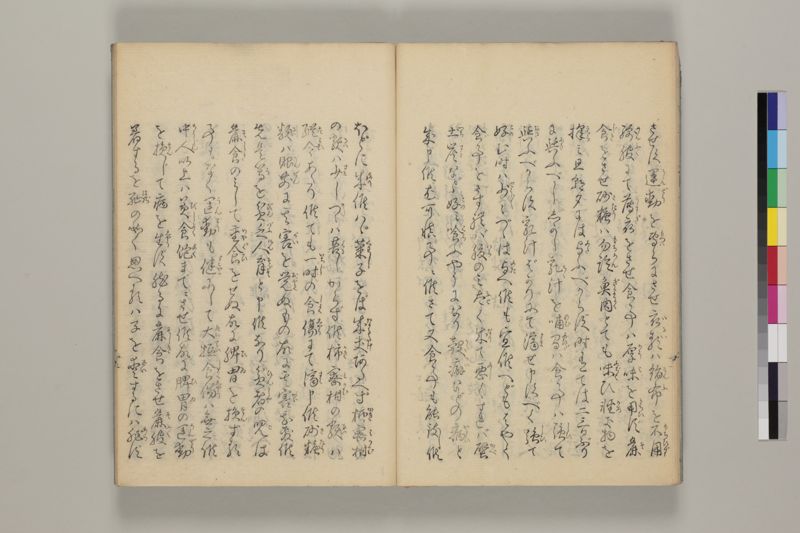
翻刻
させす運動(うんどう)を専(もつは)らにさせ衣類(いるい)は絹布(けんふ)を不用(もちひず)
綿服(めんふく)にて薄衣(うすぎ)をさせ食事は厚味(かうみ)を用(もちひ)ず麤(そ)
食(じき)をさせ砂糖(さたう)は勿論(もちろん)魚肉(ぎよにく)とても味(あぢは)ひ軽(かろ)き物を
択(えら)み且朝夕には与(あた)ふべからず時有ては二三日ぶり
に与(あた)ふべししかし乳汁(ちゝ)を哺間(のむあひだ)は食事は強(しひ)て
与(あた)ふべからす乳汁ばかりにて済(すま)せ申すべく強(しひ)て
好(この)む時は少々(せう〳〵)づゝは与(あた)へ候も宜候へどもはやく
食事をさすれば腹(はら)のみ太(ふと)く成(なり)て悪(あし)くすれば壁(かべ)
土炭(つちすみ)など好(この)み喰(くら)ふやうになり穀癖(かたかい)などの病(やまひ)と
成申候尤可慎事に候さて又食事も能致し候
ほどに成(なり)候はゞ菓子(くわし)をば成丈(なるたけ)あたへず柿(かき)蜜柑(みかむ)
の類(るい)は少(すこ)しづゝは苦(くる)しからず候/柿(かき)蜜柑(みかん)の類(るい)は
縦令(たとひ)あたり候ても一時(いちじ)の食傷(しよくしやう)にて済(すみ)申候/砂糖(さたう)
類(るい)は眼前(がんぜん)に其/害(がい)を覚(おぼえ)ぬもの故に其/害(がい)甚敷候
先是/等(ら)を貧乏人育(びんばふにんそだて)と申候なり貧者(ひんしや)の児(こ)は
麤食(そしき)のみして重食(いやぐひ)をせぬ故に脾胃(ひゐ)を損(そ)ずる
事もなく運動(うんどう)も健(すこやか)にして大抵(たいてい)食傷(しよくしやう)は無之候
中人(ちうじん)以上は美食(びしよく)飽(あく)までにさせ候故に脾胃(ひゐ)の運動(うんどう)
を損(そん)じて病を生(しやう)ず然るに麤食(そしき)をさせ麤服(そふく)を
着するを恥(はぢ)の如く思へるは子を愛(あい)するには非(あら)ず
現代語訳
させず、運動を専らにさせ、衣類は絹布を用いず綿服で薄着をさせ、食事は厚味を用いず粗食をさせ、砂糖はもちろん、魚肉であっても味の軽いものを選び、かつ朝夕には与えてはならない。時には二三日ぶりに与えるべきである。しかし母乳を飲んでいる間は食事を無理に与えてはならず、母乳ばかりで済ませるべきである。無理に欲しがる時は少しずつなら与えても良いが、早く食事をさせれば腹ばかり太くなって、悪くすれば壁土や炭などを好んで食べるようになり、偏食などの病気になってしまう。最も慎むべきことである。さて、また食事もしっかりできるように
なったならば、菓子はなるべく与えず、柿や蜜柑の類は少しずつなら差し支えない。柿や蜜柑の類はたとえ当たったとしても一時的な食傷で済む。砂糖類は目の前にその害を感じないものなので、その害が甚だしい。まずこれらを貧乏人育てと申すのである。貧しい者の子は粗食のみして食べ過ぎをしないため、脾胃を損じることもなく、運動も健やかにして大抵食傷はない。中流以上は美食を飽きるまでさせるため、脾胃の運動を損じて病気を生じる。然るに粗食をさせ粗服を着させることを恥のように思うのは、子を愛することではない。
英語訳
should not be allowed, but rather they should focus primarily on exercise. For clothing, do not use silk fabrics but cotton garments with thin clothing. For meals, do not use rich flavors but give simple food. Not only sugar, but even for fish and meat, choose items with light flavors, and do not give them morning and evening. Sometimes give them only every two or three days. However, while breast-feeding, do not force solid food but let them survive on breast milk alone. When they strongly desire food, it is acceptable to give a little at a time, but if you give solid food too early, only the belly becomes fat, and in bad cases they will come to prefer eating wall clay and charcoal, resulting in diseases like dietary disorders. This is something to be most cautious about. Now, when they have become able to eat meals properly,
do not give sweets as much as possible. Persimmons and citrus fruits are acceptable in small amounts. Even if persimmons and citrus fruits cause problems, they only result in temporary food poisoning. Sugar products are very harmful because their harm is not immediately apparent. These are what I call "poor people's child-rearing methods." Poor children eat only simple food and do not overeat, so they do not damage their spleen and stomach, their exercise is healthy, and they generally do not suffer from food poisoning. The middle class and above let children eat fine food to their heart's content, thus damaging the function of the spleen and stomach and causing illness. However, to think of giving simple food and wearing coarse clothing as shameful is not truly loving one's child.