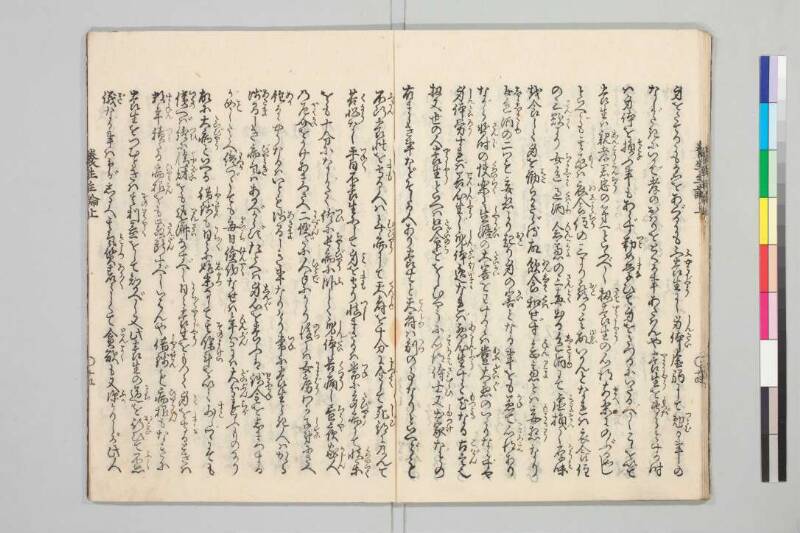
翻刻
身をたてるにも名をあぐるにも不養生(ふやうじやう)にし身体(しんたい)虚弱にして勉(つとむ)る事の
なしがたきにいかで孝のおはりをとぐる事あたはんや養生(やうしやう)を専(もつぱ)らとする時
は身体を損(そこな)ふ事もあらず勤(つと)め学(まな)ひて身をたつるにいたるべしこゝを以て
養生は親孝君忠(しんこうくんちう)の第一といふべし扨(さて)養生(やうしやう)の心得/前(まへ)条にのぶる如し
といへども其/原(もと)は衣食住(いしよくぢう)の三より発(おこ)る其/故(ゆゑ)いかんとなれは衣食住
の三欲(さんよく)より女色(ちよしよく)過酒(くはしゆ)念慮(ねんりよ)の三毒(さんどく)出る色酒(しきしゆ)にて虚損(きよそん)し厚味(かうみ)
を食して身を働(はた)らかさゞる故/飲食(ゐんしよく)和(くは)せず念慮(ねんりよ)とは妄想(もうさう)なり
女色(しよしよく)酒(しゆ)の二ツも妄想より起(おこ)り身の害(かい)となる事をも兼(かね)て心得(こゝろえ)あり
ながら暫時(さんじ)の快楽(くはいらく)に生涯(しやうがい)の大害(たいかい)をわするゝは豈(あに)大愚(だいぐ)のいたりならずや
身体(しんたい)労(ろう)すれば善心(せんしん)生(しやう)じ身体(しんたい)逸(ほしいまゝ)なれば悪心(あくしん)生(しやう)ずと尤(もつとも)なる古言(こげん)也
扨又世の人/養生(やうしやう)といへは只(たゞ)命(いのち)ををしむやうに心得(こゝろえ)侍士(さむらひ)又/出家(しゆつけ)などの
有ましき事などそしる人あり養生と天寿(てんじゆ)は別(べつ)の事なりといへども
不断(ふだん)養性を守(まも)る人は無病(むびやう)にして天寿(てんじゆ)を十分に全(まつたく)して死期(しご)に及んて
苦悩(くなう)なし平日(つね〳〵)不養生にして身(み)を守(まも)り慎(つゝし)まさるは常(つね)に多病(たびやう)にて快楽(くはいらく)
をも十分になしがたく終(つひ)に長病(ちやうびやう)に臥(ふ)して身体(しんたい)苦痛(くつう)し昼夜(ちうや)家人(かじん)
の厄介(やくかい)をうけあまつさへ二便(にべん)だに人手(ひとで)にかゝり後(のち)には女房(によばう)わか子弟(してい)にさへ
飽(あか)るゝやうなるはいとも浅間(あさま)しき事なりけり常(つね)に養生よき人はかゝる
浅間(あさま)しき病気(びやうき)はあるべからずたとへは身心(しん〴〵)を養ふは銭金(せにかね)をしまつする
が如(こと)したとへ纔(わづか)づゝにても毎日(まいにち)倹約(けんやく)なせは年分(ねんぶん)には大分(だいぶん)違(ちが)ふものなり
故に大病(たいびやう)といへる借銭(しやくせん)も日々(うち〳〵)に始末(しまつ)なして其余計(そのよけい)を以て少(すこ)しづゝにても
償(つくの)へば終(つひ)に情財(じやうざい)をも返済(へんさい)なすべし日々(にち〳〵)養生(やうじやう)をもつて身(み)を守(まも)るときは
数年(すねん)積(つみ)たる病根(びやうこん)をも散断(さんだん)すべしいはんや借銭(しやくせん)も病根(びやうこん)もなきに
養生をつむときは其利益(そのりやく)をして知るべし又此養生の道(みち)を行(おこな)ひて不思(ふし)
議(ぎ)なる事は予がしる人其/気質(きしつ)荒々(あら〳〵)しくて貪欲(とんよく)も又 深(ふか)かりしが此人
現代語訳
身を立てるにも名を上げるにも不養生にして身体虚弱で努める事が難しいのでは、どうして孝の終わりを遂げることができようか。養生を専らとする時は身体を損なうこともなく、勤め学んで身を立てるに至るべきである。ここを以て養生は親孝行君忠の第一と言うべきである。さて養生の心得は前条に述べる通りであるが、その根本は衣食住の三つから発生する。その理由はなぜかと言えば、衣食住の三欲から女色、過度の飲酒、妄想の三毒が出るからである。色欲と酒で虚損し、美食を食べて身体を働かせないため飲食が調和しない。念慮とは妄想である。女色と酒の二つも妄想から起こり、身の害となることを予め心得ていながら、しばらくの快楽に生涯の大害を忘れるのは、なんと大愚の至りではないか。身体を働かせれば善心が生じ、身体を怠惰にすれば悪心が生じるというのは、もっともな古言である。さて世の人で養生と言えばただ命を惜しむように心得て、武士や出家などの有るまじき事などと謗る人がいるが、養生と天寿は別のことであるとはいえ、
普段養生を守る人は無病にして天寿を十分に全うして死期に及んで苦悩がない。平日不養生にして身を守り慎まない者は常に多病で快楽も十分になし難く、ついに長病に臥して身体苦痛し、昼夜家人の厄介を受け、あまつさえ大小便さえ人手にかかり、後には女房や若い子弟にさえ飽きられるようになるのは、いとも浅ましいことである。常に養生の良い人はこのような浅ましい病気はあるべきではない。例えば身心を養うのは銭金を節約するのと同じである。たとえわずかずつでも毎日倹約すれば年間には大分違うものである。そのため大病という借銭も日々に始末して、その余計を以て少しずつでも償えば、ついに借財をも返済するべきである。日々養生をもって身を守る時は、数年積もった病根をも散断すべきである。いわんや借銭も病根もないのに養生を積む時は、その利益を知るべきである。またこの養生の道を行って不思議なことは、私が知る人でその気質が荒々しくて貪欲も深かったが、この人は
英語訳
Whether establishing oneself or raising one's reputation, if one neglects health cultivation and has a weak constitution making it difficult to exert effort, how can one achieve the ultimate goal of filial piety? When one specializes in health cultivation, one will not damage the body and should be able to work diligently, study, and establish oneself. For this reason, health cultivation should be called the foremost principle of filial piety to parents and loyalty to one's lord. Now, the principles of health cultivation are as described in the previous section, but their foundation arises from the three aspects of clothing, food, and shelter. The reason for this is that from these three desires of clothing, food, and shelter emerge the three poisons of sexual desire, excessive drinking, and delusional thinking. One becomes depleted through sexual indulgence and alcohol, and by eating rich foods while not exercising the body, food and drink become unbalanced. "Nenryo" refers to delusional thinking. Both sexual desire and alcohol arise from delusion, and even though one knows beforehand that they harm the body, to forget life's great harms for momentary pleasure—is this not the height of great foolishness? "When the body labors, good thoughts arise; when the body is idle, evil thoughts arise"—this is a most reasonable ancient saying. Now, among people in the world, when they speak of health cultivation, some understand it merely as cherishing life and criticize it as something unseemly for samurai or monks, but although health cultivation and natural lifespan are separate matters,
Those who ordinarily maintain health cultivation are free from illness, fully complete their natural lifespan, and have no suffering when death approaches. Those who ordinarily neglect health cultivation and do not guard and care for their bodies are constantly sickly, find it difficult to fully enjoy pleasures, and eventually lie bedridden with chronic illness, suffering physical pain day and night, becoming a burden to their family members, and even requiring assistance with bodily functions. Eventually they become tiresome even to their wives and young disciples—this is truly a wretched state. People who consistently maintain good health cultivation should not suffer such wretched illnesses. For example, nurturing body and mind is like economizing with money. Even if only little by little, if one economizes daily, there will be a great difference over the course of a year. Therefore, even the debt of serious illness can be settled day by day, and if one uses the surplus to pay back even little by little, one should eventually repay all debts. When one guards the body through daily health cultivation, one should be able to dispel even disease roots accumulated over several years. How much more so when one accumulates health cultivation without any debts or disease roots—one should know such benefits. Moreover, regarding the practice of this way of health cultivation, something remarkable is that a person I know whose temperament was rough and whose greed was deep, but this person