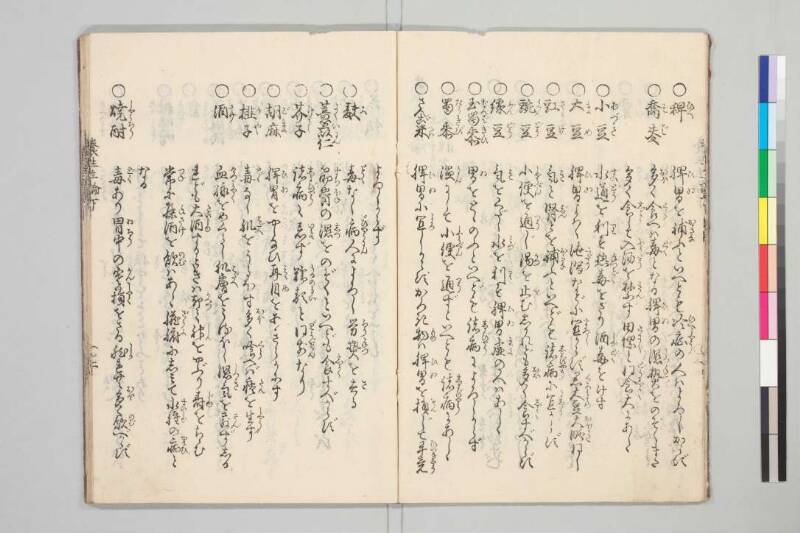
翻刻
○稗(ひへ) 脾胃(ひゐ)を補(おきな)ふといへとも冷症(ひへしやう)の人はよろしからず
○蕎麦(そば) 多(おほ)く食(くら)へは毒(どく)となる脾胃(ひゐ)の湿熱(しつねつ)をのぞくまた
多く食(しよく)して入湯(にうたう)を禁(きん)ず田螺(たにし)と同食(どうしよく)大にあしゝ
○小豆(あづき) 水道(すいどう)を利(り)す熱毒(ねつどく)をさり酒毒(しゆどく)をけす
○大豆(まめ) 脾胃(ひゐ)よはく泄瀉(くだり)などに宜(よろし)からず黒大豆(くろまめ)大略(おほかた)同し
○豇豆(さゝげ) 気(き)と腎(じん)とを補(おきな)ふといへども諸病(しよびやう)に宜(よろし)からず
○豌豆(えんどう) 小便(しやうべん)を通(つう)じ渇(かつ)を止(や)むしかれども多(おほ)く食(しよく)すべからず
○緑豆(ぶんどう) 気(き)をくだし水(みづ)を利(り)す脾胃(ひゐ)虚(きよ)の人はあしゝ
○玉蜀黍(なんばきび) 胃(ゐ)をとゝのふといへども諸病(しよびやう)によろしからず
○蜀黍(たうきび) 温(うん)にして小便(しやうべん)を通(つう)ずといへとも諸病(しよびやう)にあしゝ
○さんご米(へい) 脾胃(ひゐ)に宜(よろ)しからずかろき物(もの)は脾胃(ひゐ)を損(そん)じて畢竟(ひつきやう)
よろしからず
○麩(ふ) 毒(どく)なく病人(びやうにん)によろし労熱(らうねつ)を去(さ)る
○薏苡仁(よくいにん) 筋骨(すぢほね)の湿(しつ)をのぞくといへども食(しよく)すべからず
○芥子(けし) 諸病(しよびやう)に忌(いま)ず糯類(うるのるい)と同前(どうぜん)なり
○胡麻(ごま) 脾胃(ひゐ)をやしなひ耳目(みゝめ)をあきらかにす
○榧子(かや) 毒(どく)なし肌(はだへ)をうるほす多(おほ)く喰(くら)へば痰(たん)を生(しやう)ず
○酒(さけ) 血脈(けつみやく)をめくらし肌膚(はだへ)をうるほし湿気(しつき)を散(さん)ずしか
れども大酒(たいしゆ)するときは却(かへつ)て神(しん)をやぶり寿(じゆ)をちゝむ
常(つね)に寐酒(ねさけ)を飲(のむ)はあしゝ臓腑(ざうふ)にしみて水腫(すいしゆ)の病(やまひ)と
なる
○焼酎(しやうちう) 毒(どく)あり胃中(ゐちう)の寒積(かんしやく)をさる然(しか)れ共/多(おほ)く飲(のむ)べからず
現代語訳
○稗(ひえ) 脾胃を補うとはいえ、冷え症の人にはよくない
○蕎麦(そば) 多く食べると毒となる。脾胃の湿熱を除く。また
多く食べて入浴することを禁ずる。田螺と一緒に食べるのは大変よくない
○小豆(あずき) 水道を利し、熱毒を去り、酒毒を消す
○大豆(まめ) 脾胃が弱く下痢などの時にはよくない。黒大豆もおおよそ同じ
○豇豆(ささげ) 気と腎を補うといわれるが、諸病によくない
○豌豆(えんどう) 小便を通じ渇きを止むが、多く食べてはいけない
○緑豆(りょくとう) 気を下し水を利す。脾胃虚の人にはよくない
○玉蜀黍(とうもろこし) 胃を整えるといわれるが、諸病によくない
○蜀黍(もろこし) 温性で小便を通じるといわれるが、諸病によくない
○さんご米(へい) 脾胃によくない。軽い物は脾胃を損じて結局
よくない
○麩(ふ) 毒がなく病人によい。労熱を去る
○薏苡仁(よくいにん) 筋骨の湿を除くといわれるが食べてはいけない
○芥子(けし) 諸病に禁忌せず。もち米類と同様である
○胡麻(ごま) 脾胃を養い耳目を明らかにする
○榧子(かや) 毒がない。肌を潤す。多く食べると痰を生ずる
○酒(さけ) 血脈をめぐらし肌膚を潤し湿気を散ずる。しか
し大酒をする時は却って神を破り寿命を縮める
常に寝酒を飲むのはよくない。臓腑にしみて水腫の病と
なる
○焼酎(しょうちゅう) 毒があり胃中の寒積を去る。しかし多く飲んではいけない
英語訳
○Japanese millet (hie): Although it supplements the spleen and stomach, it is not good for people with cold constitution.
○Buckwheat (soba): Eating too much becomes poisonous. It removes damp-heat from the spleen and stomach. Also, eating too much and then bathing is forbidden. Eating it together with pond snails is very bad.
○Red beans (azuki): They facilitate water passages, remove heat toxins, and eliminate alcohol toxins.
○Soybeans (mame): Not good for those with weak spleen and stomach or diarrhea. Black soybeans are generally the same.
○Black-eyed peas (sasage): Although said to supplement qi and kidneys, they are not good for various diseases.
○Green peas (endou): They facilitate urination and stop thirst, but should not be eaten in large quantities.
○Mung beans (ryokutou): They move qi downward and facilitate water. Not good for people with spleen-stomach deficiency.
○Corn (toumorokoshi): Said to regulate the stomach, but not good for various diseases.
○Sorghum (morokoshi): Warm in nature and facilitates urination, but not good for various diseases.
○Sango rice (hei): Not good for the spleen and stomach. Light foods damage the spleen and stomach and are ultimately not good.
○Wheat gluten (fu): Non-toxic and good for sick people. Removes exhaustion heat.
○Job's tears (yokuinin): Said to remove dampness from muscles and bones, but should not be eaten.
○Poppy seeds (keshi): Not forbidden for various diseases. Same as glutinous rice products.
○Sesame (goma): Nourishes the spleen and stomach and clarifies hearing and vision.
○Torreya nuts (kaya): Non-toxic. Moistens the skin. Eating too much produces phlegm.
○Sake (alcohol): Circulates blood vessels, moistens the skin, and disperses dampness. However, when drinking heavily, it instead damages the spirit and shortens lifespan. Regularly drinking before sleep is bad. It penetrates the organs and becomes edema disease.
○Shochu (distilled liquor): Toxic and removes cold accumulation in the stomach. However, should not drink too much.