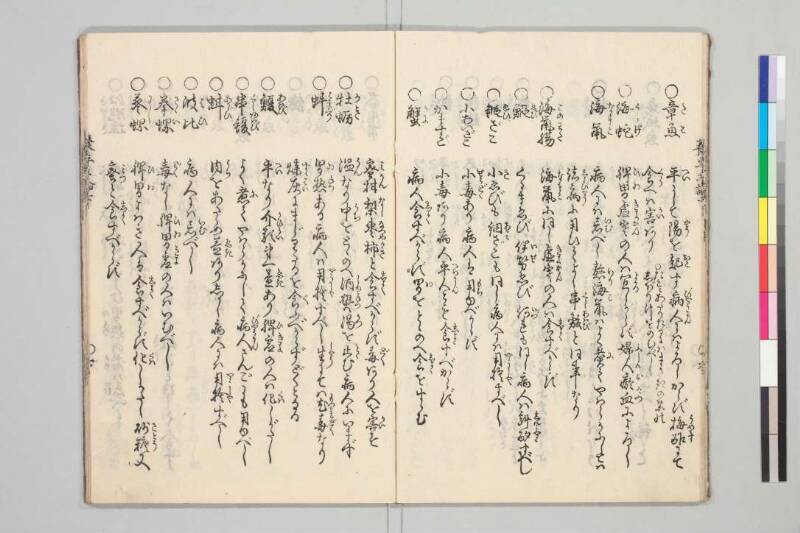
翻刻
○章魚(たこ) 平(へい)にして陽(やう)を起(おこ)す病人(びやうにん)にはよろしからず梅酢(うめす)にて
食(くら)へは害(かい)あり《割書:たこにあたりたるにはまさきの葉の|しぼり汁をのむべし》
○海蛇(くらげ) 脾胃(ひゐ)虚寒(きよかん)の人は宜(よろ)しからず婦人(ふじん)瘀血(おけつ)によろし
○海鼠(なまこ) 病人には忌(いむ)べし熬海鼠(いりこ)はよく煑(に)てやはらかにしては
諸病(しよびやう)に用ひてよく串鰒(くしあはび)と同事なり
○海鼠腸(このわた) 海鼠(なまこ)に同し虚寒(きよかん)の人は食(しよく)すべからず
○鰕(ゑび) くるまゑび伊勢(いせ)ゑび何(いづ)れも同し病人は斟酌(しんしやく)すべし
○鰕(ゑび)ざこ 小(こ)ゑびも網(あみ)ざこも同し病人には用捨(やうしや)すべし
○小あいざこ 小毒(せうどく)あり病人は用(もち)ゆべからず
○かますご 小毒あり病人/平人(へいにん)とも食(しよく)すべからず
○蟹(かに) 病人/食(しよく)すべからず胃(ゐ)をとゝのへ食(しよく)をすゝむ
蜜柑(みかん) 梨(なし)棗(なつめ)柿(かき)と食(しよく)すべからず毒(どく)あり人を害(かい)す
○牡蛎(かき) 温(うん)なり中(うち)をとゝのへ酒熱(しゆねつ)渇(かつ)を止(とゞ)む病人にいまず
○蚌(はまぐり) 胃熱(ゐねつ)ある病人は用捨(やうしや)すべし生(しやう)にては尤毒(もつともどく)なり
煤灰(すゝはい)にまじりたるを食(く)ふべからずどくとなる
○鰒(あはび) 平(へい)なり介類(かひるい)第一/益(ゑき)あり脾虚(ひきよ)の人は化(くは)しがたし
○串鰒(くしあはび) よく煮(に)てやはらかにして病人(びやうにん)さんごにも用ゆべし
○蚶(あかゞひ) 内(うち)をあたゝめ益(ゑき)ありしかし病人には用捨(やうしや)すべし
○波比(はひ) 病人には忌(いむ)べし
○挙螺(さゝい) 毒(どく)なし脾胃(ひゐ)虚(きよ)の人はいむべし
○蓼螺(にし) 脾胃(ひゐ)よはき人は食(しよく)すべからず化(くは)しかたし砂糖(さとう)又
蜜(みつ)と食(しよく)すべからず
現代語訳
○章魚(たこ) 性質は平だが陽気を起こすので病人には良くない。梅酢で食べると害がある。《注記:たこにあたったときは、まさきの葉の絞り汁を飲むべし》
○海蛇(くらげ) 脾胃が虚寒の人には良くない。婦人の瘀血には良い。
○海鼠(なまこ) 病人は避けるべきである。熬海鼠(いりこ)はよく煮て柔らかくすれば諸病に用いてよく、串鰒(くしあわび)と同じ効果である。
○海鼠腸(このわた) 海鼠と同じで、虚寒の人は食べてはいけない。
○鰕(えび) 車えび、伊勢えび、いずれも同じで、病人は注意すべきである。
○鰕(えび)ざこ 小えびも網ざこも同じで、病人には控えるべきである。
○小あいざこ 小毒があり、病人は用いてはならない。
○かますご 小毒があり、病人も健康な人も食べてはいけない。
○蟹(かに) 病人は食べてはいけない。胃を整え食欲を増進させる効果があるが、蜜柑・梨・棗・柿と一緒に食べてはいけない。毒となり人を害する。
○牡蛎(かき) 温性で、体内を整え酒熱や渇きを止める。病人にも問題ない。
○蚌(はまぐり) 胃熱がある病人は注意すべきである。生では最も毒性が強い。煤灰が混じったものを食べてはいけない。毒となる。
○鰒(あわび) 平性で、貝類の中で第一の効果がある。脾虚の人は消化しにくい。
○串鰒(くしあわび) よく煮て柔らかくすれば、病人の産後にも用いてよい。
○蚶(あかがい) 体内を温め効果があるが、病人には注意すべきである。
○波比(はい) 病人は避けるべきである。
○挙螺(ささえ) 毒はないが、脾胃虚の人は避けるべきである。
○蓼螺(にし) 脾胃の弱い人は食べてはいけない。消化しにくい。砂糖や蜜と一緒に食べてはいけない。
英語訳
○Octopus (tako) Has a neutral nature but stimulates yang energy, so it is not good for sick people. Eating it with plum vinegar is harmful. 《Note: When poisoned by octopus, drink the squeezed juice of masaki leaves》
○Jellyfish (kurage) Not good for people with spleen-stomach deficiency-cold. Good for women with blood stasis.
○Sea cucumber (namako) Sick people should avoid it. Dried sea cucumber (iriko), when well-boiled and softened, can be used for various diseases and has the same effect as dried abalone.
○Sea cucumber intestines (konowata) Same as sea cucumber; people with deficiency-cold should not eat it.
○Shrimp (ebi) Kuruma shrimp, Ise shrimp - all are the same; sick people should be cautious.
○Small shrimp (ebi-zako) Small shrimp and net-caught small fish are the same; sick people should refrain from eating them.
○Small aizako Has minor toxicity; sick people must not use it.
○Kamasuko Has minor toxicity; neither sick people nor healthy people should eat it.
○Crab (kani) Sick people should not eat it. It regulates the stomach and promotes appetite, but should not be eaten with mandarin oranges, pears, jujubes, or persimmons - this creates toxicity and harms people.
○Oyster (kaki) Has warming nature, regulates the interior, and stops alcohol fever and thirst. No problem for sick people.
○Clam (hamaguri) Sick people with stomach heat should be cautious. Raw clams are most toxic. Do not eat those mixed with soot ash, as they become poisonous.
○Abalone (awabi) Has neutral nature and is the most beneficial among shellfish. People with spleen deficiency find it hard to digest.
○Dried abalone (kushi-awabi) When well-boiled and softened, it can be used even for postpartum sick people.
○Ark shell (akagai) Warms the interior and is beneficial, but sick people should be cautious.
○Hahi Sick people should avoid it.
○Turban shell (sasae) No toxicity, but people with spleen-stomach deficiency should avoid it.
○Whelk (nishi) People with weak spleen-stomach should not eat it. It is hard to digest. Should not be eaten with sugar or honey.