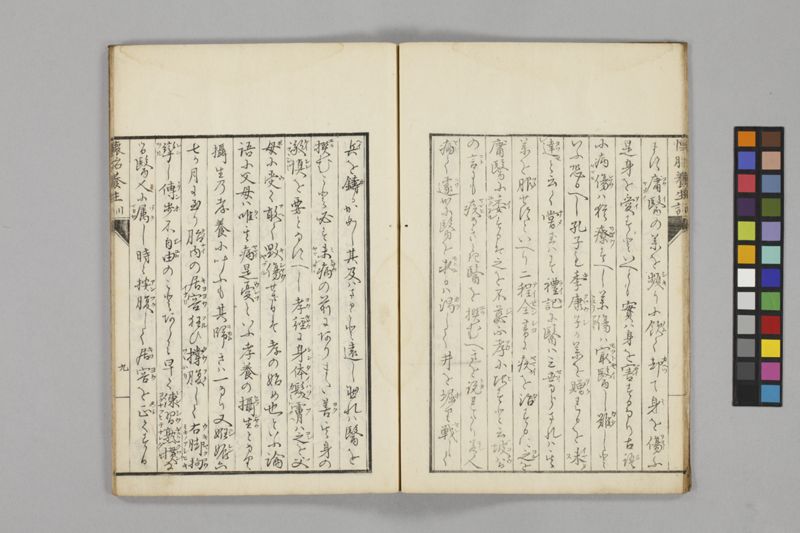
翻刻
ゝ【右丁】
ます《振り仮名:庸医|ヨウイ|ヤブイ 》の薬を頻(シキ)りに飲(ノム)て却(カヘツ)て身(ミ)を傷(ソコナ)ふ
是身を愛(アイ)すといへとも実は身を害(ガイ)するなり古/語(ゴ)
に《振り仮名:病傷| シヤウ|ヤマヒ 》は猶/療(リヤウ)すへし《振り仮名:薬傷| |クスリアタリ》は最(モツトモ)医(イ)し難(カタ)しと
いふ恐るへし孔子も季康子(キクワウシ)か薬を贈(ヲク)れるを《振り仮名:未|イマタ| ス 》
_レ達(タツセ)と云て嘗(ナメ)玉はす礼記(ライキ)に医は三/世(せい)ならされは其
薬を服(フク)せすといへり二/程全書(テイゼンシヨ)に疾(ヤマヒ)を治(ヂ)するに之(コレ)を
庸医に《振り仮名:委|イ|ユタヌル》するは之を不/慈(ジ)不/孝(コウ)に比(ヒ)すと云/坡公(ハコウ))
の言(コト)にも疾(ヤマヒ)なきとき医を撰(エラ)むへきを説(トカ)れたり若(モシ)人
病(ヤン)て遽(ニワ)かに医を求(モトム)るは渇(カツ)して井を堀(ホ)り戦(セン)して
【左丁】
兵(ヘイ)を鋳(ヰ)るか如し其及はさること遠し然れは医を
撰(エラ)むこと必す《振り仮名:未_レ病|ミヒヤウ|ヤマサル》の前にありまた善(ヨク)其身の
《振り仮名:敬慎|ケイシン|ツヽシニ》を要となすへし孝経(コウキヤウ)に《振り仮名:身体髪膚|シンタイハツフ| カミハタヘ》は之(コレ)を父(フ)
母(ボ)に受(ウ)く敢(アヘ)て《振り仮名:毀傷|キシヤウ|ヤブル》せざるは孝の始め也といふ論
語に父母は唯(タヽ)其/病(ヤマイ)是/憂(ウレフ)といふ孝養の摂生(セツシヤウ)となり
摂生の孝養に叶ふも其 帰(ヲモム)きは一なり又/妊娠(ニンシン)六
七か月に至り胎内(タイナイ)の《振り仮名:居容|キヨヨウ|イナリ》狂(クル)ひ《振り仮名:撐腹|タウフク|ツヽハリ》して《振り仮名:右脚|ウキヤク|ミキノアシ》《振り仮名:拘|コウ|ヒキ》
《振り仮名:攣|レン|ツル》し伝歩(デンホ)不/自由(ジユウ)のことあらは早く《振り仮名:練習|レンシウ|ヨクナラヒ》《振り仮名:熟慣|ヂユククワン|テナレタル》な
る医人に《振り仮名:属|ゾク|マカセ》)し時々/按腹(アンフク)して居容(キヨヨウ)を正(タヾシ)くする
現代語訳
【右丁】
ず、庸医の薬を頻繁に飲んで、かえって身を傷つける。これは身を愛するといっても、実際は身を害するのである。古い言葉に「病気による傷害はまだ治療できるが、薬による傷害は最も治し難い」という。恐ろしいことである。孔子も季康子が薬を贈ったのを「まだ理解していない」といって味わわれなかった。礼記には「医者は三世代にわたって医業を行っていなければ、その薬を服用しない」とある。二程全書には「病気を治すのに庸医に委ねるのは、不慈不孝に比べられる」とある。坡公の言葉にも、病気のないときに医者を選ぶべきことが説かれている。もし人が病気になって急に医者を求めるのは、渇いてから井戸を掘り、戦争になってから
【左丁】
兵器を鋳造するようなものである。その効果は遠く及ばない。それゆえ医者を選ぶことは必ず病気になる前にあるべきで、また良く自身の慎みを要とすべきである。孝経には「身体髪膚はこれを父母から受ける。あえて毀傷しないのが孝の始めである」という。論語には「父母はただその病気だけを憂う」という。孝養の摂生となり、摂生の孝養に適うが、その帰するところは一つである。また妊娠六、七か月に至り、胎内の胎児の位置が狂い、腹が張って右足が拘攣し、歩行が自由でないことがあれば、早く練習熟練した医者に任せ、時々腹部を按摩して胎児の位置を正しくする
英語訳
[Right page]
Instead, they frequently drink quack doctors' medicines and end up harming their bodies. While this may be called loving one's body, it actually harms the body. An old saying states: "Injuries from illness can still be treated, but injuries from medicine are most difficult to cure." This is frightening. Even Confucius, when Ji Kangzi sent him medicine, said "I do not yet understand it" and did not taste it. The Book of Rites states that "if a doctor has not practiced medicine for three generations, one should not take his medicine." The Complete Works of the Two Chengs says that "entrusting the treatment of illness to a mediocre doctor is comparable to being unbenevolent and unfilial." Master Po's words also explained that one should choose a doctor when not ill. If a person becomes sick and urgently seeks a doctor, it is like digging a well when thirsty or casting weapons when
[Left page]
war begins. Its effectiveness falls far short. Therefore, choosing a doctor must be done before becoming ill, and one should also make prudence of oneself the essential point. The Classic of Filial Piety states: "The body, hair, and skin are received from one's parents. Not daring to damage them is the beginning of filial piety." The Analects states: "Parents worry only about their child's illness." This becomes the regimen of filial care, and conforming to the filial care of regimen - their ultimate goal is one. Also, when pregnancy reaches six or seven months, if the fetus's position in the womb becomes disordered, the abdomen distends, the right leg becomes contracted and cramped, and walking becomes difficult, one should quickly entrust this to a well-practiced and experienced doctor, and regularly massage the abdomen to correct the fetus's position.