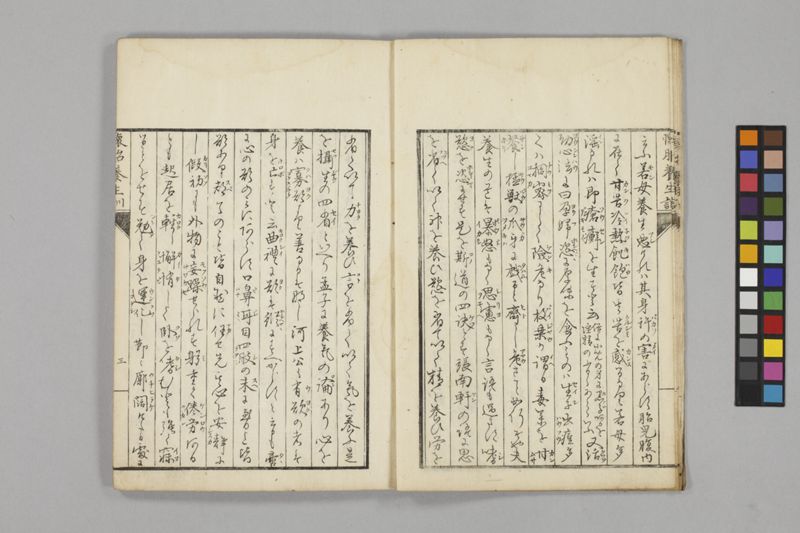
翻刻
云ふ若(モシ)母養生/悪(アシ)けれは其身/許(バカリ)の害(ガイ)にあらす胎児腹内
に在て甘苦(カンク)冷熱(レイネツ)飢飽(キハウ)皆其/苦(クルシミ)を感(カンス)るなり若母多
淫(イン)なれは即《振り仮名:瘡癬|ソウセン|デキモノ》を生すと云《割書:俗に小児の身に黒子(ホクロ)あるを|淫精のふるゝあとゝいふ》又/活(クワツ)
幼心法(ヨウシンハウ)に曰/孕婦(ヨウフ)恣(ホシヘマヽ)に厚味を食ふものは生子(セイシ)《振り仮名:出痘| |ハウソウ》多
くは《振り仮名:稠密|チウミツ|コマカ》にして険危(ケンキ)なり枚乗(バイジヤウ)か謂(いへ)る毒薬を《振り仮名:甘|カン|ムサ》
《振り仮名:餐|サン|ホリ》し猛獣(モウジウ)の《振り仮名:爪牙|サウガ|ツメキハ》に戯(タハム)ると斉(ヒト)し危(アヤウ)きこと如何ぞや夫
養生の意は《振り仮名:暴怒|ボウド|イカル》もなく《振り仮名:思慮|シリヨ|ヲモヘ》もなく言語も過さす嗜(シ)
慾(ヨク)を恣(ホシイマヽ)にせす是を斯(コノ)道の四/決(ケツ)とす張南/軒(ケン)の語に思
を省(ハブヘ)【ママ】て以て神を養ひ慾を省て以て精を養ひ労を
【左丁】
省て以て力(チカラ)を養ひ言(コト)を省て以て気を養ふ是
を摂生(セツシヤウ)の四/省(セイ)といへり孟子に養気の論(ロン)あり心を
養は《振り仮名:寡欲|クハヨク|ヨクスクナク》より善なるはなし河上公も有欲(ウヨク)の考は
身を亡(ホロボ)すと云/曲礼(キヨクレイ)に欲(ヨク)は縦(ホシヘマヽ)にすへからすと云るも啻(タヽ)
に心の欲のみにあらす口《振り仮名:鼻|ビ|ハナ》《振り仮名:耳|ジ|ミヽ》目《振り仮名:四肢| シ|テアシ》の末(スヘ)に至る迄皆
欲あり都(スベ)てのこと皆自然に任(マカ)せ先其心を《振り仮名:安静| |シスカ》に
し仮初(カリソメ)にも外物に《振り仮名:妄躁|モフソウ|サワカセ》せられす躬(ミ)重く《振り仮名:倦労|ケンロウ|ツカレ》ある
とも起居を軽(カロク)し《振り仮名:懈惰|カイタ|ヲコタル》して臥(クワ)を嗜(タシ)むとも強て寐(イヌ)
ることをせす勉(ツトメ)て身を《振り仮名:運化|ウンクワ|コナシ》し節々/廓闊(ウチヒラケ)け【衍ヵ】たる処に
現代語訳
と言っている。もし母親の養生が悪ければ、その身体だけの害ではなく、胎児が腹内にあって、甘苦・冷熱・飢饱、皆その苦しみを感じるのである。もし母が多淫であれば、即座に瘡癬を生ずるという(俗に小児の身に黒子があるのを、淫精のふるった跡という)。また『活幼心法』に曰く、「孕婦が恣に厚味を食うものは、生子の出痘多くは稠密にして険危なり」と。枚乗が謂う「毒薬を甘餐し、猛獣の爪牙に戯る」と等しく危険なことよ。
そもそも養生の意は、暴怒もなく思慮もなく、言語も過ごさず、嗜慾を恣にしない、これをこの道の四つの決まりとする。張南軒の語に「思を省いて以て神を養い、慾を省いて以て精を養い、労を省いて以て力を養い、言を省いて以て気を養う、これを摂生の四省という」とある。孟子に養気の論があり、「心を養うには寡欲より善なるはなし」と。河上公も「有欲の者は身を亡ぼす」と言う。『曲礼』に「欲は縦にすべからず」と言うのも、ただに心の欲のみにあらず、口・鼻・耳・目・四肢の末に至るまで皆欲あり。すべてのことを皆自然に任せ、まずその心を安静にし、仮初にも外物に妄躁させられず、躬重く倦労あるとも起居を軽くし、懈惰して臥を嗜むとも強いて寐ることをせず、勉めて身を運化し、節々の廓闊たる処に
英語訳
as it states. If the mother's health maintenance is poor, it is not only harmful to her own body, but the fetus in the womb feels all the suffering of sweet and bitter, cold and heat, hunger and satiation. If the mother is excessively lustful, it immediately causes sores and rashes (commonly, when children have moles on their bodies, it is said to be traces of lustful essence).
Also, in the "Huoyou Xinfa" (Heart Method for Nurturing the Young), it says: "When pregnant women indiscriminately eat rich foods, the children born will have smallpox that is mostly dense and dangerous." This is as perilous as what Mei Cheng described: "eating poison as if it were sweet food and playing with the claws and fangs of fierce beasts."
The essence of health cultivation is to have no violent anger, no excessive thinking, not to speak excessively, and not to indulge desires freely - these are the four principles of this way. In Zhang Nanxuan's words: "Reduce thinking to nourish the spirit, reduce desires to nourish essence, reduce labor to nourish strength, reduce speech to nourish qi - these are called the four reductions of health maintenance." Mencius has a theory on nourishing qi, stating "there is nothing better than having few desires for nourishing the heart." Master He Shanggong also said "those with many desires will destroy their bodies." The "Quli" (Rules of Propriety) states "desires should not be given free rein" - this refers not only to mental desires, but all desires extending to the mouth, nose, ears, eyes, and limbs.
Let everything follow nature naturally. First, keep the mind calm and tranquil, never allowing it to be disturbed by external things even temporarily. Even when the body feels heavy and tired, keep daily activities light; even when feeling lazy and wanting to lie down, do not force sleep. Strive to exercise the body and open up the joints...