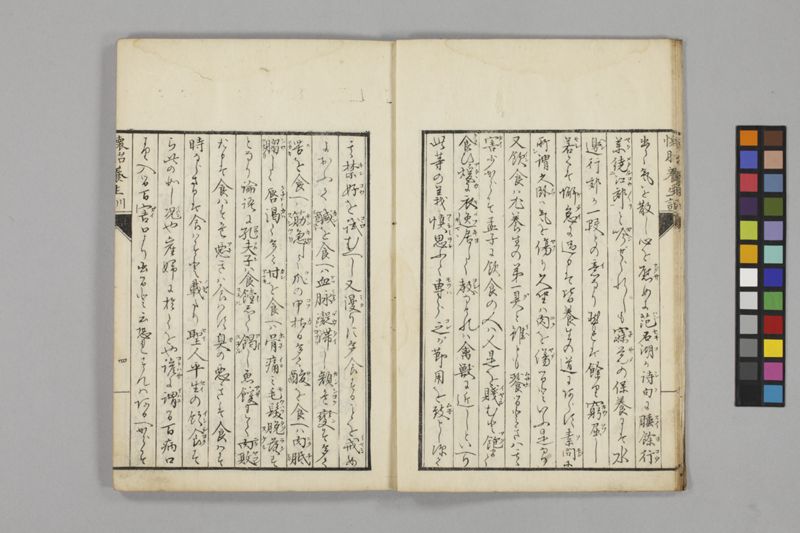
翻刻
【右丁】
出て気を散し心を慰(ナグサ)めよ范石湖(ハンセキコ)の詩句(シク)に睡余行(スイヨコウ)
薬(ヤク)徒(メクル)_二江郊(コウ〱) ̄ヲ_一と吟(ギン)ぜられしも寝覚(ネサメ)の保養には水
辺(ヘン)行郊か一段との意(イ)なり然れは余り窮屈(キウクツ)し
若(モシ)くは懈怠(ケダイ)に過るは皆養生の道にあらす素問(ソモン)に
所_レ謂久 臥(クワ)は気を傷(ヤフ)り久坐は肉(にく)を傷(ヤブ)るといふ是なり
又/飲(イン)食は尤養生の第一/具(グ)と雖(イヘ)とも餮(ムサホ)るときは其
害(カイ)少からす孟子に飲食の人は人是を賤(イヤシ)むと飽(アク)まて
食(クラ)ひ暖(アタヽカ)に衣(キ)《振り仮名:逸居|イツキヨ|キマヽ》して教(ヲシヘ)なけれは禽獣に近しといへり
此等の義/慎思(ツヽシミヲモ)ふて専(モツハ)ら之(コレ)が節用を致(ムネ)とし深く
【左丁】
其/禁好(キンコウ)を試(コヽロ)むへし又/漫(ミタ)りに多食することを戒(イマシ)め
よおふく《振り仮名:鹹|カン|シハヽユキ》を食へは血脈(ケツミヤク)《振り仮名:凝滞|ゲウタイ|トヽコフリ》し顔色(カンシヨク)変(ヘン)す多く
《振り仮名:苦|ク|ニカキ》を食へは《振り仮名:筋急|キンキウ|スシツリ》して爪(ツメ)の甲(コフ)枯(カ)る多く酸(サン)を食へは肉(ニク)《振り仮名:胝|チ|ヒヾ》
《振り仮名:䐢|シウ|アカヽリ》して唇(クチヒル)渇(カハ)く多く《振り仮名:甘|カン|アマキ》を食へは骨(ホネ)痛(イタ)み毛髪(モウハツ)《振り仮名:脱落|タツラク|ヌケル》す
となり論語に孔夫子(コウフウシ)は食《振り仮名:饐|イ|スエル》して《振り仮名:餲|アイ|スエル》し魚/餒(アザ)れて肉(ニク)敗(ヤフレ)
たるは食はす色/悪(アシ)きは食はす臭(カ)の悪きは食はす
時ならさるは食はすと載(ノセ)たり聖(セイ)人平/生(セイ)の飲食(インシヨク)す
ら此の如し況(イハン)や産婦に於てをや諺(コトハサ)に謂(イハユ)る百病口
より入る百/害(がい)口より出ると云恐れすんはあるへからす
現代語訳
【右丁】
出て気を散らし心を慰めよ。范石湖の詩句に「睡余行薬徒江郊」と吟じられたのも、寝覚めの保養には水辺の散歩が一段と良いという意味である。しかしながら、あまり窮屈にしたり、あるいは怠惰に過ぎるのは、皆養生の道ではない。『素問』に「いわゆる久しく臥すれば気を傷り、久しく坐すれば肉を傷る」というのがこれである。
また飲食は最も養生の第一の手段であるとはいえ、貪り食うときはその害は少なくない。孟子に「飲食の人は人これを賤しむ」とあり、「飽くまで食らい暖かに衣て逸居して教えなければ禽獣に近し」と言っている。これらの意味を慎重に思い、専らこれの節用を旨とし、深く
【左丁】
その禁好を試みるべきである。また、むやみに多食することを戒めよ。多く塩辛いものを食べれば血脈が凝滞して顔色が変わる。多く苦いものを食べれば筋が急って爪が枯れる。多く酸っぱいものを食べれば肉にひび割れができて唇が渇く。多く甘いものを食べれば骨が痛み毛髪が抜け落ちる。
『論語』に孔夫子は「食べ物が酸っぱくなり魚が腐り肉が敗れたものは食さず、色の悪いものは食さず、臭いの悪いものは食さず、時ならざるものは食さず」と載せてある。聖人の平生の飲食すらこのようである。ましてや産婦においてはなおさらである。諺に謂う「百病口より入り、百害口より出る」と言う。恐れずにはいられない。
英語訳
[Right page]
Go out to disperse qi and comfort the mind. In Fan Shihu's poem verse "Walking as medicine after sleep around the riverside suburbs," the meaning is that walking by the water is particularly good for maintaining health after waking. However, being either too restrictive or too lazy are both contrary to the way of health cultivation. The "Suwen" states: "What is called lying down for long periods harms the qi, sitting for long periods harms the flesh" - this is exactly that.
Also, although food and drink are the foremost means of health cultivation, when one eats greedily, the harm is not insignificant. Mencius said "people despise those who live only for food and drink" and "eating to satiation, dressing warmly, living in idleness without education makes one close to birds and beasts." One should carefully consider these meanings, making moderation the principle, and deeply
[Left page]
test these prohibitions and preferences. Also, guard against eating excessively without restraint. Eating too much salty food causes blood vessels to stagnate and changes facial color. Eating too much bitter food causes muscles to contract and nails to wither. Eating too much sour food causes flesh to crack and lips to become parched. Eating too much sweet food causes bone pain and hair loss.
In the "Analects," it records that Confucius "would not eat food that had turned sour, fish that had spoiled, or meat that had gone bad; would not eat anything of bad color, bad smell, or out of season." Even the sage's daily eating habits were like this. How much more so for pregnant women! As the proverb says: "A hundred diseases enter through the mouth, a hundred harms exit through the mouth." One cannot help but be fearful.