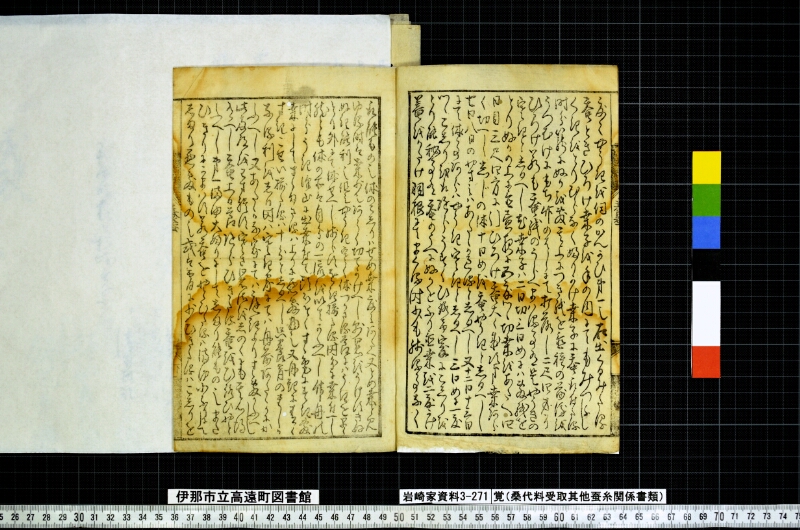
翻刻
【右丁】
度々やうきを伺のかんかひ第一也右出くるみたる
蚕ときひろけ桑子を手の内にてもみつふし
くきをとりむらなくふりかけ桑子に蚕取付たる
時分籠にぬかを敷其上につき紙を置種の前後を
うつむけにもち竹のはしにて打落し二尺四方に
ひろけ若も蚕紙のうらへまはる事有是やうきの
寒きとしるへし尤桑子は二日切三日めには敷紙を
とりぬかの上に置昼夜に五度ツヽ切桑をあたへ四
日目三尺四方に引ひろけ蚕大く成次第桑あら
く切へししじの休十日めを蚕やうきとしるへし
七日八日のやすみはあたゝか過るとしるへし又十二日十三日
にて休事あらはやうき寒きとしるへし三日めに一度
ツヽこしりを取随分うすくひろけ爰にこしりを
とり能秘事有蚕のうへにぬかをふり置桑を二度かけ
籠をかたけ羽根にてまくるとき少も残る事なく
【左丁】
取能もの也休のこしりはせめ桑度々あたへ又とめ桑と見
ゆる時は桑少しあらく切てかけへし則暑をうけすきぬ
ぬき能利也但しやうき寒く休みつかさる節にはうきを早く
とり外にて休せへし残らすをき揃たる時分に桑付へし
然とも休の所は自分の一流を以てかふへし竹舟の
時分うき沢山に出桑付て頭ほそくすゝ色にすき敷
桑にしてすゝまさるは上りに悪敷物也又舟起に青く
すきこせい揃たるは十分としるへし只養育のたしか
なる利をしる時は寒き家にては舟前あたゝかにか
ふへし又あたゝかな家にては庭起よりすゝ敷かふへし
此両道をわすれす寒さ暑さをしのくにも其心得
有へし蚕上る節随分ひきたる蚕をひろひ物初と
しつへし第一まゆ大ふりにしてしまり能もの也また
ひきりにかまはす若蚕をやとひたるはまゆ小ふりにして
しまり悪敷もの也或は宵に少ひきたるはこしりを
現代語訳
【右丁】
度々様子を伺うのが肝心第一である。右のように出てくるまでした蚕を時期を見て広げ、桑の葉を手の内で揉み潰し、茎を取り除いてむらなく振りかけ、桑の葉に蚕が取り付いた時分に籠に糠を敷き、その上に継紙を置いて、種の前後を裏返しに持ち、竹の箸で打ち落とし、二尺四方に広げる。もし蚕が紙の裏へ回ることがあれば、これは様子が寒いと知るべきである。もっとも桑の葉は二日切り、三日目には敷紙を取り除き、糠の上に置いて昼夜に五度ずつ切った桑を与え、四日目に三尺四方に引き広げ、蚕が大きくなるに従って桑を粗く切るべきである。静かに休む十日目を蚕の様子とするべきである。七日八日の休みは暖か過ぎると知るべきである。また十二日十三日で休むことがあれば様子が寒いと知るべきである。三日目に一度ずつ古紙を取り、随分薄く広げる。ここに古紙を取る良い秘訣がある。蚕の上に糠を振り置き、桑を二度かけ、籠を傾けて羽根で巻くとき、少しも残ることなく
【左丁】
取れる良いものである。休みの古紙は攻めて桑を度々与え、また止め桑と見える時は桑を少し粗く切ってかけるべきである。すなわち暑さを受けずに脱皮する良い利益である。ただし様子が寒くて休みが遣わされない節には脱皮を早く取り、外で休ませるべきである。残らず起き揃った時分に桑を付けるべきである。然るとも休みの所は自分の一流を以て飼うべきである。竹舟の時分、脱皮がたくさん出て桑が付いて頭が細くなり薄い色に透き、薄い桑にして進まないのは上がりに悪いものである。また舟起きに青く透き、小さく揃ったのは十分と知るべきである。ただ養育の確かな利益を知る時は、寒い家では舟の前を暖かに飼うべきである。また暖かな家では庭起きより涼しく飼うべきである。この両道を忘れず、寒さ暑さを凌ぐにもその心得があるべきである。蚕が上がる節、随分引いた蚕を拾い、物の初めとするべきである。第一に繭が大振りにして締まりの良いものである。また引き離しにかまわず、若い蚕を宿したのは繭が小振りにして締まりの悪いものである。或いは宵に少し引いたのは古紙を
英語訳
【Right Page】
Frequently observing the condition is most important. When the silkworms emerge as described above, spread them out at the right time, crush mulberry leaves in your palm, remove the stems, and sprinkle evenly. When the silkworms attach to the mulberry leaves, lay rice bran in a basket, place connecting paper on top, hold the seed front and back upside down, knock them off with bamboo chopsticks, and spread over a two-shaku square area. If silkworms go around to the back of the paper, this indicates the conditions are too cold. The mulberry leaves should be cut for two days, on the third day remove the laying paper, place on the rice bran, give cut mulberry five times day and night, on the fourth day spread to three-shaku square, and as the silkworms grow larger, cut the mulberry more coarsely. The tenth day when they rest quietly should be considered the silkworms' proper condition. If they rest on the seventh or eighth day, it means it's too warm. Also, if they rest on the twelfth or thirteenth day, know that the conditions are cold. On the third day, remove the old paper once each time and spread quite thinly. Here is a good secret for removing old paper. Sprinkle rice bran over the silkworms, apply mulberry twice, tilt the basket and when rolling with a feather, it can be taken without leaving any residue.
【Left Page】
This is a good method. For the old paper from resting periods, persistently give mulberry frequently, and when it appears to be stopping mulberry, cut the mulberry slightly coarser before applying. This provides the good benefit of molting without receiving heat. However, when conditions are cold and rest cannot be managed, take the molting early and let them rest outside. Apply mulberry when all have risen uniformly. Even so, resting areas should be raised according to one's own method. During the bamboo boat period, when much molting emerges and mulberry attaches making the heads thin and pale in color, making thin mulberry that doesn't progress is bad for the final stage. Also, when boat-rising is blue and transparent with small uniform size, know this is sufficient. When knowing the reliable benefits of cultivation, in cold houses raise warmly before the boat stage. In warm houses, raise more coolly than garden-rising. Don't forget these two methods, and have this knowledge for enduring cold and heat. When silkworms are ascending, pick up the quite drawn silkworms and make them the beginning of things. First, cocoons that are large and well-tightened are good. Also, regardless of separation, those harboring young silkworms produce small cocoons with poor tightening. Or those slightly drawn in the evening should have old paper...