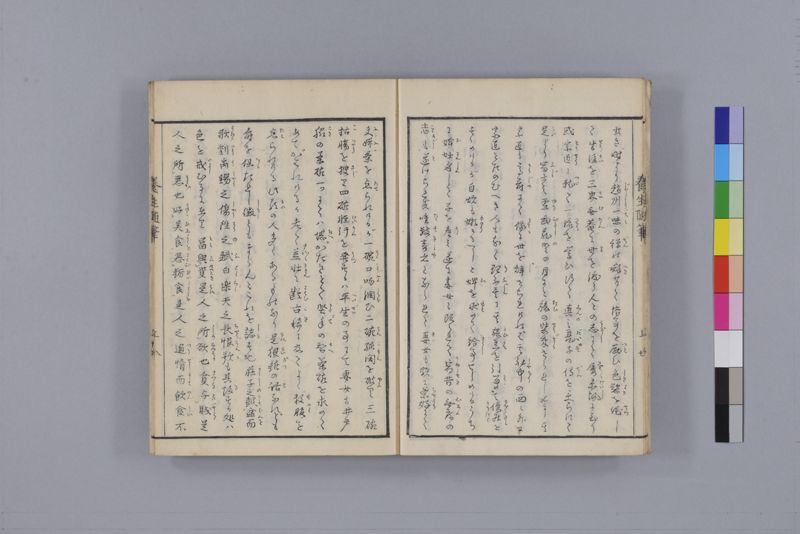
翻刻
【右頁】
少き時より趙州(じやうしう)一味(いちみ)の禅(ぜん)の癖(へき)有て悋事を厭(いと)ひ色慾(しきよき)を絶(せつ)し
て生涯(せうかい)を三 界(かい)無菴(むあん)に世(よ)を渡らんとの志(こゝざし)にて屡(しば〳〵)京師(けいし)に至り
或 宗匠(そうせう)に就(つい)て一 流(りう)を学ひ得て真之(しんの)台子(だいす)の伝(でん)を受られて
是(これ)より冨士(ふじ)之 雪(ゆき)武蔵野(むさしの)月にと旅(たひ)の装束(せうぞく)せられし所に其
宗匠も高寿(かうじゆ)にて俄(にはか)に世を辞(じ)さられければ其 社中(しやちう)の面々外に
宗匠とたのむへき人もなく理不尽(りふじん)に其 旅立(たひたち)を引 留(とゝ)めて《振り仮名:僑居|きやうきよ|かりたく》を
すゝめけるが自炊も嬾(ものう)かるへしと婢(ひ)を求(もと)めて給事(きうし)せしめけるうち
に婢(ひ)妊身(にんしん)して子を産(う)み遂に妻女と改られて宿昔(しゆくせき)の無庵(むあん)の
志(こゝろざし)も遂(と)けられず唯(たゝ)数寄者(すきしや)となられて妻(さい)女も頗に茶好(ちやすき)にて
【左頁】
夫婦(ふうふ)茶を点(たて)られけるが一 碗(わん)口吻(こうふん)潤(うるほ)ひ二 碗(わん)孤閟(こもん)を破(やふ)り三碗
枯腸(こちやう)を捜(さぐ)り四碗 軽(けい)汗(かん)を発(はつ)するは平生(へいぜい)の事にて妻女も井戸
脇(わき)の茶碗一つにては堪(たへ)がたきとて堅手(かたで)の替(かへ)茶碗を求めて
あてがはれけるか老て益(ます〳〵)壮(さかん)に齢(よはひ)古稀(こき)に及てよく数服(すふく)を
点(たて)られける此 類(るい)の人多くあるものなり是(これ)猥雑(わいざつ)の話(わ)なれども
寿を保(たも)たれし徴(しるし)ともならんとこれを誌(しる)す也 荘子(そうし)之(の)鼓(こして)_レ盆而(ほんを)
歌(うたふ)劉禹錫(りううしやく)之 傷往之賦(しやうわうのふ)白楽(はくらく)天之 長恨歌(ちやうごんか)も其 帰(き)する処は
色を戒(いまし)むるに在り 冨(とみ)與(とは)_レ貴(たつとき)是(これ)人之 所(ところ)_レ欲(ほつする)也 貧(まつしき)与(とは)_レ賤(いやしき)是
人之所_レ悪(にくむ)也 好(このみ)_二美食(ひしよくを)_一悪(にくむ)_二糲(れい)食(しよくを)_一是人之 通情(つうぜう)而(にして)飲食(いんしい)不
現代語訳
【右頁】
若い時から趙州一味の禅の癖があって、世俗の事を嫌い、色欲を絶って生涯を三界無庵で世を渡ろうとの志で、しばしば京都に至り、ある宗匠について一流を学び得て真之台子の伝授を受けられて、これより富士の雪、武蔵野の月にと旅の装束をされたところ、その宗匠も高齢で急に世を去られたので、その社中の面々は他に宗匠と頼むべき人もなく、無理にその旅立ちを引き留めて仮住まいを勧めた。自炊も面倒だろうと女中を求めて給仕させたうちに、女中が妊娠して子を産み、ついに妻女と改まって、昔からの無庵の志も遂げられず、ただの数寄者となられて、妻女も非常に茶好きで
【左頁】
夫婦で茶を点てられたが、一碗で口を潤し、二碗で孤悶を破り、三碗で枯腸を探り、四碗で軽汗を発するのは日常のことで、妻女も井戸脇の茶碗一つでは堪えがたいとして、堅手の替茶碗を求めて当てがわれたが、老いて益々盛んに、年齢古希に及んでよく数服を点てられた。この類の人は多くあるものである。これは猥雑な話であるが、寿命を保たれた証拠ともなろうと、これを記すのである。荘子の鼓盆而歌、劉禹錫の傷往之賦、白楽天の長恨歌も、その帰するところは色を戒めることにある。富と貴はこれ人の欲するところなり。貧と賤はこれ人の憎むところなり。美食を好み、粗食を憎むのは人の通情であって、飲食は
英語訳
【Right Page】
From his youth he had a penchant for the Zen of Jōshū's "one taste," detesting worldly affairs and cutting off sexual desire, with the aspiration to spend his life wandering the world in the state of "no fixed abode in the three realms." He frequently went to Kyoto, studied under a certain tea master and learned the school's teachings, receiving the transmission of the shin-no-daisu. Just as he was preparing for a journey "to the snow of Mount Fuji and the moon over Musashino," that tea master, being of advanced age, suddenly passed away. The members of his tea circle, having no one else to rely on as master, unreasonably detained him from his journey and urged him to stay temporarily. Thinking that self-cooking would be troublesome, they found him a maidservant to attend to his needs. In time, the maid became pregnant and bore a child, eventually becoming his wife. His long-held aspiration for "no fixed abode" could not be fulfilled, and he merely became a tea devotee, with his wife also being quite fond of tea.
【Left Page】
The couple would prepare tea together - one bowl moistened the lips, two bowls broke through loneliness, three bowls searched the withered intestines, four bowls brought forth light perspiration - this was their daily routine. His wife found that one tea bowl by the well was insufficient, so she obtained a katade replacement tea bowl to serve him. In old age he became increasingly vigorous, and even reaching the age of seventy, he could still prepare many servings of tea well. There are many people of this type. Though this is a ribald tale, I record it as it may serve as evidence of preserving longevity. Zhuangzi's "drumming on a tub while singing," Liu Yuxi's "Fu on Lamenting the Past," and Bai Letian's "Song of Everlasting Sorrow" all ultimately return to the warning against sexual indulgence. Wealth and honor are what people desire. Poverty and lowliness are what people detest. Loving fine food and hating coarse food is human nature, and as for eating and drinking...