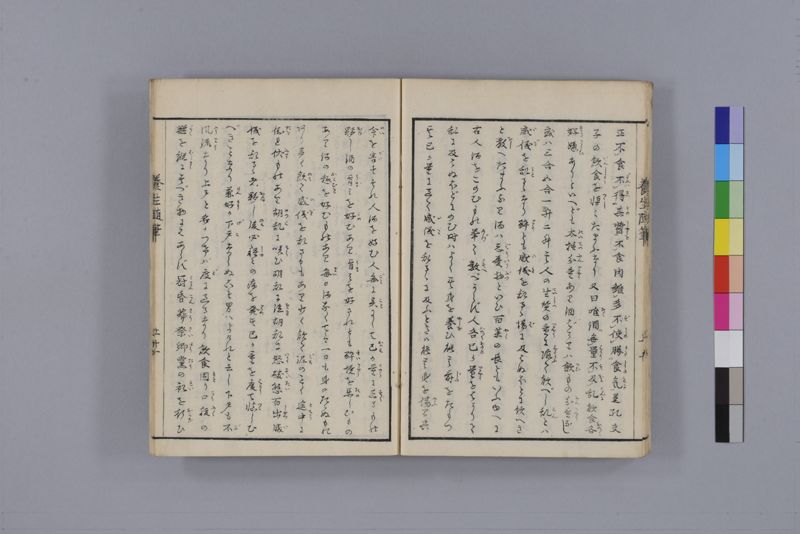
翻刻
正不_レ食 不(ざれは)_レ得(ゑ)_二其(その)醤(しやうを)_一不_一食肉雖_レ多 不(ず)_レ使(しめ)_レ勝(かた)_二食(しの)気(きに)_一是孔夫
子の飲食(いんしよく)を慎(つゝし)みたまふなり又曰 唯(たゝ)酒 ̄ハ毎_レ量(はかり)不(す)_レ及(およ)_レ乱(らんに)飲食 各(おの〳〵)
好嫌(すききらひ)ありといへども太抵(たいてい)分量(ふんりやう)あり酒ばかりは飲(のむ)もの分量(ふんりやう)なし
或は三合五合一升二升其人の性質(せいしつ)の量(りやう)に随(したかふ)て飲べし乱(らん)とは
威儀(いぎ)を乱(みた)るゝなり酔(よう)とも威儀(いぎ)を乱るゝ場(ば)に及はぬほとに飲へき
と教(をし)へたまふなり酒は忘憂物(ばういうぶつ)といひ百 薬(やく)の長ともいふゆへに
古人酒をこのむもの挙(あげ)て数(かそへ)べからず人 各(おの〳〵)己(おのれ)か量(りやう)をはかりて
乱に及はぬほどにのむ時はよく其身を養(やしなひ)能其 寿(じゆ)をたもつ
其己が量に過て威儀(いぎ)を乱るゝに及ふときは能其身を傷(やふ)り其
【左丁】
命(めい)を害(がい)すそれ人酒を好む人 毎(ごと)に異(こと)にして已(おのれ)か量(りやう)に過(すぐ)るもの
夥(おほ)し酒の旨(うま)みを好(この)むあり旨(うま)みを好されとも酔境(すいきやう)を楽(たの)しむもの
あり酒の趣(おもむき)を好むものあり毎(まい)日酒なくては一日も身のたゝぬもの
あり多く飲(のみ)て威儀(いぎ)を乱さるもあり少く飲て泥(どろ)のことく途中(とちう)に
倒(たを)れ伏(ふす)ものあり胡乱(めつた)に咲(わら)ひ胡乱に泣(なき)胡乱に怒(いかり)酔態(すいたい)百 出(しゆつ)威(い)
儀を乱るゝ者 夥(おほ)し後(のち)必 種(しゆ)々の病を発(はつ)す己か量を度(はかり)て慎(つゝ)しむ
べきことなり兼好(けんかう)か下戸(げこ)ならぬこそ男はよけれと云し下戸も不(ぶ)
風流(ふうりう)なり上戸と名かつけば度(ど)に過るなり飲食 固(もと)り口腹(こうふく)の
慾(よく)を縦(ほしまゝ)にすべき物にはあらず冠昏葬祭(くわんこんさうさい)郷党(けうたう)の礼(れい)を行(おこな)ひ
現代語訳
正しく切らなければ食べない、その醤(調味料)を得られなければ食べない。肉は多くとも、主食の気を勝たせないようにする。これが孔夫子の飲食を慎まれた教えである。また曰く「ただ酒だけは量を測らず、乱に及ばない」と。飲食にはそれぞれ好き嫌いがあるといっても、大抵は分量がある。酒だけは飲む者に決まった分量がない。
或いは三合、五合、一升、二升と、その人の性質の量に従って飲むべきである。乱とは威儀を乱すことである。酔っても威儀を乱すところまで及ばない程度に飲むべきと教えられたのである。酒は忘憂物といい、百薬の長ともいうゆえに、古人で酒を好む者は挙げて数えきれない。人はそれぞれ自分の量を測って、乱に及ばない程度に飲む時はよくその身を養い、よくその寿命を保つ。
自分の量を過ぎて威儀を乱すに及ぶときは、よくその身を傷つけ、その命を害する。それ故、人で酒を好む人はみな異なっており、自分の量を過ぎる者が多い。酒の旨味を好む者がある。旨味を好まなくとも酔境を楽しむ者がある。酒の趣を好む者がある。毎日酒なくては一日も身が立たない者がある。多く飲んで威儀を乱さない者もあり、少し飲んで泥のように途中に倒れ伏す者もある。でたらめに笑い、でたらめに泣き、でたらめに怒り、酔態百出、威儀を乱す者が多い。後に必ず種々の病を発する。自分の量を測って慎むべきことである。兼好が「下戸でないのが男はよい」と言ったが、下戸も風流でない。上戸と名がつけば度を過ぎるものである。飲食はもとより口腹の欲を思いのままにすべき物ではない。冠昏葬祭や郷党の礼を行い
英語訳
If it is not properly cut, do not eat it; if you cannot obtain the proper sauce, do not eat it. Even if there is much meat, do not let it overcome the qi of the staple food. This is how Confucius was prudent about food and drink. He also said, "Only with wine, do not measure the quantity, but do not reach the point of disorder." Although everyone has preferences in food and drink, there are generally proper portions. Only with wine is there no fixed portion for the drinker.
Whether three gō, five gō, one shō, or two shō, one should drink according to one's natural capacity. "Disorder" means disrupting one's dignity and comportment. Even when intoxicated, one should drink only to the extent that one does not disrupt one's dignity - this was his teaching. Wine is called "the thing that makes one forget worries" and "the chief of a hundred medicines," so among the ancients, those who loved wine were too numerous to count. When people measure their own capacity and drink only to the extent that they do not reach disorder, they nourish their body well and preserve their longevity well.
When one exceeds one's capacity and reaches the point of disrupting one's dignity, one harms the body and damages one's life. Therefore, people who love wine are all different, and many exceed their own capacity. Some love the taste of wine. Some who do not love the taste still enjoy the state of intoxication. Some love the refined pleasure of wine. Some cannot get through a single day without daily wine. Some drink much without disrupting their dignity, while others drink little and collapse like mud along the way. Laughing randomly, crying randomly, getting angry randomly - there are a hundred manifestations of drunken behavior, and many disrupt their dignity. Afterward, they inevitably develop various illnesses. One should measure one's capacity and exercise restraint. Kenkō said "it is better for a man not to be a teetotaler," but being a teetotaler is also unrefined. If one is labeled a heavy drinker, one tends to exceed proper limits. Food and drink are fundamentally not things with which one should indulge the desires of mouth and belly at will. In performing the rites of capping, marriage, funerals, and sacrifices, and the proprieties of local community...