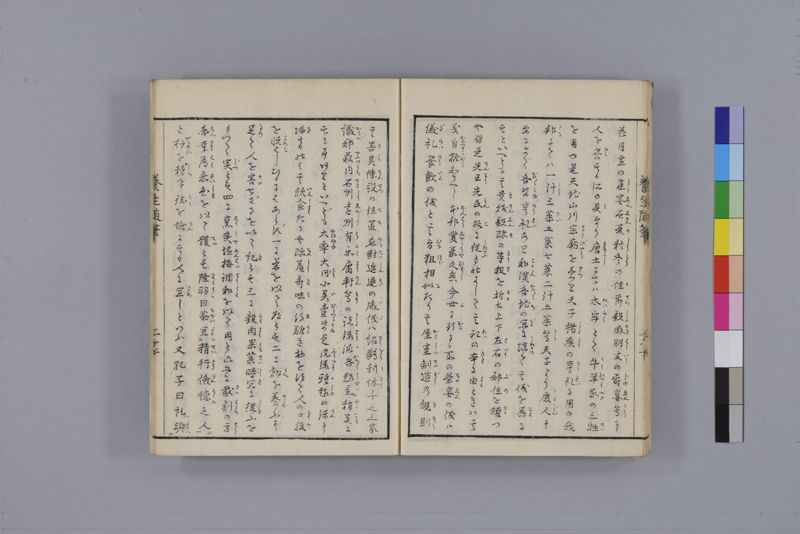
翻刻
花月雪の集宴(しうゑん)春夏秋冬(しゆんかしうとう)の佳節(かせつ)親戚朋友(しんせきはういう)の寿宴(じゆゑん)等(とう)に
人を饗(けう)する所の具(く)なり唐土(もろこし)にては太牢(たいらう)とて牛(うし)羊(ひつし)豕(ぶた)の三 牲(せい)
を用ゆ是天地山川 宗廟(そうびやう)を祭(まつ)り天子 諸侯(しよこう)の亨礼(けうれい)に用ゆ我
邦(くに)にては一 汁(しう)三 菜(さい)五菜七菜二汁五菜 等(とう)天子より庶人(しよじん)に
至るまで各(おの〳〵)皆(みな)亨礼(けうれい)あり和漢(わかん)各(おの〳〵)地(ち)の宜(ぎ)に随(したかつ)て其儀を異(こと)に
すといへとも其 貴賤(きせん)親疎(しんそ)の等殺(とうさ)を折(わか)ち上下 左右(さいう)の部位(ぶゐ)を頒(わか)つ
や皆是 先王(せんわう)先 民(みん)の故(こ)に従(したかふ)ものにして其 礼(れい)の本(もと)に由(よる)ときは其
義 自(おのつから)推(おし)知るへし本邦(ほんはう)賞茶(しやうちや)久(ひさし)矣今 世(よ)に行(おこ)るゝ所の茶宴(ちやゑん)の儀は
儀礼(ぎらい)饗飲(けういん)の儀と其 旨(むね)粗(ほゞ)相 似(に)たり其 屋室(おくしつ)制造(せいぞう)の規則(きそく)
【左丁】
其 器具(きぐ)陳説(ちんせつ)の位置(ゐち)応対(おうたい)進退(しんたい)の威儀(いぎ)は紹鴎(ぜうをう)利休(りきう)千之三家
織部(おりべ)薮内(やふのうち)石州(せきしう)遠州(ゑんしう)有楽(うらく)庸軒(ようけん)等(とう)の諸流派(しよりうは)各(おの〳〵)趣意(しゆい)稍(やゝ)異(こと)に
する事ありといへども大率(おおむね)大 同(とう)小 異(い)壹(ひとつに)皆(みな)是 風流(ふうりう)雅趣(かしゆ)の源(げん)に
帰(き)するのみ其 飲食(いんしよく)たるや珍羞(ちんしう)奇味(きみ)の得難(ゑかた)き物を得て人の口腹(こうふく)
を悦(よろこはし)むるにはあらず一に茶を以て道とす二に飢(うへ)を養(やしな)ふに
足(たつ)て人を害(かい)せざるを以て紀(き)とす三に穀肉(こくにく)果菜(くわさい)時宜(しぎ)に従(した)ふを
もつて実(じつ)とす四に烹炙(はうしや)塩梅(あんはい)調和(てうくわ)を以て用とす五に截割(さいくわつ)の方(はう)
円厚(ゑんかう)薄采色(はくさいしき)を以て 体(てい)とす陸羽(りくうか)曰 茶(ちや) ̄ハ宜(よろし)_二精行(せいかう)倹徳(けんとくの)之人_一 ̄ニ_一
と行(おこなひ)を精(しら)け徳(とく)を倹(けん)にする人に宜(よろ)しといふ又孔子曰礼 ̄ハ与(より) ̄ハ_二
現代語訳
花月雪の宴会、春夏秋冬の佳節、親戚朋友の祝宴などで人をもてなすための道具である。中国では太牢といって牛・羊・豚の三牲を用いる。これは天地山川や宗廟を祭り、天子・諸侯の饗応の礼に用いるものである。我が国では一汁三菜、五菜、七菜、二汁五菜など、天子より庶人に至るまでそれぞれ皆饗応の礼がある。日本と中国はそれぞれ土地の事情に従ってその儀式を異にするといっても、その貴賤親疎の序列を分け、上下左右の座位を分けることは、皆これ先王・先民の故事に従うものであって、その礼の根本に基づけば、その意義は自ずから理解できるであろう。本邦で茶を賞玩することは久しい。今世に行われる茶宴の儀は、儀礼の饗飲の儀とその趣旨がほぼ似ている。その屋室制造の規則、
その器具陳列の位置、応対進退の威儀は、紹鴎・利休の千家三家、織部・薮内・石州・遠州・有楽・庸軒などの諸流派がそれぞれ趣意をやや異にすることがあるといっても、大体は大同小異で、ひとつに皆これ風流雅趣の源に帰するのみである。その飲食たるや、珍味奇味の得難い物を得て人の口腹を悦ばせるのではない。第一に茶を以て道とする。第二に飢えを癒すに足りて人を害さないことを紀とする。第三に穀物・肉・果物・野菜を時宜に従うことを実とする。第四に料理・調味の調和を以て用とする。第五に切り方の方円厚薄や彩色を以て体とする。陸羽が曰く「茶は精行倹徳の人に宜しい」と、行いを清らかにし徳を慎ましくする人に適しているという。また孔子が曰く「礼は〜より」
英語訳
These are implements for entertaining people at banquets of flowers, moon, and snow, at auspicious occasions of spring, summer, autumn, and winter, and at celebratory feasts with relatives and friends. In China, they use what is called tairō - the three sacrificial animals of cattle, sheep, and pigs. These are used for sacrificing to heaven, earth, mountains, and rivers, and ancestral temples, and in the hospitality rites of emperors and feudal lords. In our country, there are one soup with three dishes, five dishes, seven dishes, two soups with five dishes, etc. From the emperor down to commoners, each has their own hospitality rites. Although Japan and China each differ in their ceremonies according to local customs, the division of hierarchical ranks of noble and base, intimate and distant, and the allocation of seating positions of upper and lower, left and right, all follow the precedents of ancient kings and ancient peoples. If one bases this on the fundamentals of ritual propriety, the meaning can naturally be understood. Our country has long appreciated tea. The tea banquet ceremonies practiced in the present world are roughly similar in purpose to the hospitality and drinking ceremonies of ritual propriety. The rules for constructing rooms and chambers,
The positioning of utensil arrangements and the deportment of reception, advancing and withdrawing - the various schools of Jōō, Rikyū's three Sen houses, Oribe, Yabunouchi, Sekishū, Enshū, Uraku, Yōken, etc., may each have slightly different approaches, but generally they share major similarities with minor differences, all ultimately returning to the source of refined elegance and cultured taste. As for their food and drink, it is not about obtaining rare delicacies and exotic flavors that are hard to come by in order to please people's appetites. First, they take tea as the Way. Second, they take as their principle providing enough to satisfy hunger without harming people. Third, they take as their substance following seasonal appropriateness with grains, meat, fruits, and vegetables. Fourth, they take as their function the harmony of cooking, roasting, and seasoning. Fifth, they take as their form the square, round, thick, and thin cutting methods and coloring. Lu Yu said, "Tea is suitable for people of pure conduct and frugal virtue" - meaning it is appropriate for those who purify their conduct and practice modest virtue. Also, Confucius said, "Ritual propriety is better than..."