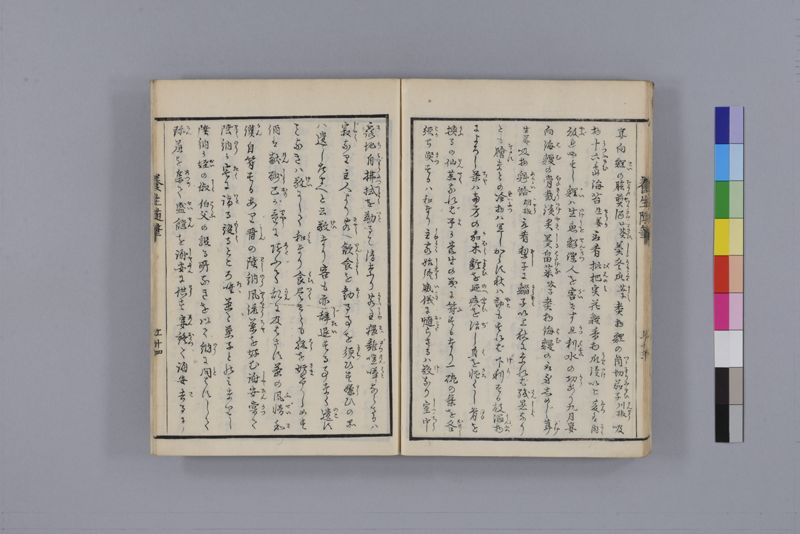
翻刻
宴向 鯉(こい)の膾(なます)煎酒(いりさけ)《割書:山葵(わさび)》羹(しる)冬瓜(かもうり)《割書:芥子(からし)》煮物鯉の筒切(つゝきり)茄子(なすひ)《割書:川椒(さんせう)》吸
物 十六島(うつふるひ)海苔 《割書:生姜(せうか)》取肴 枇杷実(びはのみ)花鰹香物 瓜漬(うりつけ)以上 夏(なつ)は肉(にく)
破(やぶ)れやすし鯉(こい)は生魚(いけうを)鮮潔(せんけつ)人を害(がい)せす且(かつ)利水(りすい)の功(かう)あり九月宴
向 海鰻(はむ)の骨截(ほねきり)漬炙(つけやき)羹(しる)畠菜(はたけな)《割書:芥子》煮物 海鰻(はむ)の取身しめじ茸(たけ)
《割書:生姜》吸物 魁蛤(あかゝい)《割書:胡椒(こせう)》取肴 梨子(なし)に鯔子(からすみ)以上秋になれば残暑(さんしよ)なり
とも膾(なます)なとの冷物(れいふつ)は宜しからす秋は動(やゝ)もすれば下痢(げり)する故 温物(うんふつ)
によろし茶(ちや)は南方の嘉木(かほく)齢(よはひ)を延(のへ)疾(やまひ)を治(ぢ)し身(み)を軽(かろ)くし骨(ほね)を
換(かふ)るの仙薬(せんやく)なれば予(よ)か養生の義に符(ふ)するなり一椀の茶を各(おの〳〵)
頒(わか)ち喫(きつ)するは和なり主客(しゆかく)始終(ししう)威儀(いき)に惰(おこた)らさるは敬(け)なり室中(しつちう)
【左丁】
露地(ろち)自(みづから)払拭(ふつしよく)を勤(つと)るは清なり客主(かくしゆ)猥雑(わいざつ)喧嘩(けんくわ)ならさるは
寂(じやく)なり主人より客(きやく)へ飲食(いんしよく)を勧(すゝ)る事を須(もち)ひす嫌(きら)ひの品
は遺したまへと云 敬(けい)なり客も亦 辞退(じたい)する事なく遺(のこ)す
ことなきは敬(けい)にして和(くわ)なり食尽(くひつく)せとも腹(はら)を妨(さま)けしめす
酒は献酬(けんしう)己(おの)が量(りやう)に随(した)ふて乱(らん)に及はさす茶の風情(ふぜい)和(わ)
漢(かん)自符するあり晋(しん)の陸納(りくのう)風流茶(ふうりうちや)を好む 謝安(しやあん)嘗(かつ)て
陸納(りくのう)か宅に詣(いた)る設(もうく)るところ唯(たゝ)茶と菓子とのみなりし
陸納か姪(おい)の俶(しく)伯父(はくふ)の設る所なきを以て納(のう)に問(と)はすして
珍(ちん)羞を集(あつめ)て盛饌(せいせん)を謝安(しやあん)に供(けう)す宴(ゑん)終(おはつ)て謝安 去(さ)るに
現代語訳
【右丁】
六月の宴では、向付は鯉の膾に煎り酒《山葵》、汁は冬瓜《芥子》、煮物は鯉の筒切りと茄子《山椒》、吸物は十六島海苔《生姜》、取肴は枇杷の実に花鰹、香物は瓜漬け。以上。夏は肉が傷みやすいが、鯉は生魚でも新鮮潔白で人に害を与えず、かつ利尿の効果がある。
九月の宴では、向付は海鰻の骨切りの漬け焼き、汁は畠菜《芥子》、煮物は海鰻の身としめじ茸《生姜》、吸物は赤貝《胡椒》、取肴は梨に烏賊墨。以上。秋になれば残暑があっても、膾などの冷たい物は良くない。秋はやや下痢をしがちなので、温かい物が良い。
茶は南方の良い木で、寿命を延ばし、病気を治し、身を軽くし、骨を変える仙薬なので、私の養生の考えに合致する。一椀の茶をそれぞれが分かち合って飲むのは和である。主客が始終威儀を怠らないのは敬である。室中や
【左丁】
露地を自ら掃除に励むのは清である。客主が騒がしくしたり喧嘩したりしないのは寂である。主人から客へ飲食を勧めることはせず、嫌いな品は残してくださいと言う、これは敬である。客もまた辞退することなく残すこともないのは敬であって和である。食べ尽くしても腹を害することがない。
酒は献酬を自分の量に従って行い、乱れることがない。茶の風情は和漢に通ずるものがある。晋の陸納は風流茶を好んだ。謝安がかつて陸納の宅を訪れた時、設けられたものはただ茶と菓子のみであった。陸納の甥の俶は、伯父の設けるところが粗末であることを、納に問わずして珍味を集めて盛大な饗宴を謝安に供した。宴が終わって謝安が去ると、
英語訳
【Right Page】
For June banquets: mukōzuke of carp salad with parched sake 《wasabi》, soup of winter melon 《mustard》, simmered dish of carp cut in cylinders with eggplant 《Japanese pepper》, clear soup of Utsupurui seaweed 《ginger》, sake accompaniment of loquat fruit with bonito flakes, pickles of melon. The above. In summer, meat spoils easily, but carp, even as fresh fish, is clean and pure, causes no harm to people, and has diuretic benefits.
For September banquets: mukōzuke of conger eel with bone cuts, marinated and grilled, soup of field greens 《mustard》, simmered dish of conger eel meat with shimeji mushrooms 《ginger》, clear soup of ark shells 《pepper》, sake accompaniment of pears with karasumi (dried mullet roe). The above. When autumn comes, even if there is lingering summer heat, cold dishes like salads are not good. In autumn, one tends to have diarrhea, so warm dishes are better.
Tea is a fine tree from the south, a miraculous medicine that extends life, cures illness, lightens the body, and transforms the bones, so it accords with my principles of health cultivation. Sharing and drinking one bowl of tea among everyone is wa (harmony). The host and guests maintaining proper decorum from beginning to end is kei (respect). The room and
【Left Page】
diligently cleaning the tea garden path oneself is sei (purity). The guest and host not being boisterous or quarrelsome is jaku (tranquility). The host not urging food and drink upon guests, saying "please leave what you dislike" - this is kei (respect). The guests also neither declining nor leaving food - this is both kei (respect) and wa (harmony). Even eating everything does not harm the stomach.
With sake, the exchange of cups follows one's own capacity without reaching disorder. The aesthetic of tea corresponds to both Japanese and Chinese traditions. Lu Na of the Jin dynasty loved elegant tea. When Xie An once visited Lu Na's residence, what was served was only tea and sweets. Lu Na's nephew Shu, thinking his uncle's provisions were inadequate, gathered delicacies and provided a lavish feast for Xie An without consulting Na. When the banquet ended and Xie An departed,