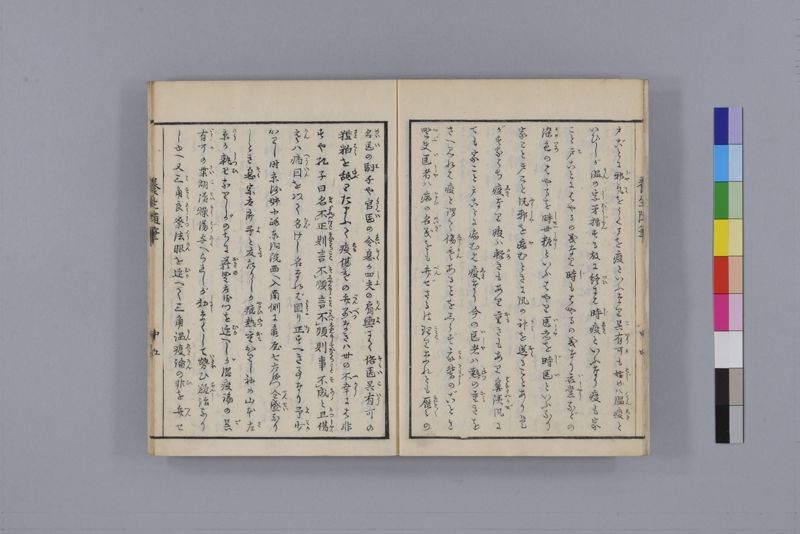
翻刻
【右丁】
戸ごとに邪気(じやき)をうくるを疫といふなり呉有可(こいうか)も始(はじ)めは温疫(うんゑき)と
いひしが温(うん)の字(じ)矛盾(ぼうじゆん)する故に終(つひ)には時疫(じゑき)といふなり疫も家
こと戸(こ)ことにはやるの義なり時(じ)もはやるの義なり衣裳(いしやう)などの
染色(そめいろ)のはやるを時世粧(しせいしやう)といふはやり医者(いしや)を時医(じい)といふなり
家こと戸こと風邪(ふうしや)を病(や)むときに風の神(かみ)を送(おく)ることあり是
がすなはち疫(ゑき)なり疫は軽(かろ)きもあり重(おも)きもあり鼻洟風(はなたれかぜ)に
ても家こと戸ことに病むは疫(ゑき)なり今の医者(いしや)は熱(ねつ)の重(おも)きを
さへ見れは疫と謂て傷寒(しやうかん)あることをしらず我(わか)輩(ともがら)のごとき
野夫(やぶ)医者(いしや)は病(やまひ)の名義(めいぎ)をも弁(べん)ぜさるは理(ことは)りなれとも歴々(れき〳〵)の
【左丁】
名医(めいい)の嗣(し)子や官医(くわんい)の令息(れいそく)か四夫(しふ)の肩輿(けんよ)にて俗医(そくい)呉有(こいう)可の
糟粕(さうはく)を舐(ねぶ)りたまふて疫(えき)傷寒の弁別(べんべつ)なきは世の不孝(ふかう)には非
すや孔子曰 名(な)不(ざれば)_レ正(たゝし)則(すなはち)言(こと)不(す)_レ順(しゆんなら)言(こと)不(されは)_レ順(しゆんなら)則(すなはち)事(こと)不(す)_レ成(なら)と且(かつ)傷(しやう)
寒(かん)は病(へう)因(いん)を以て名(なづ)けし名なれば固(もとよ)り正(たゝ)すへき事なり予(よ)少(わか)
かりし時京師姉小路東洞院西へ入南側に亀屋七左衛門 全盛(せんせい)なり
しとき息(そく)宗太郎 予(よ)と友(とも)たりしか病(やまひ)熱重(ねつおも)かりし初め山本 左(さ)
京(けう)か執匕(しつひ)なりしがにのちに荻野(おきの)左衛門を迎(むか)へしが温疫論の呉(ご)
有可(いうか)の柴胡清燥湯(さいこせいそうとう)与(あた)へられしが効(しるし)なくして勢(いきほ)ひ難治(なんし)なり
しゆへ又 三角良察(みすみれうさつ)法眼(はうけん)を迎(むか)へて三角 温疫論(うんゑきろん)の非(ひ)を弁(へん)せ
現代語訳
【右丁】
戸ごとに邪気を受けるのを疫というのである。呉有可も初めは温疫と言っていたが、温の字が矛盾するので、最終的には時疫と言うのである。疫も家ごと戸ごとに流行するという意味である。時も流行するという意味である。衣装などの染色の流行を時世粧というし、流行医者を時医というのである。家ごと戸ごと風邪を患うときに風の神を送ることがある。これがすなわち疫である。疫は軽いものもあり重いものもある。鼻水風邪でも家ごと戸ごとに病むのは疫である。今の医者は熱の重いのを見ただけで疫と言って、傷寒があることを知らない。我々のような野夫医者が病気の名義も弁別できないのは当然だが、歴々の
【左丁】
名医の跡継ぎや官医の令息が四人の担ぎ手の肩輿に乗って、俗医呉有可の糟粕を舐めて、疫と傷寒の区別がないのは世の不幸ではないだろうか。孔子は言った「名が正しくなければ言葉が順当でない。言葉が順当でなければ事が成らない」と。また傷寒は病因によって名付けられた名前なので、もとより正すべきことである。私が若かった時、京師姉小路東洞院西へ入った南側に亀屋七左衛門が全盛であった時、息子宗太郎が私と友人だったが、病気で熱が重かった初めに山本左京が治療していたが、後に荻野左衛門を迎えて、温疫論の呉有可の柴胡清燥湯を与えられたが効果がなくて病勢が治りにくくなったので、また三角良察法眼を迎えて、三角は温疫論の非を弁じて
英語訳
【Right Page】
Receiving evil qi from household to household is called epidemic (eki). Go Yuka initially called it "warm epidemic" (on-eki), but because the character "warm" was contradictory, he eventually called it "seasonal epidemic" (ji-eki). Epidemic also means spreading from house to house. "Ji" (seasonal/timely) also means "popular" or "trending." The popular dyeing of clothing is called "contemporary fashion" (jiseishō), and fashionable doctors are called "contemporary physicians" (jii). When people suffer from colds household by household, there are times when they send away the wind god. This is precisely what epidemic means. Epidemics can be mild or severe. Even runny-nose colds, when they affect every household, constitute an epidemic. Today's doctors see only severe fever and call it epidemic, not knowing that there is such a thing as "cold damage" (shōkan). It is natural that country doctors like us cannot distinguish the proper names of diseases, but when the distinguished
【Left Page】
heirs of renowned physicians and the noble sons of court physicians, carried in palanquins by four bearers, lick the dregs of the vulgar physician Go Yuka and cannot distinguish between epidemic and cold damage—is this not a misfortune for the world? Confucius said, "If names are not correct, then language is not in accordance with the truth of things. If language is not in accordance with the truth of things, then affairs cannot be carried on successfully." Moreover, since "cold damage" (shōkan) is a name given based on the disease's cause, it should naturally be corrected. When I was young, on the south side of Kyoto, west of Anekōji Higashi-no-tōin, there was Kameya Shichizaemon in his prime. His son Sōtarō was my friend, but when he fell ill with severe fever, initially Yamamoto Sakyō treated him, but later they summoned Ogino Saemon, who administered Go Yuka's Saiko Seisō-tō from the Warm Epidemic Theory, but it was ineffective and the condition became difficult to treat. So they summoned Misumi Ryōsatsu Hōgen, and Misumi argued against the fallacies of the Warm Epidemic Theory.