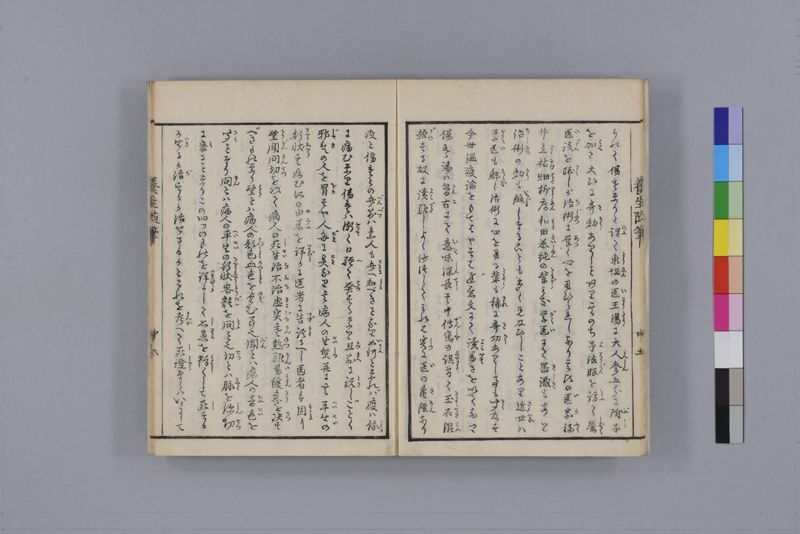
翻刻
【右丁】
られて傷寒なりと謂(いふ)て東垣(とうゑん)の医王湯(いわうたう)に大 人参(にんしん)五分に附子(ぶし)
を加(くは)【へ脱】て大ひに奇効(きかう)ありしことあり其のち予法眼(よはうげん)を訪(とふ)て屡(しば〳〵)
医談(いだん)を聴(きゝ)しが治術(ちじゆつ)に厚(あつ)く心を用ひられしなり其頃の医家(いか)福(ふく)
井 立祐(りうすけ)畑柳庵(はたりうあん)和田泰純(わたたいしゆん)の輩(ともがら)みな学医(がくい)にて器識(きしき)もあり
治術(ちしゆつ)の効(かう)も徴(いちじる)しなることも多く見及ひしことあり近世(きんせい)は
学医(がくい)も鮮(すくな)く治術に心を用る輩(ともから)も稀(まれ)に奇功(きかう)ありし事も聞(きゝ)及す
今世温疫論をもてはやすは達意文にて読易(よみやす)きを以てなり
傷寒論は簡古(かんこ)にて意味深長(いみしんてう)其中 伝写(でんしや)の誤(あやまり)有て玉石(きよくせき)混(こん)
雑(ざつ)する故に読難(よみがた)しよく沙汰してみれは実(しつ)に医(い)の亀鑑(きかん)なり
【左丁】
疫と傷寒との弁別(べんべつ)は素人も弁(わきま)へ知(しる)るべきことなり如何(いかん)となれば疫は俄(にはか)
に病むなり傷寒は漸(やうや)く日 経(へ)て発(はつ)するなり且(かつ)前(まへ)に説(とき)しごとく
邪気(じやき)の人を冒(をか)すや人 毎(ごと)に異(こと)なり其病人の生質(せいしつ)并に其 平生(へいせい)の
行状(きやうしやう)其病む所の由来(ゆらい)を詳(つまびら)かに医者に告(つげ)語(かた)るへし医者は固(もとよ)り
望聞問切(はうぶんもんせつ)を以て病人の死生(しせい)治不治(ちふち)虚実(きよじつ)寒熱(かんねつ)難易(なんい)緩急(くわんきう)を決(けつ)す
べきものなり望(はう)とは病人の顔色(かんしよく)血色(けつしよく)を望(のぞ)む事也 聞(ぶん)とは病人の音声(おんせい)を
聞(きく)ことなり問(もん)とは病人の平生(へいせい)の行状(きやうしやう)容体(ようだい)を問(とふ)こと也 切(せつ)とは脈(みやく)を深切(しんせつ)
に察(み)ることなりこの四つのものを詳(つまひらか)にして思慮(しりよ)を精(くはし)くして死(し)する
か生(いき)るか治(ぢ)するか治せさるかとこれを考(かんが)へて死証(ししやう)ならはいかにして
現代語訳
【右丁】
られて傷寒だと言って、李東垣の医王湯に大人参五分と附子を加えて大いに奇効があったことがある。その後、私は法眼を訪ねて度々医談を聞いたが、治術に厚く心を用いられていた。その頃の医家である福井立祐、畑柳庵、和田泰純らは皆学医で器識もあり、治術の効果も著しいことが多く見受けられた。近世は学医も少なく、治術に心を用いる者も稀で、奇功があったことも聞き及ばない。
今世で温疫論がもてはやされるのは、達意の文で読みやすいからである。傷寒論は簡古で意味深長だが、その中に伝写の誤りがあって玉石混淆しているため読み難い。よく検討してみれば、実に医学の亀鑑である。
【左丁】
疫と傷寒との区別は素人も理解できることである。なぜなら疫は突然発病するが、傷寒は徐々に日を経て発症するからである。また前に説明したように、邪気が人を侵すとき、人ごとに異なる。その病人の生質並びにその平生の行状、その病む所の由来を詳しく医者に告げ語るべきである。医者は当然、望聞問切をもって病人の死生、治不治、虚実、寒熱、難易、緩急を決すべきものである。望とは病人の顔色、血色を観察することで、聞とは病人の音声を聞くことである。問とは病人の平生の行状、容体を問うことで、切とは脈を深切に察することである。この四つを詳細にして思慮を精しくして、死ぬか生きるか、治るか治らないかを考えて、死証ならばいかにして
英語訳
【Right Page】
...and saying it was shanghan (typhoid fever), he added large ginseng (5 bu) and aconite to Li Dongyuan's Yiwang Decoction, which had great miraculous effects. After that, I visited Hōgen and frequently listened to medical discussions, as he devoted great attention to therapeutic techniques. The physicians of that time—Fukui Ryūsuke, Hata Ryūan, and Wada Taijun—were all scholarly doctors with good judgment and insight, and their therapeutic effects were often remarkable. In recent times, there are few scholarly doctors, and those who devote themselves to therapeutic techniques are rare; I have not heard of any miraculous achievements.
The reason the Wenyi Lun (Treatise on Warm Epidemics) is popular nowadays is because it is written in clear prose and is easy to read. The Shanghan Lun (Treatise on Cold Damage) is concise and ancient with profound meaning, but it contains transcription errors and mixes precious gems with ordinary stones, making it difficult to read. When properly examined, it is truly a mirror for medicine.
【Left Page】
The distinction between epidemic diseases and shanghan is something even laypeople can understand. This is because epidemic diseases strike suddenly, while shanghan develops gradually over days. Moreover, as explained earlier, when pathogenic qi attacks people, it differs from person to person. The patient should tell the doctor in detail about their constitution, usual behavior, and the origin of their illness. The doctor should naturally use the four diagnostic methods (inspection, auscultation, inquiry, and palpation) to determine whether the patient will live or die, whether they can be cured or not, and assess deficiency/excess, cold/heat, difficulty/ease, and urgency/gradualness. "Inspection" means observing the patient's facial color and complexion; "auscultation" means listening to the patient's voice; "inquiry" means asking about the patient's usual behavior and condition; "palpation" means carefully examining the pulse. By making these four methods thorough and refining one's consideration, one should contemplate whether the patient will die or live, be cured or not, and if it is a fatal condition, how to...