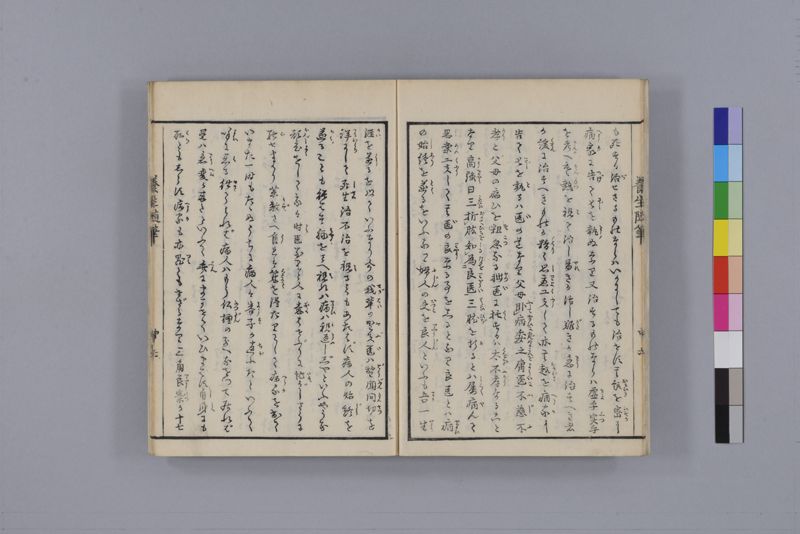
翻刻
【右丁】
も死する治(ぢ)せさるものならはいかにしても治せす其 趣(おもむき)を密(ひそか)に
病家(へうか)に告(つげ)て匕(さじ)を執(とら)ぬなり又治するものならは虚(きよ) 乎 実(しつ)乎
を考(かんか)へ寒熱(かんねつ)を視(み)て治し易(やす)きか治し難(がた)きか急(きう)に治すへき者
か緩(くわん)に治すへきものか精(くはし)く思慮工夫(しりよくふう)して亦其 趣(おもむき)を病家(へうか)に
告て匕(さじ)を執(と)るは医(い)の道なり父母 臥(ふして)_レ病(やまひに)委(ゆだぬる)_二之(これを)庸(よう)医(いに)_一不(ふ)慈(じ)不(ふ)
孝(かう)と父母の病ひを粗忽(そこつ)なる拙医(せつい)に托(たく)するは太(はなはだ)不孝(ふこう)なること
なり高強(かうきやう)曰 三(みたひ)折(おりて)_レ肱(ひちを)知(しる)_レ為(たるを)_二良医(りやうい)_一 三(みたひ)肱(ひぢ)を折(お)るとは屡(しは〳〵)病(や)んて
思案工夫(しあんくふう)して其医の良(りやう)なる事を知るとなり良医とは病(やまひ)
の始終(ししう)を遂(とく)るをいふなり婦人(ふじん)の夫(おつと)を良人(りやうじん)といふも吾(わか)一 生(せう)
【左丁】
涯(がい)を遂(とく)るを以ていふなり今の我輩(わがはい)の野夫医(やぶい)は望聞問切(ぼうぶんもんせつ)を
詳(つまひらか)にして死生(しせい)治不治を視(み)ることもあたはず病人の始 終(じう)を
遂(とく)ることも能はす脈(みやく)をさへ視(み)れは病(やまひ)は視通(みとふ)しじやといふやうな
顔色(かんしよく)をして我は 時(し)医なりと人に意(おも)はせぶりに忙(いそ)がしさうに
馳(は)せまはり薬 数(かず)さへ售(う)れは策(はかりこと)を得たりとして病家(へうか)を出て
いまた一時もたゝぬうちに病人は容子(ようす)か違(ちが)ふたといふて
呼(よひ)に来(く)る往(ゆき)てみれば病人はもう仏檀(ふつだん)の前へなをつて居れば
是は急変(きうへん)か来たといふて弁(べん)にまかせていひまはす自身(じしん)にも
恥(はち)ともしらす病家(へうか)も亦 罪(つみ)ともせざるなり三角 良察(りやうさつ)か十七
現代語訳
【右丁】
死ぬ者は治すことができないものであれば、どうしても治すことはできない。その旨を密かに病家に告げて、治療を引き受けない。また治る者であれば、虚証か実証かを考え、寒熱を診て、治しやすいか治しにくいか、急に治すべき者か緩やかに治すべきものかを精しく思慮工夫して、またその趣旨を病家に告げて治療を引き受けるのが医の道である。「父母が病に臥して、これを庸医に委ねるのは不慈不孝である」と。父母の病いを粗忽な拙医に託するのは、はなはだ不孝なことである。高強が言うには「三たび肱を折りて良医たることを知る」と。三度肘を折るというのは、しばしば病んで思案工夫して、その医の優れていることを知るということである。良医とは病気の始終を全うすることを言う。婦人の夫を良人というのも、我が一生涯を全うすることをもって言うのである。今の我らの野夫医(やぶ医者)は望聞問切を
【左丁】
詳しくして死生、治不治を診ることもできず、病人の始終を全うすることもできず、脈をさえ診れば病気は見通せるというような顔色をして、我は時医だと人に思わせぶりに忙しそうに駆け回り、薬の数さえ売れば策を得たりとして病家を出て、まだ一時も経たないうちに、病人の様子が違ったと言って呼びに来る。行ってみれば病人はもう仏壇の前に納められているので、これは急変が来たと言って弁にまかせて言い回す。自身にも恥とも知らず、病家もまた罪とも思わない。三角良察が十七
英語訳
【Right Page】
Those who will die cannot be cured no matter what, so treatment is impossible. The doctor should secretly inform the family of this situation and decline to take on the treatment. For those who can be cured, one should consider whether it is a deficiency or excess pattern, examine cold and heat, and carefully deliberate whether it is easy or difficult to treat, whether it requires urgent or gradual treatment, then inform the family of this assessment before taking on the treatment—this is the way of medicine. "When parents lie ill and entrust themselves to mediocre doctors, this is unbenevolent and unfilial." To entrust one's parents' illness to careless, incompetent doctors is extremely unfilial. Gaoqiang said, "By breaking one's arm three times, one learns to be a good doctor." Breaking the elbow three times means that through frequently being ill and contemplating with ingenuity, one learns what makes a doctor excellent. A good doctor is one who sees a patient through from beginning to end of an illness. When a woman calls her husband "ryōjin" (good person), it also means one who will accompany her through her entire life. Today's quack doctors among us cannot
【Left Page】
thoroughly apply the four diagnostic methods to assess life and death, curability and incurability, nor can they see patients through from beginning to end. They put on airs as if they can see through any illness just by feeling the pulse, making people think they are fashionable doctors by rushing about busily, and once they sell enough medicine, they think they have succeeded and leave the patient's home. Before even an hour has passed, someone comes calling saying the patient's condition has changed. When they go to look, the patient has already been laid out before the Buddhist altar, so they glibly excuse themselves saying "sudden deterioration occurred." They feel no shame themselves, and the family also does not hold them responsible. Sankaku Ryōsatsu at seventeen