翻刻
【右丁】
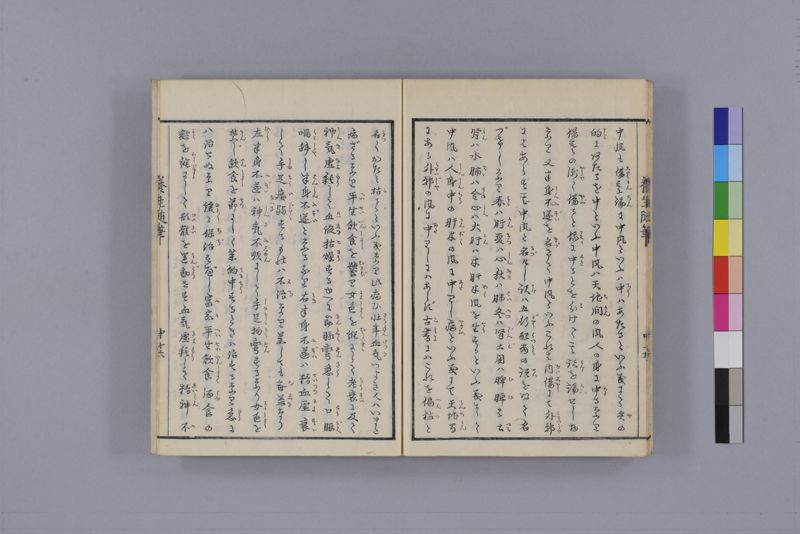
中風も傷寒論(しやうかんろん)に中風といふは中(ちう)はあたるといふ義にて矢(や)の
的(まと)にあたるを中といふ中風は天 地(ち)間(かん)の風人の身に中(あた)るなり
傷寒の漸(やうや)く傷(やぶ)ると俄(にわか)に中(あた)るとを分(わ)けて其 訳(わけ)を論(ろん)せし物
なり又半 身(しん)不随(ふずい)を名(なづ)けて中風といふこれは内傷(ないしやう)にて外邪(くわいじや)
にはあらす其中風と名(なづ)けし訳(わけ)は五 行(ぎやう)配当(はいとう)の説(せつ)を以て名
づけしなり春(はる)は肝(かん)夏(なつ)は心(しん)秋(あき)は肺(はい)冬(ふゆ)は腎(じん)土(ど)用は脾(ひ)脾(ひ)は土(つち)
腎(じん)は水 肺(はい)は金(かね)心(しん)は火 肝(かん)は木肝 木(ほく)風を生(せう)すると云ふ義にて
中風は人身中(しんしんちう)の肝木(かんぼく)の風に中(あた)りし病(やまひ)といふ義にて天地(てんち)間(かん)
にある外邪(くわいじや)の風に中(あた)りしにはあらず古書(こしよ)にはこれを偏枯(へんこ)と
【左丁】
名(なつ)くかたみ枯(か)るゝといふ義なり此病ひ壮年(さうねん)血気(けつき)つよき人はいまた
病ざるなり平生(へいせい)飲食(いんしよく)を饕(むさぼ)り女色(によしよく)を縦(ほしいまヽ)にして老衰(らうすい)に及て
神気(しんき)虚耗(きよもう)して血液(けつゑき)枯燥(こそう)するゆへに筋脈(きんみやく)彎急(れんきう)して口眼(こうがん)
喎斜(くわしや)し半身付随(はんしんふずい)となるなり右半身 付随(ふずい)は精血(せいけつ)虚衰(きよすい)
して手足(しゆそく)《振り仮名:痿弱|いじやく|なへて》するものは不治(ふち)なり薬しても無益(むゑき)なり
左(ひたり)半身 不随(ふずい)は神気(しんき)不順(ふじゆん)にして手足(しゆそく)拘彎(こうれん)するなり女色(によしよく)を
禁(きん)じ飲食(いんしょく)を節(せつ)にして薬 的中(てきちう)するときは治するなり急(きう)に
は治せぬなり緩々(ゆる〳〵)保治(ほぢ)すべし富家(ふか)平生(へいせい)飲食(いんしよく)酒(しゆ)食の
欲(よく)を縦(ほしいまゝ)にして形骸(けいかい)を運動(うんどう)せす血気 虚耗(きよもう)して精神(せいしん)不(ふ)
現代語訳
【右丁】
中風も傷寒論に中風というのは、「中」は当たるという意味で、矢が的に当たることを「中」というように、中風は天地間の風が人の身に当たることである。傷寒が徐々に傷つけるのと、急に当たるのとを分けて、その違いを論じたものである。また半身不随を名づけて中風というのは、これは内傷であって外邪ではない。その中風と名づけた理由は五行配当の説をもって名づけたものである。春は肝、夏は心、秋は肺、冬は腎、土用は脾。脾は土、腎は水、肺は金、心は火、肝は木。肝木は風を生ずるという意味で、中風は人身中の肝木の風に当たった病気という意味であって、天地間にある外邪の風に当たったのではない。古書にはこれを偏枯と
【左丁】
名づける。片方が枯れるという意味である。この病気は壮年で血気の強い人はまだ病まない。普段飲食を貪り、女色を欲しいままにして老衰に及んで神気が虚耗して血液が枯燥するために、筋脈が攣急して口眼が歪斜し、半身不随となるのである。右半身不随は精血が虚衰して手足が萎弱になるものは不治である。薬を用いても無益である。左半身不随は神気不順によって手足が拘攣するのである。女色を禁じ飲食を節制して薬が的中するときは治るのである。急には治せない。ゆっくりと保養治療すべきである。富裕な家では普段飲食・酒食の欲を欲しいままにして身体を運動させず、血気が虚耗して精神が不
英語訳
【Right Page】
Regarding apoplexy (chūfū), in the Treatise on Cold Damage, "chū" means "to strike" - just as we say an arrow "strikes" (chū) its target, apoplexy is when the wind between heaven and earth strikes the human body. This work distinguishes between typhoid fever that gradually damages and apoplexy that strikes suddenly, discussing their differences. Also, naming hemiplegia as "apoplexy" - this is internal injury, not external pathogenic influence. The reason for naming it apoplexy comes from the theory of Five Element correspondences. Spring corresponds to liver, summer to heart, autumn to lungs, winter to kidneys, and the seasonal transitions to spleen. Spleen is earth, kidneys are water, lungs are metal, heart is fire, liver is wood. In the sense that liver-wood generates wind, apoplexy means a disease struck by the wind of liver-wood within the human body, not being struck by external pathogenic wind between heaven and earth. Ancient texts call this "piān kū" (partial withering).
【Left Page】
This means "one side withering." This disease does not yet afflict those in their prime with strong blood and qi. Those who habitually indulge in food and drink and give free rein to sexual desires, when they reach old age and decline, their spirit-qi becomes depleted and their blood becomes dry and parched, causing the sinews and vessels to contract urgently, the mouth and eyes to become twisted and slanted, resulting in hemiplegia. Right-side hemiplegia, where essence and blood are depleted and the hands and feet become weak and flaccid, is incurable. Medicine is useless for this. Left-side hemiplegia is caused by disordered spirit-qi causing the hands and feet to become rigid and contracted. When sexual desires are prohibited, food and drink are moderated, and medicine hits the mark, it can be cured. It cannot be cured quickly. One should treat it slowly with careful nursing. Wealthy families habitually indulge their desires for food, drink, and alcohol without exercising their bodies, causing blood and qi to become depleted and the spirit to become dis-