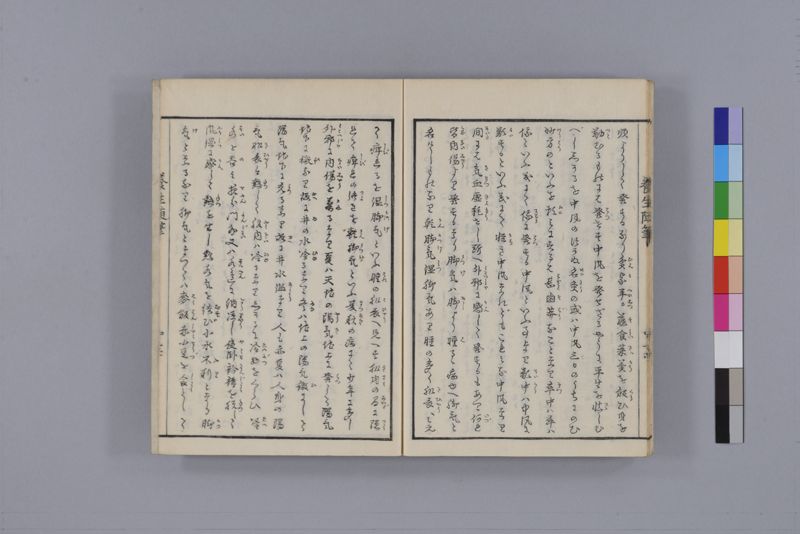
翻刻
【右丁】
順よりして発するなり貧家(ひんか)平日(へいしつ)蔬食(そしい)菜羹(さいかう)を飯(くら)ひ身を
勤(つと)むるものには発(はつ)せす中風を発せざるやうに平生を慎(つゝ)しむ
べししかるを中風のつかぬ名灸(めいきう)の或は中風三日のうちにのむ
妙方(めうはう)のといふを頼(たの)みにするは甚(はなはた)鹵莽(そばう)なことなり卒(そつ)中は卒は
俄といふ義にて俄(にはか)に発(はつ)する中風といふ事なり類中(るいちう)は中風に
類するといふ義にて軽(かろ)き中風なれどもこれみな中風なり
間(あいた)には気血(きけつ)虚耗(きよもう)せし所へ外邪(くわいしや)に感(かん)して発するもあり何(いづ))れ
皆(みな)内傷(ないしやう)より発するなり脚気(かつけ)は脚(あし)より腫(は)るゝ病ゆへ脚気と
名けしものなり乾(かん)脚気(かつけ)湿(しつ)脚気あり腫の多く肌表(きひやう)へみえ
【左丁】
て痺(しび)れるを湿(しつ)脚気(かつけ)といふ腫(はれ)の肌表(きひやう)へ見へす肌肉(きにく)の間(あいだ)に隠(つゝく)【ママ】
れて痺(しび)れの強(つよ)きを乾(かん)脚気(かつけ)といふ夏秋(なつあき)の病にて少年に多し
外邪(くわいじや)に内傷(ないしやう)を兼(かね)るなり夏は天地の陽気(やうき)地上に発(はつ)して陽気
地下に微(ひ)なり故(ゆへ)に井(ゐ)の水 冷(ひゆ)るなり冬(ふゆ)は地上の陽気 微(ひ)にして
陽気地下に充(みつ)るなり故(ゆへ)に井水 温(あたゝか)なり人も亦夏は人身の陽
気 肌表(きひやう)は熱(ねつ)して腹内(ふくない)は冷(ひゆ)るなりしかるに冷物(れいぶつ)をくらひ冷(れい)
水(すい)を呑(の)み夜分(やふん)門外(もんぐわい)又は水辺(すいへん)に納涼(なうりやう)し夜臥(やくわ)衿褥(きんじよく)を脱(ねつ)【「たつ」の誤ヵ】して
風湿(ふうしつ)に感(かん)して熱(ねつ)を生し熱水気を結(むす)び小水 不利(ふり)となり脚(かつ)
気(け)となるなり脚気となつては麦飯(はくはん)赤小豆(しやくせうづ)を食(しよく)として
現代語訳
【右丁】
順調でないことから発するのである。貧しい家では普段粗食や野菜のスープを食べ、身体を動かして働く者には発症しない。中風を発症しないように普段から慎むべきである。それなのに中風の霊験あらたかな灸や、あるいは中風になって三日のうちに飲む妙薬などを頼みにするのは、非常に軽率なことである。卒中の「卒」は急にという意味で、急に発症する中風ということである。類中は中風に類するという意味で、軽い中風ではあるが、これらも皆中風である。
時には気血が虚耗したところに外邪に感染して発症することもあるが、いずれも皆内傷から発するのである。脚気は脚から腫れる病気なので脚気と名づけたものである。乾脚気と湿脚気がある。腫れが多く肌の表面に現れて
【左丁】
しびれるのを湿脚気という。腫れが肌の表面に見えず肌肉の間に隠れて、しびれが強いのを乾脚気という。夏秋の病気で少年に多い。外邪に内傷を兼ねるのである。夏は天地の陽気が地上に発して、陽気が地下では微弱になる。そのため井戸の水は冷たくなる。冬は地上の陽気が微弱で、陽気が地下に充満する。そのため井戸の水は温かい。人もまた夏は人身の陽気で肌の表面は熱くなり腹の内は冷える。それなのに冷たい物を食べ、冷水を飲み、夜分に門外や水辺で涼み、夜寝るときに衿褥を脱いで風湿に感じて熱を生じ、熱が水気と結合して小便が出にくくなり、脚気となるのである。脚気になったら麦飯や赤小豆を食べて
英語訳
【Right Page】
It arises from spiritual disorder. In poor households, those who usually eat simple food and vegetable broths and keep their bodies active through work do not develop it. One should be cautious in daily life to prevent developing apoplexy. Yet to rely on famous moxibustion treatments for apoplexy or wonder medicines to be taken within three days of having apoplexy is extremely reckless. In "sudden stroke" (sotchū), "sudden" (sotsu) means "abrupt," referring to apoplexy that develops suddenly. "Resembling stroke" (ruichū) means "resembling apoplexy" - though it is mild apoplexy, these are all forms of apoplexy.
Sometimes it develops when external pathogens affect areas where qi and blood are already depleted, but in all cases it arises from internal injury. Beriberi (kakke) is named so because it is a disease that causes swelling starting from the legs. There are dry beriberi and wet beriberi. When swelling appears prominently on the skin surface and
【Left Page】
causes numbness, it is called wet beriberi. When swelling is not visible on the skin surface but is hidden between the skin and flesh with severe numbness, it is called dry beriberi. It is a disease of summer and autumn, common in young people. It combines external pathogens with internal injury. In summer, the yang qi of heaven and earth emerges above ground, while yang qi below ground becomes weak. Therefore, well water becomes cold. In winter, yang qi above ground is weak while yang qi fills the underground. Therefore, well water is warm. Similarly in humans, in summer the body's yang qi makes the skin surface hot while the abdomen becomes cold. Yet people eat cold foods, drink cold water, cool themselves outside the gate or by waterside at night, sleep without proper bedding, become affected by wind and dampness, generate heat, the heat combines with water qi, urination becomes difficult, and beriberi develops. When one has developed beriberi, one should eat barley rice and red adzuki beans and